






Dental aligners are removable, custom-made plastic trays that gradually shift teeth into better alignment by applying gentle, controlled pressure. They have become the orthodontic choice of millions of adults and older teenagers worldwide, primarily because they are nearly invisible during wear and do not restrict diet or make oral hygiene complicated. At Blue Clinic, we offer Invisalign as part of a full orthodontic service that covers both aligner-based and fixed brace treatment options.
In this guide, we will cover how dental aligners work, the different types available, who they are best suited for, who should consider another option, what daily life looks like during treatment, how they compare to braces, and what comes after treatment ends.
How Do Dental Aligners Work?
Each aligner in a treatment series is designed to move specific teeth by a fraction of a millimetre. When worn consistently, the aligner exerts gentle pressure on targeted teeth, and the bone surrounding the tooth roots remodels slowly in response, allowing the teeth to shift safely over time. The patient progresses through the series in sequence, with each tray building on the movement achieved by the previous one.
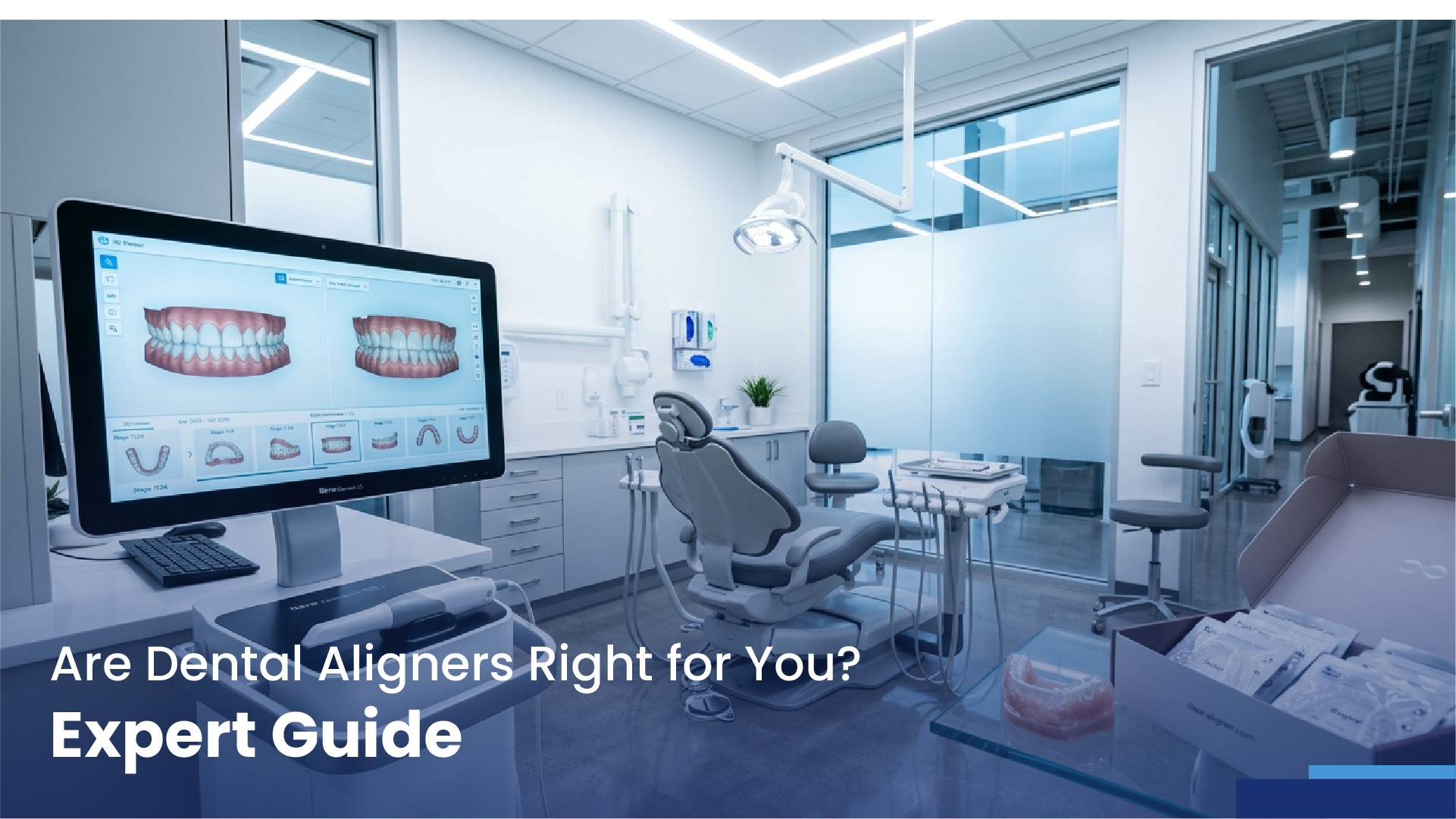
Before any aligners are made, a 3D digital scan of the teeth is taken and specialist software is used to create a virtual treatment plan showing the full sequence of movements from start to finish. Patients can see a projected simulation of the expected outcome before committing. At Blue Clinic’s orthodontic department, this planning phase is carried out carefully to ensure the proposed movements are clinically realistic for the patient’s specific case.
Small tooth-coloured composite attachments are bonded to certain teeth in many cases to give the aligner the grip it needs to achieve specific movements that a plain smooth tray cannot produce alone. These are removed cleanly at the end of treatment without damage to the enamel.
Types of Dental Aligners
Invisalign
Invisalign is the most widely used and extensively studied clear aligner system in the world, with over 17 million patients treated to date. It uses a proprietary thermoplastic material called SmartTrack, which is designed to apply more consistent force over time than earlier aligner materials. Invisalign has the largest body of published clinical outcome data of any clear aligner brand, making it the benchmark against which other systems are measured. Our Invisalign Kuwait page covers what treatment with this system involves at Blue Clinic, including the assessment process and what the trays feel like in use.
Invisalign Teen
Invisalign Teen is a version of the system adapted for younger patients who are still in the mixed or full permanent dentition stage. It includes compliance indicators, small blue dots that fade with wear time so the treating dentist can check adherence, and it allows for erupting teeth. It also includes a small number of replacement aligners at no extra cost to account for the reality that teenagers sometimes lose or damage trays.
Invisalign Lite and Go
For patients with mild alignment issues only, Invisalign Lite and Invisalign Go are abbreviated versions of the full system that cover a smaller number of tooth movements over a shorter treatment period. They are typically less expensive than full Invisalign and are appropriate for cases involving minor crowding, small gaps, or relapse after previous orthodontic treatment. They are not designed for complex bite correction.
Other Clear Aligner Brands
Several other branded clear aligner systems exist at various price points. Some are offered exclusively through dental clinics with their own in-house lab network. Clinical data for these systems is generally thinner than for Invisalign, and outcomes for complex cases may be less predictable. For patients with straightforward cases, a well-planned course of treatment from a reputable brand can deliver good results. For more complex movements, the depth of the prescribing orthodontist’s experience and the robustness of the system’s clinical toolkit matter more than the brand name alone.
Who Are Dental Aligners Suitable For?
Dental aligners are well-suited for adults and older teenagers with mild to moderate alignment issues. The most common cases treated successfully with clear aligners include crowded teeth, spacing between teeth, minor overbite, minor underbite, minor crossbite, and orthodontic relapse. They are particularly effective for patients who have already had fixed braces and whose teeth have shifted due to inconsistent retainer use. Our orthodontic team assesses suitability at the initial consultation and will advise honestly about what aligners can and cannot achieve in your specific case.
Aligners are also particularly well suited to adult patients who cannot or prefer not to have visible orthodontic appliances during treatment for professional or personal reasons. The near-invisibility of aligners during wear makes them a practical option for patients navigating professional environments, important events, or simply personal comfort during a treatment period that may last one to two years.
Who Should Consider Braces Instead?
Clear aligners are not appropriate for all orthodontic cases. Patients with severe crowding, significant bite problems involving large discrepancies between the upper and lower jaws, complex rotations, or cases requiring significant vertical tooth movement may not achieve the best results with aligners alone. These situations give fixed braces a mechanical advantage because the bracket-and-wire system allows precise forces to be applied in three dimensions more reliably than a removable tray.
Compliance is also a genuine clinical consideration. Aligners must be worn for 20 to 22 hours every day to work as prescribed. Patients who are likely to remove them frequently for comfort or convenience will see treatment stall and their trays eventually stop fitting. For patients who are not confident about maintaining that level of discipline, fixed dental braces are a more reliable option because they work continuously without any patient-managed wear requirement. Our guide on types of braces and cost compares all the main orthodontic options side by side.
Daily Life With Dental Aligners
Eating and Drinking
The aligners must be removed before eating or drinking anything other than plain water. This is one of the most significant daily habits required of aligner patients. Every meal, every coffee, every snack, and every flavoured drink requires removing the aligners, and the teeth should be brushed before reinserting them. Patients who graze throughout the day or drink coffee frequently need to account for the discipline this demands. The aligners need to accumulate at least 20 to 22 hours of wear per day, meaning the windows out of the mouth must be kept short and purposeful.
Oral Hygiene
Oral hygiene during aligner treatment is significantly easier than during fixed brace treatment. Because the trays are removable, brushing and flossing proceed normally without the need to navigate around brackets and wires. The trays themselves are cleaned by rinsing with lukewarm water and gentle brushing. Using toothpaste on the trays is generally not recommended as abrasive toothpastes can scratch the plastic surface and reduce clarity. Our dental team provides detailed care instructions at the start of treatment.
Speech
A mild lisp or change in speech clarity is common during the first few days of wearing new aligners. The tongue needs time to adjust to the slight increase in bulk in the mouth. Most patients adapt within two to five days and speech returns to normal. The adjustment period when starting a new set of trays is usually shorter than the initial adaptation.
Discomfort
Mild pressure or tightness when a new aligner is first worn is normal and indicates the tray is exerting the intended force. This typically settles within one to two days. The discomfort associated with aligners is generally described as milder than the soreness experienced after wire tightening appointments with fixed braces. According to patient outcome data cited by the American Association of Orthodontists, patient-reported comfort is one of the most consistently positive aspects of clear aligner treatment.
Treatment Duration
Treatment duration with dental aligners varies widely depending on the complexity of the case. Minor corrections can sometimes be completed in four to eight months. Moderate cases typically take 12 to 18 months. Comprehensive cases involving more extensive tooth movement may take up to 24 months or longer. These estimates assume consistent daily wear of at least 20 to 22 hours.
The treating orthodontist will give a projected treatment duration at the planning stage. It is worth understanding that this projection is based on the planned number of aligners and can change if refinement trays are needed, if trays are lost, or if wear time is consistently below the prescribed level. More detail on how aligner treatment timelines work is available on our Invisalign treatment guide.
Retainers After Aligner Treatment
Retainers are non-negotiable after any form of orthodontic treatment, including clear aligners. When the active aligner series ends and the teeth have reached their target positions, the bone surrounding the tooth roots is still in a state of remodelling. Without a retainer holding the teeth in place, they will drift back toward their original positions. This process can happen relatively quickly in the weeks immediately after treatment ends.
Most patients transition to a clear retainer that resembles a thicker aligner tray and is worn full-time initially, then nightly on an ongoing basis. Some patients choose a fixed wire retainer bonded behind the front teeth as an alternative. The retention protocol is determined by the treating orthodontist based on the individual case. Neglecting retainers is the most common reason for orthodontic relapse.
What Can You Do After Aligners Are Complete?
Once aligner treatment is finished and retainers are in place, many patients choose to enhance the result with additional cosmetic procedures. Teeth whitening is one of the most commonly requested follow-up treatments. Because aligners do not involve bonding adhesive to the tooth surface, the enamel is generally in excellent condition for whitening at the end of treatment. Other patients explore dental veneers for any remaining shape or shade concerns that tooth alignment alone did not address. Both options are available at Blue Clinic as part of a coordinated smile treatment plan.
Dental Aligners vs Fixed Braces: A Direct Comparison
The core practical differences between clear aligners and fixed braces come down to visibility, lifestyle demands, compliance, and clinical versatility. Aligners are nearly invisible, diet-restriction-free, and easier to keep clean. Fixed braces are cemented in place, always working regardless of patient discipline, and offer greater mechanical versatility for complex cases.
For mild to moderate cases the clinical outcomes of both are broadly comparable. For complex cases, fixed braces are often the more appropriate recommendation. Cost is also a factor: aligners are generally priced at a similar level to ceramic braces or above, while metal braces remain the most affordable fixed option. A consultation at our orthodontic department will identify the most appropriate option for your case.
Frequently Asked Questions
How often do I need to change my aligners?
Most aligner systems currently use a seven to fourteen day schedule per tray, though this varies depending on the system and the case. Your treating orthodontist will specify the schedule for your particular treatment plan. Moving to the next tray too early before the planned movement is complete can result in poor tracking and the need for additional correction.
Can I wear aligners if I have crowns, bridges, or veneers?
In many cases, yes. Existing restorations do not automatically exclude a patient from aligner treatment, but they can complicate attachment placement and may limit the types of movement possible in specific areas. The treating dentist will assess the restorations as part of the initial planning process. If significant prosthodontic work is planned, such as new crowns or bridges, it is generally advisable to coordinate the timing with the orthodontic plan.
What happens if I lose an aligner?
Contact your clinic promptly. Depending on where you are in the sequence, your dentist may advise wearing the previous tray temporarily, moving to the next tray early, or ordering a replacement. Waiting without wearing any aligner allows the teeth to shift, which can make subsequent trays fit incorrectly and may require additional trays to correct.
Can aligners fix a bad bite?
Mild bite discrepancies including minor overbite and mild underbite can be treated with clear aligners, sometimes with the assistance of small rubber bands attached to hooks on the trays. Significant skeletal bite discrepancies involving jaw position are generally not suitable for aligner treatment alone and may require fixed braces or a combined orthodontic and surgical approach.
Are aligners suitable for teenagers?
Yes. Invisalign Teen is specifically designed for younger patients and includes features that account for the realities of teenage wear compliance. That said, clear aligners are most consistently successful with patients who are genuinely motivated to wear them as prescribed. For teenagers where compliance is a concern, fixed braces may be the more reliable recommendation.
How much do dental aligners cost in Kuwait?
Costs vary depending on the system used, the complexity of the case, and the clinic. A full Invisalign course is a significant investment. For a meaningful cost estimate, a case assessment with imaging is necessary. Our guide on Invisalign cost in Kuwait provides a detailed breakdown of how pricing is structured and what to ask before committing.
Is Aligner Treatment Right for You?
Dental aligners are a clinically sound and widely available orthodontic option for patients with mild to moderate alignment cases who value discretion during treatment and are willing to commit to the daily wear requirements. They are not a universal solution, and the best outcome comes from choosing the right appliance for the right case rather than defaulting to aligners because of their appearance advantage.
Practical next steps:
- Visit our Invisalign Kuwait page to understand what the system offers and how treatment at Blue Clinic is structured.
- Book a consultation through WhatsApp for a clinical assessment that will confirm whether aligners are the appropriate recommendation for your teeth.
- Ask your orthodontist directly whether fixed braces would produce a better result for your specific case before deciding.
- Plan retainers as part of your orthodontic journey from the start, not as an afterthought when treatment ends.
Our orthodontic team at Blue Clinic provides honest, case-specific guidance. Reach out to arrange your assessment.