






Metal braces remain the most widely used orthodontic appliance in the world and the benchmark against which every newer option is measured. Despite the growing popularity of clear aligners and ceramic alternatives, metal braces continue to be the first recommendation for many patients, especially those with complex alignment cases that other options cannot always handle as effectively.
In this article, we will cover what metal braces are, how they work, the conditions they treat, the benefits they offer, what to expect during and after treatment, how much they typically cost, and how they compare to other orthodontic options.
What Are Metal Braces?
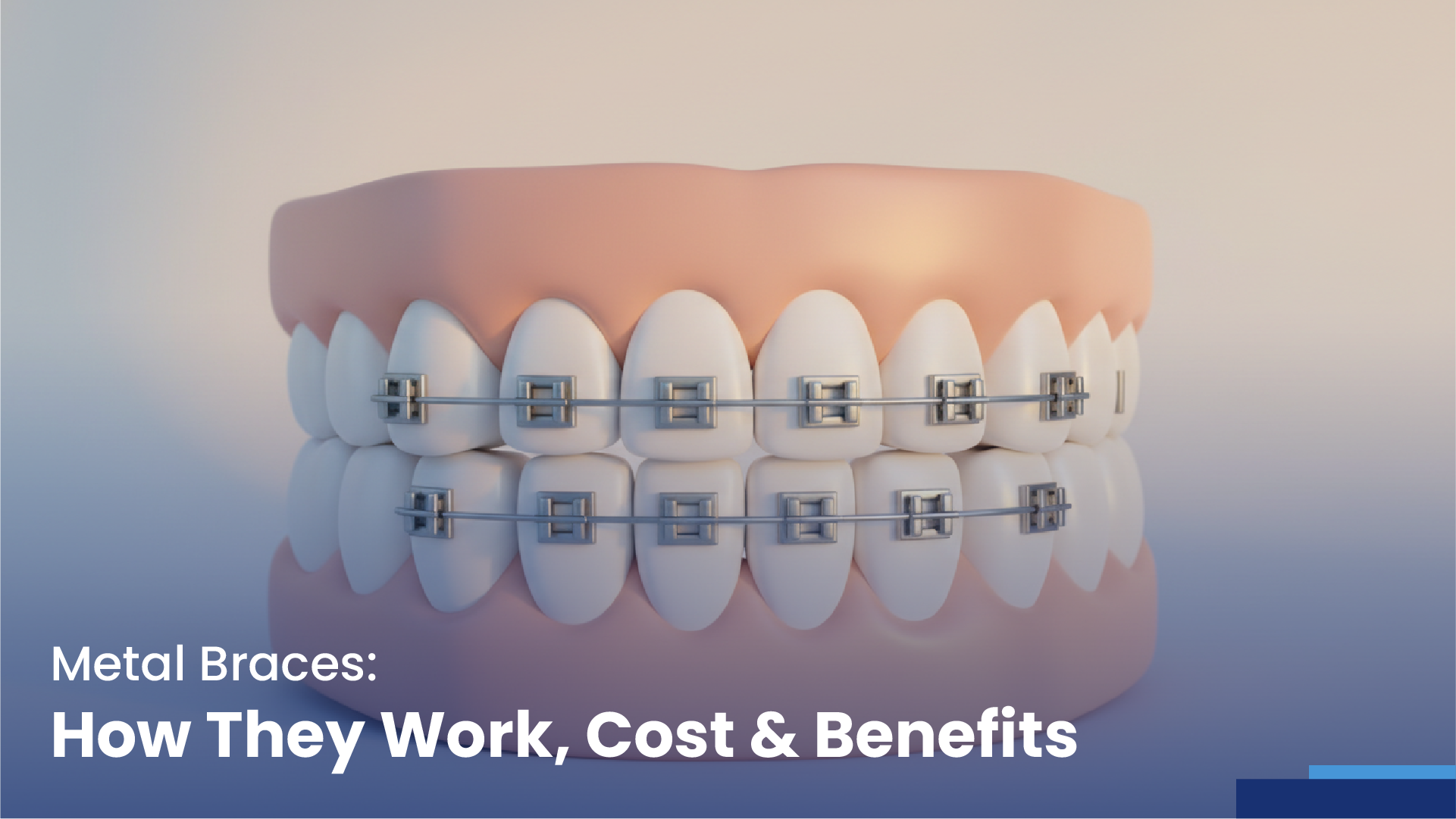
Metal braces consist of small stainless steel brackets bonded to the outer surface of each tooth, connected by a thin metal wire called an archwire. Small elastic bands called ligatures hold the wire in place within each bracket. Together, these components apply controlled, gradual pressure that shifts teeth into their correct positions over time. You can learn more about the full range of orthodontic treatments available at our dental clinic.
The materials used today are far more refined than earlier generations of braces. Modern metal brackets are smaller, lower in profile, and more comfortable than older designs. Self-ligating variants eliminate the need for elastic bands and use a sliding mechanism to hold the wire, which some orthodontists prefer for certain cases. The core technology, however, has remained dependable for decades.
How Do Metal Braces Work?
The process begins with a thorough assessment by an orthodontist. X-rays, photographs, and digital scans or impressions are taken to map the current position of your teeth and plan the movements needed to achieve the desired alignment. At Blue Clinic, this planning phase is carried out carefully to ensure the treatment path is appropriate for each patient’s specific case.
Once brackets are bonded to the teeth, the archwire is threaded through them and held in position. The wire exerts gentle but constant pressure on the brackets, which transmits that force to the teeth. Over time, this pressure causes the bone surrounding the tooth roots to remodel, allowing the teeth to move. The process is gradual and carefully controlled to ensure teeth shift safely and without damage to the surrounding structures.
Every four to eight weeks, the patient returns for a tightening appointment. During these visits, the orthodontist changes the archwire or adjusts its tension to maintain active pressure and continue progress. According to research on orthodontic tooth movement, the biological process relies on bone resorption on the pressure side and deposition on the tension side.
What Conditions Can Metal Braces Treat?
Metal braces are suitable for a wide range of alignment issues. They are used to correct crowded or overlapping teeth, widely spaced teeth, crooked teeth, and various bite problems including overbite, underbite, crossbite, and open bite. They are also effective for more complex cases involving significant rotation of teeth or cases where precise force control is required.
Because metal braces are fixed and apply continuous pressure, they can handle cases that removable options like clear aligners may not manage as effectively. For patients with moderate to severe misalignment, or those who need significant bite correction, metal braces are often the more clinically appropriate choice.
The Benefits of Metal Braces
Proven Clinical Track Record
Metal braces have been the standard orthodontic treatment for generations. Their effectiveness across a broad range of cases is well-documented, and orthodontists are highly experienced in using them. For patients with complex needs, this track record provides a level of clinical confidence that newer options cannot yet fully match. Our orthodontic team has extensive experience managing cases across all complexity levels.
Cost-Effectiveness
Compared to ceramic braces and clear aligners, metal braces are generally the most affordable fixed treatment option. This makes them accessible for a wider range of patients and budgets. For families with multiple children needing treatment, the cost advantage is particularly meaningful. A detailed look at pricing factors is available in our guide on types of braces and cost.
No Compliance Required
Unlike removable options such as clear aligners, metal braces work constantly. They do not depend on the patient remembering to put them back in or wearing them for a minimum number of hours each day. This makes them a reliable option for younger patients or anyone who prefers not to manage a removable appliance.
Handling Complex Cases
Metal braces are the strongest fixed option for precise biomechanical control. When a case involves significant rotation, intrusion, or complex bite movement, the rigidity of metal brackets and wires allows orthodontists to apply the specific forces needed with accuracy. For such cases, metal braces often achieve results that are difficult to replicate with other appliances. You can explore all orthodontic options available at our orthodontics department.
Durability
Metal brackets resist chipping and breaking far better than ceramic alternatives. They withstand the everyday wear of eating, speaking, and general physical activity. For active patients or those involved in contact sports, this durability is a practical advantage.
What to Expect During Metal Braces Treatment
The First Appointment
The first appointment after assessment involves bonding the brackets to the teeth and fitting the initial archwire. This session typically takes one to two hours. After the appointment, patients can expect mild soreness for a few days as the teeth begin to respond to the new pressure. You can book your first appointment at Blue Clinic through WhatsApp.
Regular Tightening Sessions
Progress appointments every four to eight weeks are essential to keep treatment moving. During each visit, the orthodontist evaluates tooth movement, changes the wire if needed, and replaces elastic ligatures. Missing or delaying these appointments will slow treatment progress significantly. The total number of appointments depends on the length of your treatment plan.
Treatment Duration
Most patients wear metal braces for 18 months to three years depending on the complexity of the case. Simpler alignment corrections can be completed in 12 to 18 months, while complex cases involving bite correction or significant crowding may require longer. A realistic treatment timeline will be discussed during your initial assessment. For a broader overview of how treatment unfolds, research on orthodontic treatment phases provides useful context.
Food and Lifestyle Guidelines
Certain foods need to be avoided throughout treatment to protect the brackets and wires. Hard foods such as raw carrots, hard bread, and ice can dislodge brackets or bend wires. Sticky foods like caramel and gum can pull at brackets. These restrictions are not permanent, but they need to be respected consistently to avoid unplanned repair appointments that set back your timeline.
Oral hygiene becomes more important and more demanding with braces. Brackets and wires create additional surfaces where food and plaque accumulate. Brushing after every meal, using an interdental brush or water flosser between the brackets, and attending your regular cleaning appointments at the dental clinic keeps gum health and tooth condition stable throughout treatment.
After Metal Braces: What Comes Next?
When the active phase of treatment ends and the braces are removed, the process is not quite finished. The teeth need time to settle into their new positions while the surrounding bone completes its remodelling. During this period, retainers are essential. They hold the teeth in alignment and prevent natural drift back toward their original positions.
Retainers are typically worn full-time initially and then reduced to night-time use over time. Once braces are removed, many patients also explore options to enhance the final appearance of their smile, such as teeth whitening or veneers, which can be discussed at a follow-up appointment.
How Much Do Metal Braces Cost?
The cost of metal braces depends on the length of treatment, case complexity, the clinic, and the geographic market. In Kuwait, metal braces are generally the most affordable fixed orthodontic option. The overall cost typically covers the full treatment period including all tightening appointments. It is worth asking your clinic what exactly is included in the quoted price and whether emergency repair visits carry additional charges.
Patients who need other dental work before or alongside orthodontic treatment, such as root canal treatment or restorations, should factor those costs into their overall treatment budget. Addressing existing dental issues before starting braces is important and can affect the overall timeline.
Metal Braces vs Other Orthodontic Options
Metal braces, ceramic braces, and clear aligners each occupy a different position in orthodontic treatment. Metal braces are the most durable, most affordable, and most clinically versatile fixed option. Ceramic braces offer improved aesthetics at a higher cost but with less durability. Clear aligners like Invisalign are removable and nearly invisible but require strict compliance and are better suited to mild or moderate cases.
The best option is always the one that aligns with your clinical needs, lifestyle, and budget. A consultation with an orthodontist is the only way to determine which approach is appropriate for your specific alignment situation. Choosing based on aesthetics or price alone without professional input can lead to suboptimal outcomes.
Frequently Asked Questions
How painful are metal braces to get fitted?
The fitting process itself is not painful. After the appointment, mild to moderate soreness is common for the first few days as teeth begin to respond to pressure. This discomfort typically peaks around 48 hours post-fitting and eases on its own. Over-the-counter pain relief and soft foods help manage this initial phase.
Can adults get metal braces?
Yes. Adults are treated with metal braces regularly and achieve the same results as younger patients. Orthodontic treatment is not age-limited. The main difference is that adults may take slightly longer to respond to treatment due to denser bone, but the clinical outcomes are comparable.
Do metal braces leave marks on teeth?
When properly maintained with good oral hygiene, metal braces should not leave permanent marks. Decalcification, which appears as white spots on the enamel, can occur if plaque is allowed to accumulate around brackets. Regular brushing, professional cleaning visits, and the use of fluoride products significantly reduce this risk.
Are metal braces suitable for children?
Metal braces are commonly recommended for children and teenagers. They are durable, reliable, and do not require the compliance discipline of removable options. Many orthodontists recommend waiting until most permanent teeth have erupted before starting fixed brace treatment, which usually happens around ages 11 to 13.
What is the difference between self-ligating and traditional metal braces?
Traditional metal braces use elastic bands called ligatures to hold the wire in each bracket. Self-ligating braces use a built-in clip mechanism instead, which some clinicians prefer for reduced friction and potentially fewer adjustments. The clinical evidence on whether one is meaningfully faster than the other is mixed, and both achieve good results in appropriate cases.
Planning Your Metal Braces Treatment
Metal braces remain the most clinically versatile orthodontic appliance available. For patients with complex cases, they offer a level of control and predictability that other options currently cannot match. For those on a budget, they deliver strong results at a lower cost than alternatives. For parents choosing treatment for their children, they are a dependable and well-studied option.
Before starting treatment, consider the following steps:
- Schedule a consultation with an orthodontist to assess your case and confirm which options are clinically appropriate.
- Ask for a full treatment plan including estimated duration, cost, and what is included in the price.
- Discuss any existing dental health concerns such as cavities or gum issues that may need to be addressed before starting.
- Consider your lifestyle, especially dietary habits and physical activity, when finalising your choice.
- Book your consultation at Blue Clinic to get a personalised assessment and discuss next steps.
Our orthodontic team at Blue Clinic is ready to guide you through the process from initial assessment through to the end of treatment. Reach out to arrange a visit at a time that suits you.