






Adult orthodontic treatment has become increasingly common in Kuwait, driven by higher aesthetic awareness, better treatment options, and advances in dental technology. Many adults delay orthodontic care for years due to cost concerns, lifestyle limitations, or lack of clear information.
This guide explains the types of braces and cost for adults in a practical, medically accurate way, helping you understand what each option offers, how it works, and how to choose the most suitable solution for your smile.
At Blue Clinic, orthodontic care is provided as part of a comprehensive dental department that focuses on long-term oral health, facial balance, and patient comfort.
Why adults choose braces later in life
Orthodontic problems do not disappear with age. Crooked teeth, crowding, spacing, and bite misalignment can worsen over time and lead to functional and aesthetic issues.
Adult patients commonly seek braces for reasons such as:
- Difficulty cleaning crowded teeth, increasing the risk of decay and gum disease
- Jaw discomfort, headaches, or uneven tooth wear caused by bite imbalance
- Shifting teeth after earlier orthodontic treatment
- Desire for a more confident, professional appearance
Unlike teenagers, adults often prioritize discreet treatment options, predictable timelines, and flexibility around work and social commitments. This has led to a wider range of orthodontic solutions designed specifically for adult lifestyles.
What determines the cost of braces for adults?
The cost of braces in Kuwait is not fixed and depends on several clinical and practical factors. Understanding these variables helps set realistic expectations.
Key factors include:
- Type of braces selected
- Severity of alignment or bite issues
- Length of treatment
- Need for additional procedures such as tooth extractions or bite correction
- Follow-up visits and adjustment frequency
A mild spacing issue may require a shorter treatment plan, while complex crowding or jaw misalignment can increase both duration and cost. An orthodontic consultation is essential to assess these details accurately.
Traditional metal braces for adults
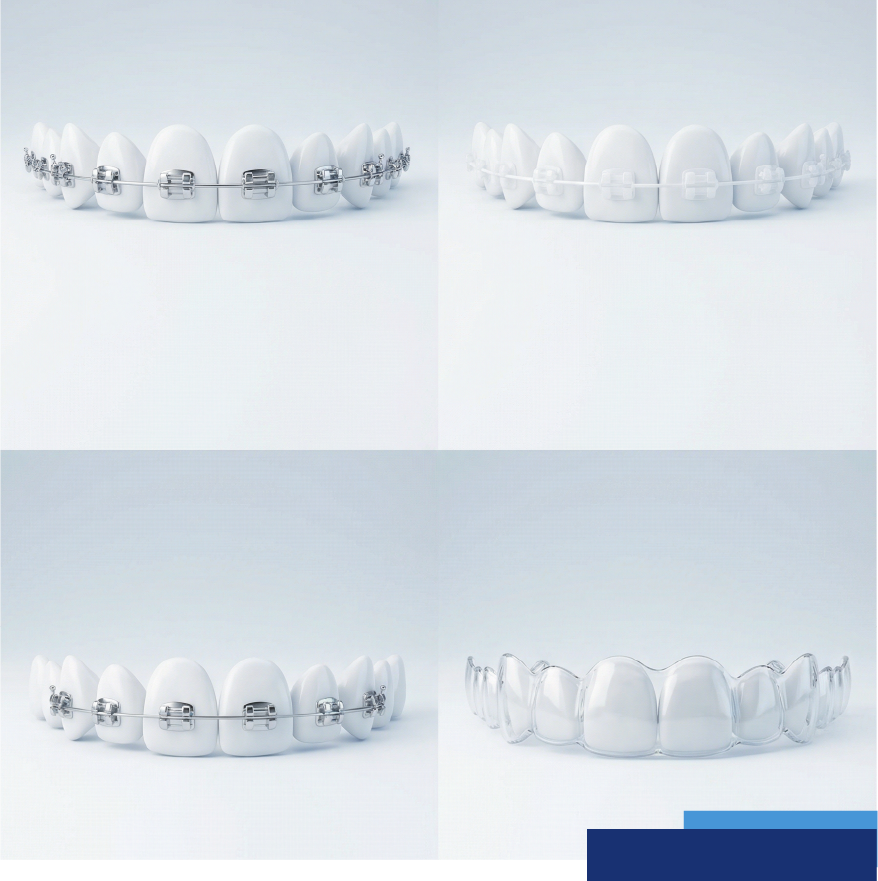
Traditional metal braces remain one of the most reliable orthodontic systems available. They consist of metal brackets bonded to the teeth and connected by archwires that gradually guide tooth movement. Despite their visibility, they continue to be widely used due to their effectiveness and durability.
From a clinical perspective, metal braces allow precise control over tooth movement, making them suitable for complex crowding, bite correction, and rotational issues. Adult patients with significant alignment problems often achieve predictable results with this system.
The primary limitation of metal braces lies in their appearance and the initial adjustment period. Some patients experience temporary discomfort or irritation, particularly during wire changes. Proper oral hygiene is essential to prevent plaque buildup around brackets.
In Kuwait, traditional metal braces cost typically ranges between 600 and 1,200 KWD, making them one of the most affordable orthodontic options for adults seeking comprehensive correction.
Ceramic braces as a discreet alternative
Ceramic braces function similarly to metal braces but use tooth-colored or translucent brackets that blend more naturally with the enamel. This makes them a popular option for adults who want effective orthodontic treatment with reduced visual impact.
From a biomechanical standpoint, ceramic braces can correct most alignment issues efficiently. They are commonly chosen by professionals who prefer a subtler appearance during treatment. Comfort levels are generally comparable to metal braces, although ceramic brackets may require slightly more care.
One limitation is durability. Ceramic brackets can be more fragile than metal and may stain over time if oral hygiene is inconsistent or if the patient frequently consumes strongly pigmented foods and beverages.
In Kuwait, ceramic braces prices usually fall between 800 and 1,500 KWD, reflecting their aesthetic advantage and material cost.
Lingual braces for invisible orthodontic treatment
Lingual braces are bonded to the inner surface of the teeth, making them virtually invisible from the outside. This option appeals to adults who prioritize aesthetics above all else and prefer not to show any signs of orthodontic treatment.
Clinically, lingual braces require advanced planning and precise customization. Tooth movement is effective, but the technique demands high expertise from the orthodontist. Patients must also adapt to a different sensation, as the brackets sit closer to the tongue.
Cleaning can be more challenging due to limited visibility, and some patients experience temporary speech changes during the initial weeks. These effects usually improve as the mouth adapts.
Lingual braces are among the most premium orthodontic solutions, with costs in Kuwait ranging from 1,200 to 2,500 KWD, depending on case complexity and treatment duration.
Clear aligners and removable orthodontics
Clear aligners have transformed adult orthodontics by offering a nearly invisible, removable solution. They consist of a series of custom-made transparent trays that gradually move teeth into alignment. Aligners are particularly appealing for adults with mild to moderate spacing or crowding.
From a medical perspective, aligners rely heavily on patient compliance. They must be worn for the recommended number of hours per day to achieve planned results. While effective for many cases, aligners are not suitable for all orthodontic problems, especially those involving significant bite discrepancies.
One major advantage is ease of hygiene, as aligners can be removed for eating and cleaning. This reduces the risk of plaque accumulation and enamel decalcification.
In Kuwait, clear aligner treatment costs generally range from 500 to 1,800 KWD, depending on the number of aligners required and the complexity of tooth movement.
Comparison of orthodontic options and prices in Kuwait
| Type of Orthodontics | Description | Advantages | Disadvantages | Orthodontic prices in Kuwait |
| Traditional metal braces | Metal brackets and wires used to straighten teeth | Highly effective, durable, affordable | Visible, may cause discomfort, hygiene requires attention | 600 to 1,200 KWD |
| Ceramic braces | Tooth-colored brackets for reduced visibility | More aesthetic, effective, comfortable | May stain, less durable, higher cost | 800 to 1,500 KWD |
| Lingual braces | Braces placed on the inner side of teeth | Invisible from outside, effective | Difficult cleaning, speech adaptation, high cost | 1,200 to 2,500 KWD |
| Clear aligners | Removable transparent trays | Invisible, removable, comfortable | Limited for complex cases, compliance dependent | 500 to 1,800 KWD |
How long does orthodontic treatment take for adults?
Treatment duration varies depending on the complexity of the case and the system used.
Typical timelines include:
- Mild alignment issues: 6 to 12 months
- Moderate crowding or spacing: 12 to 18 months
- Complex bite correction: 18 to 24 months or longer
Clear aligners may offer shorter treatment times for suitable cases, while complex corrections may benefit from fixed braces.
Are braces painful for adults?
Discomfort is common during the initial phase and after adjustments, but pain is usually mild and temporary. Modern orthodontic techniques focus on gradual, controlled force to minimize discomfort.
Most patients adapt within days, and over-the-counter pain relief is usually sufficient.
How braces improve oral health beyond appearance
Orthodontic treatment offers functional benefits that extend beyond cosmetic improvement.
Proper alignment helps:
- Reduce plaque accumulation by improving access for brushing and flossing
- Lower the risk of gum disease and tooth decay
- Improve bite efficiency and jaw comfort
- Prevent uneven tooth wear
These benefits make braces a preventive investment in long-term oral health.
Choosing the best type of braces for your lifestyle
Selecting the right system depends on clinical needs and daily habits.
Considerations include:
- Visibility and professional requirements
- Willingness to maintain strict oral hygiene
- Ability to follow aligner wear schedules
- Budget and treatment timeline
An orthodontic consultation allows for a personalized comparison of options based on these factors.
Cost transparency and consultation importance
Understanding the types of braces and cost requires more than online estimates. A professional assessment includes diagnostic imaging, bite analysis, and treatment planning.
At Blue Clinic, orthodontic consultations focus on clarity, realistic outcomes, and patient education rather than generic pricing.
Frequently asked questions
- Is there an age limit for braces?
There is no upper age limit for orthodontic treatment. As long as the teeth and gums are healthy, adults can benefit from braces at any stage of life.
- Do braces cause more pain for adults?
Adults may experience mild discomfort during adjustments, similar to younger patients. Pain levels are usually temporary and manageable with proper guidance.
- Can braces improve jaw pain or headaches?
In some cases, correcting bite alignment can reduce strain on the jaw muscles and joints, which may help relieve certain types of discomfort.
- Are clear aligners as effective as braces?
Clear aligners are effective for mild to moderate cases. Complex bite or rotation issues may require fixed braces for optimal results.
- Will I need retainers after treatment?
Retainers are essential after orthodontic treatment to maintain results. Long-term retention is a key part of adult orthodontic care.
Conclusion: informed choices lead to confident results
Blue Clinic provides comprehensive orthodontic care within a fully equipped dental department, combining clinical precision, patient-centered planning, and clear communication. Located in Mahboula, Kuwait, the clinic supports adults at every stage of their orthodontic journey, from consultation to post-treatment care.
Booking a professional evaluation is the first step toward a healthier bite, balanced smile, and lasting confidence.