

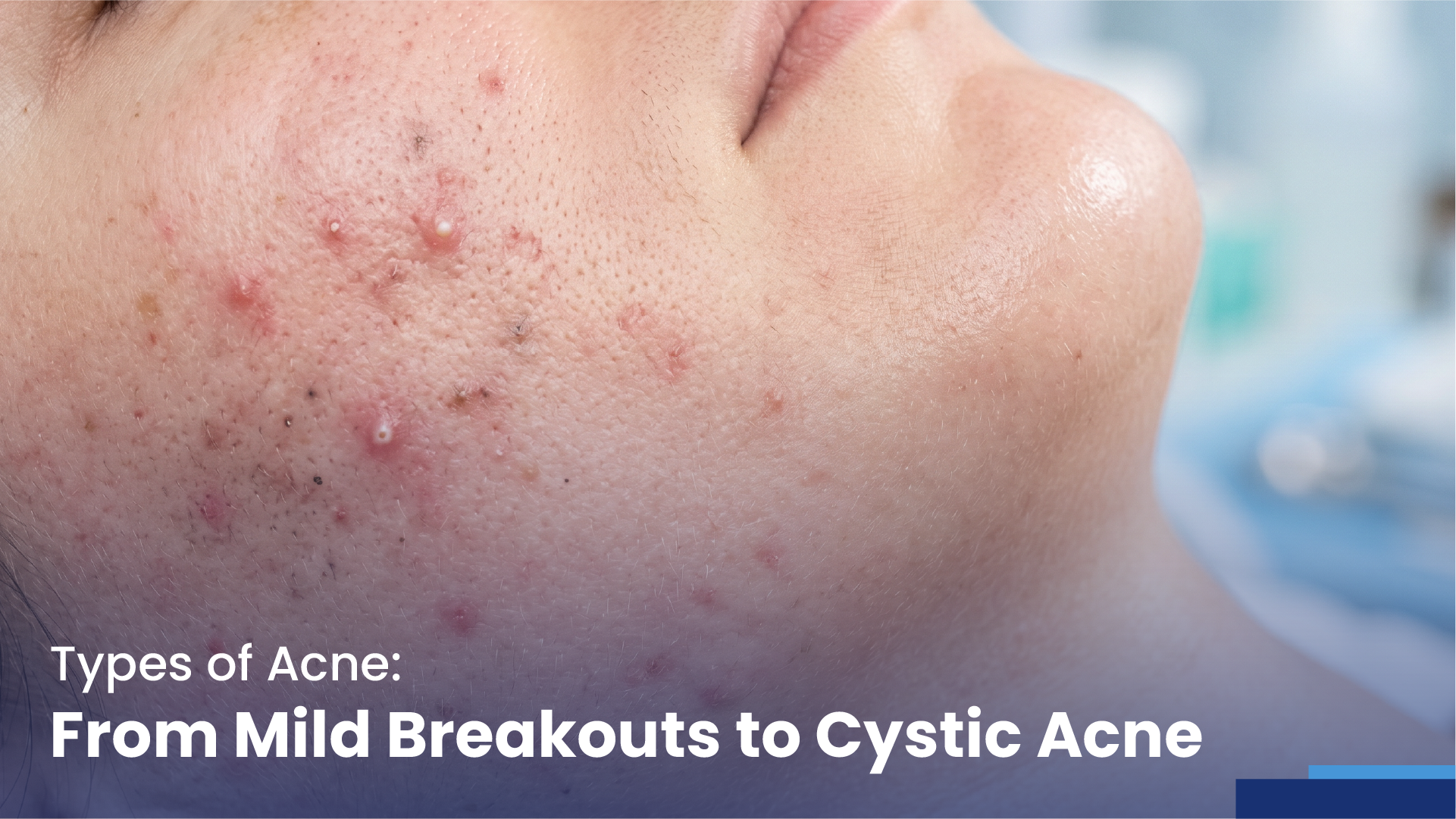
Acne is not a single condition. It is a group of related skin problems that form through the same basic process but develop differently depending on how deep the blockage goes and whether bacteria trigger an immune response. Understanding the type of acne you have is the most important step toward choosing a treatment that actually works. At Blue Clinic‘s dermatology and aesthetics department, acne assessment is the starting point for every treatment plan because the approach for comedonal acne is fundamentally different from the approach for cystic or hormonal acne.
This guide covers all the main types of acne, from the mildest surface-level comedones to the most severe inflammatory lesions, how each one forms, what distinguishes one from another, and which treatment approaches are appropriate for each.
How Acne Forms: The Common Starting Point
All acne types begin with the same event: a hair follicle becomes blocked. Skin cells shed continuously, and sebaceous glands attached to each follicle produce sebum (oil) to keep the skin hydrated. When dead skin cells, excess sebum, and sometimes bacteria accumulate inside the follicle, a blockage forms. What happens next — whether the pore stays closed, opens to the air, becomes inflamed, or develops into a painful cyst — determines which type of acne develops.
The bacterium Cutibacterium acnes lives naturally on the skin and plays a key role in inflammatory acne types. When it proliferates inside a blocked follicle, the immune system responds with inflammation, producing the redness, swelling, and pain associated with more severe acne lesions. The dermatology team at Blue Clinic provides accurate diagnosis before recommending any treatment approach.
Non-Inflammatory Acne
Non-inflammatory acne consists of comedones — blocked follicles without a significant immune response. These lesions are not red or painful and do not involve bacterial infection as a primary driver. They are the mildest form of acne but can still be persistent and difficult to clear without targeted treatment.
Whiteheads (Closed Comedones)
A whitehead forms when a hair follicle becomes blocked by a mixture of dead skin cells and sebum, and the opening at the skin surface closes over the blockage. The trapped material has no exposure to air, so it remains white or flesh-coloured. Whiteheads appear as small raised bumps on the skin surface, most commonly on the forehead, nose, and chin (the T-zone).
Whiteheads do not turn into blackheads unless the pore opens. They can, however, develop into inflammatory lesions if bacteria proliferate inside the blocked follicle. Treatment focuses on preventing new blockages through regular exfoliation with ingredients like salicylic acid, retinoids, or niacinamide, and on not squeezing, which forces the content deeper into the follicle.
Blackheads (Open Comedones)
A blackhead forms through the same process as a whitehead, except that the pore opening remains open to the air. The trapped sebum and dead skin cells oxidise on contact with air, turning them dark brown to black. The colour has nothing to do with dirt — it is a chemical reaction between melanin in the skin cells and oxygen.
Blackheads are most common on the nose, chin, and outer cheeks where sebaceous glands are densest. They are among the most persistent acne lesions because the open pore continues to collect debris. Salicylic acid, adapalene, and regular professional extraction help manage them. According to guidance from the American Academy of Dermatology, retinoids are the most effective topical agents for preventing and treating comedonal acne of both types.
Inflammatory Acne
Inflammatory acne occurs when bacteria inside a blocked follicle trigger an immune response. The result is redness, swelling, heat, and in some cases significant pain. Inflammatory lesions are graded by depth and severity, ranging from surface-level papules to deep, painful cysts.
Papules
A papule is a small, raised, red lesion less than 5mm in diameter. It forms when the wall of a blocked follicle breaks down due to bacterial activity and inflammation, but the lesion remains solid — there is no visible fluid or pus inside. Papules are tender to the touch but do not have a head.
Papules should not be squeezed. Attempting to extract a papule that has no visible head forces the inflammatory contents deeper into the dermis, worsening the inflammation and significantly increasing the risk of post-inflammatory hyperpigmentation and scarring. Treatment involves topical or oral anti-inflammatory agents and antibacterials.
Pustules
A pustule is a papule that has developed a visible centre of pus — the white or yellow dot that is visible at the surface. The pus is a mixture of dead white blood cells, bacteria, and skin debris that accumulates as the immune system fights the infection. Pustules are the classic “pimple” that most people picture when they think of acne.
Pustules are tempting to squeeze because the pus is superficial. However, squeezing without proper technique and sterilisation introduces surface bacteria into the follicle, increases inflammation, and can cause scarring. Professional extraction or targeted topical treatment is a safer approach. At the Blue Clinic dermatology department, acne extractions are performed with proper technique as part of a treatment session.
Nodules
Nodules are large, solid, painful lesions that extend deep into the dermis — the layer beneath the skin surface. They form when the follicle wall ruptures deep within the skin, spreading the inflammatory contents into surrounding tissue. Nodules feel hard, have no visible head, and do not respond to surface-level treatments.
Nodular acne is a moderate-to-severe grade of acne that typically requires systemic treatment — oral antibiotics, hormonal therapy for women, or isotretinoin. Topical treatments alone are insufficient. Nodules that are not treated appropriately have a high likelihood of leaving permanent indented scarring. Prompt medical assessment is important.
Cystic Acne
Cystic acne is the most severe form. Cysts are large, fluid-filled lesions that form deep within the dermis when a ruptured follicle triggers an intense immune response, encasing the inflammatory contents in a walled structure. They are painful, can exceed 5mm in diameter, and may persist for weeks or months.
Cystic acne is strongly associated with hormonal fluctuations, particularly elevated androgens. It tends to occur on the lower face, jawline, neck, and back. It is far more common in adolescents and young adults but can persist or first appear in adulthood, particularly in women with hormonal conditions such as polycystic ovary syndrome (PCOS).
Cystic acne almost always requires systemic treatment. Isotretinoin is the most effective oral treatment for severe cystic acne and can produce long-term remission. Hormonal treatments including oral contraceptives and anti-androgens are effective for women. Intralesional corticosteroid injections can rapidly reduce individual cysts. The American Academy of Dermatology classifies cystic acne as severe grade and recommends systemic treatment as the standard of care.
Other Acne Patterns Worth Knowing
Hormonal Acne
Hormonal acne is not a morphologically distinct type — lesions can be papules, pustules, nodules, or cysts — but it is identified by its pattern: concentrated on the lower face, jawline, and chin, typically flaring in the week before menstruation, often deep and tender rather than surface-level. It is driven by androgen fluctuations that stimulate sebaceous glands and increase follicle susceptibility to blockage.
Treatment is different from standard acne approaches. Topical retinoids help but are not sufficient alone. Hormonal management — through combined oral contraceptives, spironolactone, or other anti-androgens — addresses the root cause. Diagnosis and treatment should be managed by a dermatologist.
Fungal Acne (Malassezia Folliculitis)
Fungal acne is not true acne. It is caused by an overgrowth of Malassezia yeast in the hair follicles rather than by bacteria and sebum blockage. It presents as clusters of small, uniform, itchy papules and pustules, typically on the forehead, chest, or back. It does not respond to standard antibacterial acne treatments and can worsen with some topical antibiotics.
Antifungal treatments — topical or oral — are required. If your breakouts are itchy, appear in uniform clusters, and are not responding to conventional acne treatment, fungal acne should be ruled out by a dermatologist.
Acne Grading: Mild, Moderate, Severe
Dermatologists classify acne severity to guide treatment decisions:
- Mild acne: predominantly comedones with few inflammatory lesions, minimal impact on surrounding skin.
- Moderate acne: mix of comedones and inflammatory lesions (papules and pustules), covering more of the face or body, some background redness.
- Severe acne: predominantly nodules and cysts, widespread inflammation, high risk of scarring, requiring systemic treatment.
Self-grading can be inaccurate. A professional assessment ensures the right treatment intensity is selected from the start, avoiding both under-treatment (which allows scarring to progress) and over-treatment (which carries unnecessary risks).
Treatment Approaches by Acne Type
- Whiteheads and blackheads: salicylic acid cleansers, topical retinoids (adapalene, tretinoin), regular professional exfoliation.
- Papules and pustules: topical antibiotics (clindamycin, erythromycin), benzoyl peroxide, retinoids, azelaic acid.
- Nodules: oral antibiotics, retinoids, hormonal therapy for women, intralesional steroid injection.
- Cystic acne: isotretinoin, hormonal management, intralesional corticosteroids for individual lesions.
- Hormonal acne: combined oral contraceptives, spironolactone, in addition to topical treatments.
- Fungal acne: antifungal agents (topical ketoconazole, oral fluconazole or itraconazole).
The dermatology team at Blue Clinic provides comprehensive acne assessment and treatment plans tailored to the specific type and severity of your acne.
Frequently Asked Questions
Can you have more than one type of acne at the same time?
Yes, and it is very common. Many patients have a mix of comedonal and inflammatory acne simultaneously. The treatment plan addresses all types present but may prioritise the most inflammatory or scarring-prone lesions first.
Does washing your face more often clear acne?
No. Over-washing strips the skin of its natural oils, triggering increased sebum production as a compensatory response. Twice-daily gentle cleansing with a non-comedogenic cleanser is sufficient. Harsh scrubbing can aggravate inflammatory lesions.
How long does it take for acne treatment to work?
Topical treatments typically require four to twelve weeks of consistent use before meaningful improvement is visible. Expecting faster results and abandoning treatment prematurely is one of the most common reasons for treatment failure.
Can acne cause permanent scarring?
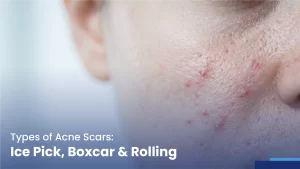
Yes, particularly nodular and cystic lesions that are squeezed, or that remain untreated for extended periods. Scarring can take the form of indented atrophic scars or raised hypertrophic/keloid scars depending on skin type and genetics. Treating acne effectively and early is the most reliable way to prevent scarring.
Is sun exposure good for acne?
No. While a tan may temporarily mask the redness of acne lesions, UV exposure thickens the outer layer of skin, potentially worsening blockages, and significantly increases the risk of post-inflammatory hyperpigmentation. Most acne medications also increase sun sensitivity.
Getting the Right Diagnosis
Treating acne effectively starts with identifying what type you have and what is driving it. Generic over-the-counter products produce inconsistent results because they are not matched to the specific lesion type or the underlying cause. A consultation with a qualified dermatologist is the most reliable path to a treatment plan that works for your skin.
- Visit the Blue Clinic dermatology department for a professional assessment of your acne type and skin profile.
- Book a consultation through WhatsApp to discuss your specific concerns and receive a personalised treatment recommendation.
The dermatology team at Blue Clinic provides evidence-based acne diagnosis and treatment, including topical therapies, chemical peels, and laser treatments where appropriate.