

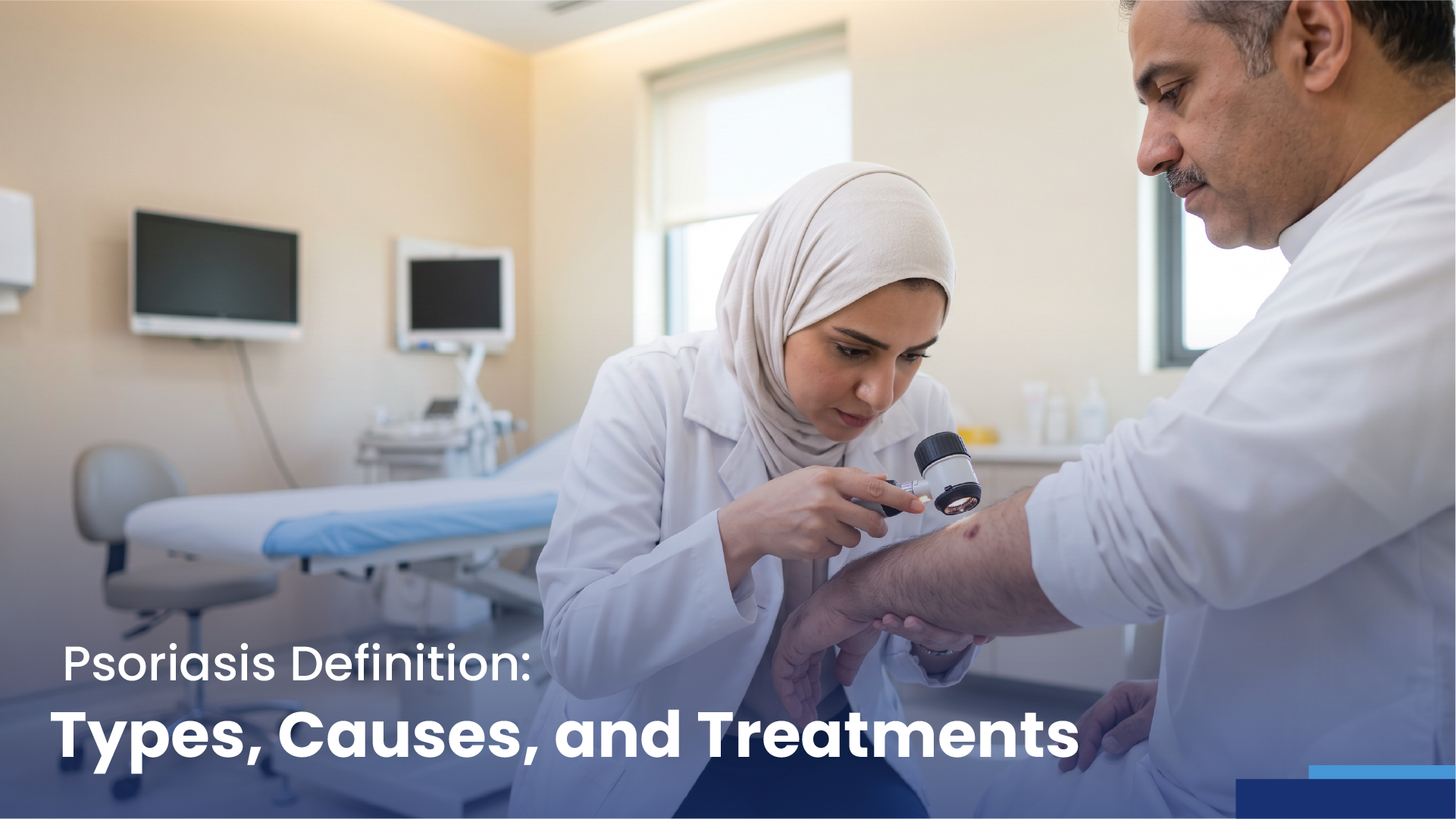
Psoriasis is a chronic autoimmune skin condition in which the immune system mistakenly triggers an accelerated skin cell turnover cycle. Normal skin cells complete their lifecycle and shed over 28 to 30 days. In psoriasis, this cycle is compressed to as little as three to seven days, resulting in a rapid buildup of skin cells on the surface that cannot shed fast enough. The cells accumulate as thick, scaly plaques that are the hallmark of the most common form of the disease.
Psoriasis is not contagious. It is not caused by poor hygiene. It is a genetic and immunological condition that affects approximately 2 to 3 percent of the global population and can appear at any age, though it most commonly presents in early adulthood or after age 50. At Blue Clinic‘s dermatology department, psoriasis management is offered as part of a comprehensive dermatology service covering diagnosis, treatment, and long-term monitoring.
The Immunological Mechanism
Understanding psoriasis requires understanding what goes wrong in the immune system. In healthy skin, T lymphocytes (a type of white blood cell) travel to the skin in response to infection or injury. In psoriasis, T cells are mistakenly activated and attack healthy skin cells as if they were pathogens. This activates a cascade of inflammatory signals — primarily involving cytokines such as TNF-alpha, IL-17, and IL-23 — that drives keratinocytes (skin cells) to divide and migrate to the surface at an abnormally high rate.
This immune dysregulation is why psoriasis is classified as an autoimmune disease and why the most effective modern treatments target specific steps in this inflammatory pathway rather than simply treating the skin surface. The genetic component is strong: according to data from the National Psoriasis Foundation, a person with one affected parent has a 10% chance of developing psoriasis; this rises to 50% if both parents are affected.
Types of Psoriasis
1. Plaque Psoriasis (Psoriasis Vulgaris)
Plaque psoriasis accounts for approximately 80 to 90 percent of all psoriasis cases and is the form most people picture when they think of the condition. It presents as well-defined, raised, red or violet patches covered by silvery-white scales. The plaques are most commonly found on the elbows, knees, lower back, and scalp, but can appear anywhere on the body.
The plaques form because the accelerated keratinocyte turnover produces cells that have not fully matured — they arrive at the surface still containing their nucleus, whereas normal shed skin cells do not. The silvery scale is this accumulation of immature, incompletely shed cells. Plaque psoriasis is chronic, meaning it persists indefinitely with periods of flare and remission.
2. Guttate Psoriasis
Guttate psoriasis is the second most common type and is characterised by numerous small (less than 1cm), drop-shaped red lesions scattered across the trunk, arms, and legs. It is particularly associated with a preceding streptococcal throat infection (strep throat) and tends to occur most frequently in children and young adults.
Guttate psoriasis may resolve spontaneously after several weeks or months, especially if the triggering infection is treated. However, in some patients it evolves into plaque psoriasis over time. Treating the streptococcal infection with antibiotics may help resolve an acute episode.
3. Inverse Psoriasis
Inverse psoriasis (also called intertriginous or flexural psoriasis) affects the skin fold areas — the armpits, groin, under the breasts, between the buttocks, and around the genitals. Because these areas are subject to friction and moisture, the lesions appear as smooth, shiny, red patches rather than the silvery-scaled plaques seen in plaque psoriasis.
Inverse psoriasis is easily confused with fungal infections or contact dermatitis. Friction and sweat aggravate it significantly, making management particularly challenging. Treatment requires careful selection to avoid irritants in sensitive areas.
4. Pustular Psoriasis
Pustular psoriasis presents as white pustules (blisters filled with non-infectious pus) surrounded by inflamed skin. It can be localised — most commonly to the palms of the hands and soles of the feet (palmoplantar pustulosis) — or generalised, affecting large areas of the body.
Generalised pustular psoriasis (von Zumbusch type) is a medical emergency. It develops rapidly and can cover the entire body with pustules accompanied by fever, chills, and systemic illness. It requires urgent hospital management. Localised forms are less severe but can be significantly debilitating, interfering with walking and manual tasks.
5. Erythrodermic Psoriasis
Erythrodermic psoriasis is the rarest and most severe form, characterised by widespread redness, scaling, and shedding covering 90% or more of the body surface area. It can develop from a sudden flare of plaque psoriasis or arise independently. The skin loses its ability to regulate temperature and fluid balance, creating life-threatening risks including hypothermia, dehydration, and secondary infection.
Erythrodermic psoriasis is a dermatological emergency requiring immediate hospitalisation. Triggers include abrupt withdrawal of systemic corticosteroids, severe sunburn, certain medications, and severe infection.
Psoriatic Arthritis
Up to 30 percent of people with psoriasis develop psoriatic arthritis — an inflammatory arthritis affecting the joints. It can cause pain, stiffness, and swelling in any joint but commonly affects the fingers, toes, wrists, and lower back. Nail changes (pitting, thickening, or separation from the nail bed) are common in patients with psoriatic arthritis.
Psoriatic arthritis can cause permanent joint damage if untreated. Early diagnosis and treatment is important for preserving joint function. The dermatology team at Blue Clinic refers patients with joint symptoms for rheumatological assessment when psoriatic arthritis is suspected.
Causes and Triggers
Psoriasis has a multifactorial cause. Genetic predisposition provides the baseline susceptibility, but environmental triggers are typically required to activate and sustain the disease process. Common triggers include:
- Infections: particularly streptococcal throat infections (which can trigger or worsen guttate psoriasis) and certain viral illnesses.
- Stress: psychological stress is consistently identified as a major trigger for flares in existing psoriasis and is thought to influence disease onset.
- Skin injury (Koebner phenomenon): psoriasis can appear at sites of skin trauma including cuts, burns, insect bites, and tattoos.
- Certain medications: lithium, beta-blockers, antimalarials (chloroquine, hydroxychloroquine), and systemic corticosteroid withdrawal are the most commonly implicated.
- Alcohol and smoking: both are associated with increased psoriasis severity and reduced treatment response.
- Obesity: excess weight is associated with more severe psoriasis and a poorer response to systemic treatments.
Impact on Quality of Life
Psoriasis is not merely a skin condition. Its impact on quality of life is comparable to that of other major chronic conditions including type 2 diabetes and coronary artery disease, according to studies published in the British Journal of Dermatology. Visible plaques on exposed areas of the body cause significant psychological distress, social withdrawal, and occupational difficulties. The itch associated with psoriasis — which can be severe — further disrupts sleep and daily function.
Depression and anxiety are significantly more prevalent in patients with psoriasis than in the general population. A holistic approach to management acknowledges this and includes support for the psychological burden of the condition alongside skin treatment.
Treatment Approaches
Topical Treatments
Topical therapies are the first-line treatment for mild to moderate psoriasis. They are applied directly to the affected skin and include:
- Corticosteroids: the most widely used topical agents. Reduce inflammation and slow keratinocyte proliferation. Potency is selected based on the body site and severity. Long-term continuous use carries risks of skin thinning.
- Vitamin D analogues (calcipotriol): slow keratinocyte growth and have a complementary mechanism to corticosteroids. Often combined with a corticosteroid in a single formulation.
- Coal tar preparations: have been used for over a century. Anti-inflammatory and anti-proliferative but have a distinctive smell and staining properties that limit acceptability.
- Calcineurin inhibitors (tacrolimus, pimecrolimus): useful for sensitive areas including the face and flexures where potent corticosteroids are inappropriate.
- Retinoids (tazarotene): reduce abnormal cell proliferation, often combined with a corticosteroid.
Phototherapy
Phototherapy uses controlled doses of ultraviolet light to slow skin cell turnover and reduce inflammation. It is a well-established second-line treatment for moderate psoriasis affecting more body surface area than topical treatment can practically cover.
- Narrowband UVB (NB-UVB): the most commonly used phototherapy modality. Typically administered three times weekly for 12-16 weeks. Requires attendance at a dermatology centre.
- PUVA (psoralen plus UVA): psoralen is taken orally or applied topically before UVA exposure, sensitising the skin to light. More effective than UVB alone for some resistant cases but with higher long-term cancer risk with extensive use.
Systemic Treatments
Oral or injected systemic treatments are used when psoriasis is moderate to severe, covers a large body surface area, or involves psoriatic arthritis.
- Methotrexate: a folate antagonist that reduces the rate of skin cell division. Used for decades as a first-line systemic option. Requires regular blood monitoring for liver and bone marrow effects.
- Cyclosporine: an immunosuppressant that rapidly improves severe psoriasis. Used as a short-term intervention rather than long-term treatment due to kidney and blood pressure effects.
- Acitretin: an oral retinoid particularly effective for pustular and erythrodermic psoriasis. Teratogenic — women of childbearing potential require strict contraception during use and for two years after stopping.
Biologics
Biologics are the most significant development in psoriasis treatment in decades. These targeted therapies are injected or infused and work by blocking specific molecules in the inflammatory cascade that drives psoriasis. They produce dramatic improvement or complete clearance in patients with moderate to severe disease who have not responded adequately to conventional systemic treatment.
- TNF-alpha inhibitors (adalimumab, etanercept, infliximab): block TNF-alpha, a key inflammatory cytokine.
- IL-17 inhibitors (secukinumab, ixekizumab, bimekizumab): target the IL-17 pathway, which is particularly active in psoriasis. Produce very high clearance rates.
- IL-23 inhibitors (guselkumab, risankizumab, tildrakizumab): target the IL-23 cytokine upstream, producing sustained, long-lasting responses with less frequent dosing.
Biologic selection is made by a dermatologist based on disease severity, comorbidities, previous treatment response, and patient preferences. The dermatology team at Blue Clinic manages both topical and systemic psoriasis treatment and provides referral pathways for biologic therapy where appropriate.
Frequently Asked Questions
Is psoriasis contagious?
No. Psoriasis cannot be passed from person to person through touching, sharing clothing, or any other form of contact. It is an autoimmune condition driven by internal immune system dysfunction, not an external infection.
Does diet affect psoriasis?
There is emerging evidence that dietary factors influence psoriasis severity in some patients. Obesity worsens psoriasis and reducing weight improves treatment response. An anti-inflammatory diet (Mediterranean pattern) is associated with reduced psoriasis severity in some studies. Alcohol worsens psoriasis reliably. Gluten avoidance may benefit the small subset of patients with coexisting coeliac disease. However, diet is a supportive measure, not a replacement for medical treatment.
Will psoriasis ever go away permanently?
Psoriasis is a chronic condition — it does not have a cure. However, many patients experience prolonged periods of remission during which symptoms are minimal or absent. Modern biologic treatments can produce complete or near-complete skin clearance that lasts for years in many patients. The goal of treatment is sustained remission and preservation of quality of life.
Can children get psoriasis?
Yes. Psoriasis can present at any age, including infancy and childhood. Approximately one-third of adult psoriasis patients report that their condition began before age 20. Guttate psoriasis is particularly common in children, often triggered by a streptococcal infection.
Can psoriasis affect the nails?
Yes. Nail psoriasis affects approximately 50% of people with psoriasis and up to 80% of those with psoriatic arthritis. It presents as pitting (small depressions), thickening, discolouration, or separation of the nail from the nail bed (onycholysis). Nail psoriasis can be difficult to treat topically and may respond better to systemic treatments.
Managing Psoriasis at Blue Clinic
Psoriasis management is most effective when it is consistent, tailored, and reviewed regularly. The right treatment is not the same for every patient — it depends on the type and extent of psoriasis, the presence of psoriatic arthritis, other health conditions, lifestyle factors, and treatment response.
- Visit the Blue Clinic dermatology department for a comprehensive psoriasis assessment including type classification and severity grading.
- Book a consultation through WhatsApp to discuss your symptoms, treatment history, and goals with a qualified dermatologist.
The Blue Clinic team provides evidence-based psoriasis care from first diagnosis through to systemic treatment where required.