







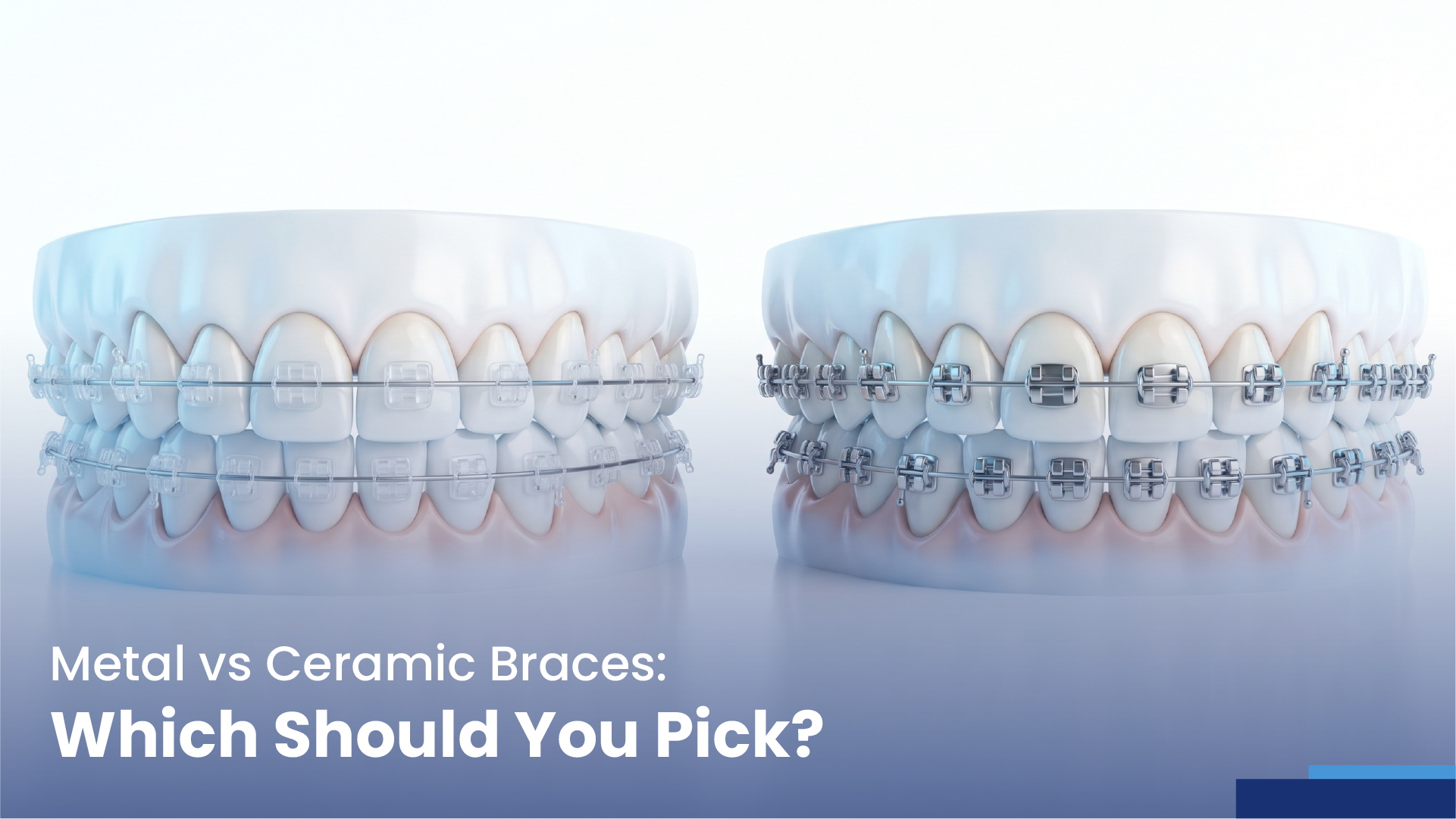
Metal vs ceramic braces is one of the first decisions patients face when starting orthodontic treatment. Most people immediately think about appearance, but the differences between the two go further than that. From durability and cost to maintenance habits and lifestyle fit, both options carry real trade-offs worth understanding before you commit.
In this article, we will cover how each type works, a detailed comparison across the factors that matter most, who each option is best suited for, what to expect during treatment, and when clear aligners might be worth considering instead.
How Do Metal and Ceramic Braces Both Work?
Both types rely on the same orthodontic principle. Brackets are bonded directly onto the front surface of each tooth, and a wire passes through all the brackets. Over time, the wire applies steady controlled pressure that gradually moves teeth into alignment. Periodic tightening appointments keep the pressure active throughout the treatment period. You can explore the full range of dental braces in Kuwait to understand what current options are available at Blue Clinic.
The key difference is the bracket material. Metal braces use stainless steel brackets, which are strong, predictable, and clinically proven over decades. Ceramic braces use a tooth-colored or translucent ceramic compound designed to blend with the natural shade of the teeth. The mechanics behind both are essentially the same, which means treatment results are comparable when the case is appropriate for either type.
Metal vs Ceramic Braces: A Direct Comparison
Appearance
Ceramic braces have a clear visual advantage for patients who want a discreet option. The tooth-colored brackets blend in naturally and are far less noticeable than the silver glint of metal. Some orthodontists also pair ceramic brackets with tooth-colored wires to reduce visibility even further. For adults in professional or social environments, this difference matters. Our orthodontic department can advise you on which option best suits your specific case and aesthetic priorities.
Metal braces are visibly prominent, and there is no way around that. However, many patients, particularly younger ones, are unbothered by this or even choose colored elastics to personalize the look. Appearance is personal, and the right choice depends on how much visibility matters to you during the treatment period.
Durability and Strength
Metal brackets are significantly more durable than ceramic. Stainless steel resists chipping, cracking, and breaking under normal daily use. This makes metal braces a stronger choice for younger patients, active individuals, or anyone whose lifestyle increases the risk of impact to the teeth. At Blue Clinic, our orthodontists assess each patient’s case carefully before recommending a bracket type.
Ceramic brackets are more fragile by comparison. They can chip or crack under force, and damaged brackets need to be replaced, which can add both cost and time to the treatment. According to research on orthodontic bracket materials, ceramic brackets have higher fracture rates under certain conditions compared to metal ones. Patients considering ceramic braces should be prepared to follow dietary and lifestyle guidelines carefully.
Comfort
The pressure applied to teeth is similar for both options since the wire mechanics are the same. However, the surface texture of ceramic brackets is slightly rougher than metal, which can cause more irritation to the inner cheeks and lips, particularly in the early weeks of treatment. Most patients adjust to this discomfort within a few weeks as the mouth gets used to the appliance. You can book a consultation to get personalised guidance from our team.
Staining and Maintenance
Staining is one of the most practical concerns with ceramic braces. The ceramic brackets themselves are stain-resistant, but the elastic ligatures holding the wire in place are white or clear and absorb color quickly. Coffee, tea, turmeric, red wine, tomato sauce, and other strongly pigmented substances can discolor the ligatures within days. These ligatures are replaced at each tightening appointment, so the staining is not permanent, but it can be noticeable between visits.
Metal braces do not carry this concern. The silver-colored elastics do not absorb pigment, making maintenance simpler for patients who do not want to restrict their diet beyond the standard guidelines. Dental hygiene during orthodontic treatment remains important for both types, and proper brushing technique around brackets is essential regardless of which material you choose.
Cost
Ceramic braces typically cost more than metal braces. The material is more expensive to produce, and some clinics charge higher fees to account for the added complexity of working with ceramic brackets. The price difference varies depending on the clinic, the case complexity, and the market. For a detailed breakdown of what affects orthodontic pricing, our blog on types of braces and cost covers the full picture.
If budget is a priority consideration, metal braces remain the more affordable fixed brace option. For patients who want aesthetics without the budget of clear aligners, ceramic braces sit in a middle ground that many find worthwhile.
Treatment Duration
Treatment time is effectively the same for both options when cases are comparable. The length of your treatment depends on the severity of misalignment, the health of your teeth and gums, and how consistently you attend tightening appointments. The bracket material does not meaningfully affect how quickly teeth move. What can extend treatment time with ceramic braces is bracket damage that needs repair, which disrupts the steady progress.
Who Should Choose Metal Braces?
Metal braces are well-suited for patients who prioritize reliability, cost-effectiveness, and low-maintenance treatment. They are the standard recommendation for children and early teenagers who may not yet be responsible enough for the care requirements of ceramic braces. They are also the better choice for patients with complex alignment cases, those with active lifestyles or contact sports involvement, and individuals who prefer not to worry about staining or bracket fragility. You can learn more about orthodontic options at our dental clinic in Kuwait.
Who Should Choose Ceramic Braces?
Ceramic braces are most commonly chosen by adults, working professionals, and older teenagers who want a less noticeable treatment option. They suit patients who are motivated to follow care instructions closely, who avoid heavily pigmented foods and drinks, and who have a lifestyle that reduces the risk of bracket damage. The aesthetic benefit is real and meaningful for many patients during what can be a treatment period of one to three years.
It is worth noting that ceramic braces are still fixed appliances. They are bonded to the teeth for the full duration of treatment and require the same level of commitment as metal braces. Patients who want something removable should consider clear aligners as an alternative.
What About Clear Aligners?
Clear aligners like Invisalign offer a third path for patients who want maximum discretion and a removable appliance. They are suitable for mild to moderate alignment cases and are particularly popular with adults who cannot commit to the dietary restrictions of fixed braces. The aligners are changed every one to two weeks, and treatment is managed through a series of custom-fitted trays rather than brackets and wires.
The key requirement with clear aligners is compliance. They must be worn for 20 to 22 hours per day to work as intended. Patients who remove them frequently for convenience will find their treatment progress stalls. For complex cases involving significant crowding, spacing, or bite correction, fixed braces may still be the more appropriate recommendation from your orthodontist.
Retainers After Treatment
Whether you choose metal braces, ceramic braces, or clear aligners, your treatment does not end when the appliance is removed. Retainers are essential to hold teeth in their corrected positions while the surrounding bone adapts and stabilises. Without consistent retainer use, teeth naturally drift back toward their original positions over time. Your orthodontist will prescribe a retainer schedule appropriate for your case.
Frequently Asked Questions
Do ceramic braces take longer than metal braces?
No. Treatment duration depends on the complexity of your alignment case, not the bracket material. Both options move teeth through the same mechanical process at the same rate. What can extend treatment with ceramic braces is bracket damage requiring repair, which interrupts steady progress.
Can ceramic braces stain permanently?
The ceramic brackets themselves are resistant to staining. However, the elastic ligatures that hold the wire in place can discolor with exposure to pigmented foods and drinks. Since ligatures are replaced at each tightening visit, the discoloration is temporary. Avoiding strong pigments between appointments helps keep them looking their best.
Are ceramic braces suitable for all cases?
Ceramic braces work well for most standard alignment cases. However, for severe misalignment, significant bite correction, or cases requiring strong biomechanical control, metal braces are often the more reliable recommendation. Your orthodontist will assess your specific case and advise accordingly.
What happens if a ceramic bracket breaks?
A broken bracket needs to be replaced as soon as possible to keep treatment moving correctly. Ceramic brackets are more susceptible to chipping than metal ones. If you notice a broken or loose bracket, contact your orthodontist promptly. Delays in repair can extend your overall treatment time.
Is the discomfort the same with both types?
The pressure applied to teeth is comparable for both, but ceramic brackets have a slightly rougher texture that can cause more cheek and lip irritation early in treatment. Most patients adapt within the first few weeks. Over-the-counter orthodontic wax can help protect soft tissue during the adjustment period.
Making the Right Choice for Your Treatment
The decision between metal and ceramic braces is ultimately a balance between aesthetics, budget, and lifestyle. Neither option is universally superior. Metal braces offer proven reliability, lower cost, and simpler maintenance. Ceramic braces offer greater discretion during a treatment period that can last one to three years. For patients who want a removable option, clear aligners present a third path worth discussing with an orthodontist.
Before making a decision, consider the following practical steps:
- Schedule a consultation to have your case assessed and discuss which options are clinically suitable for your alignment needs.
- Ask your orthodontist specifically about treatment duration, cost, and maintenance expectations for each option in your case.
- Consider your daily habits, diet, and social environment during treatment honestly when weighing the ceramic versus metal question.
- Discuss retainer options as part of your treatment planning, not only at the end.
- Contact Blue Clinic to book your orthodontic consultation and get personalised guidance from a specialist.
Our orthodontic team at Blue Clinic is available to walk you through all available options, assess your specific case, and help you choose the approach that fits your needs and lifestyle. Reach out to arrange a visit.