







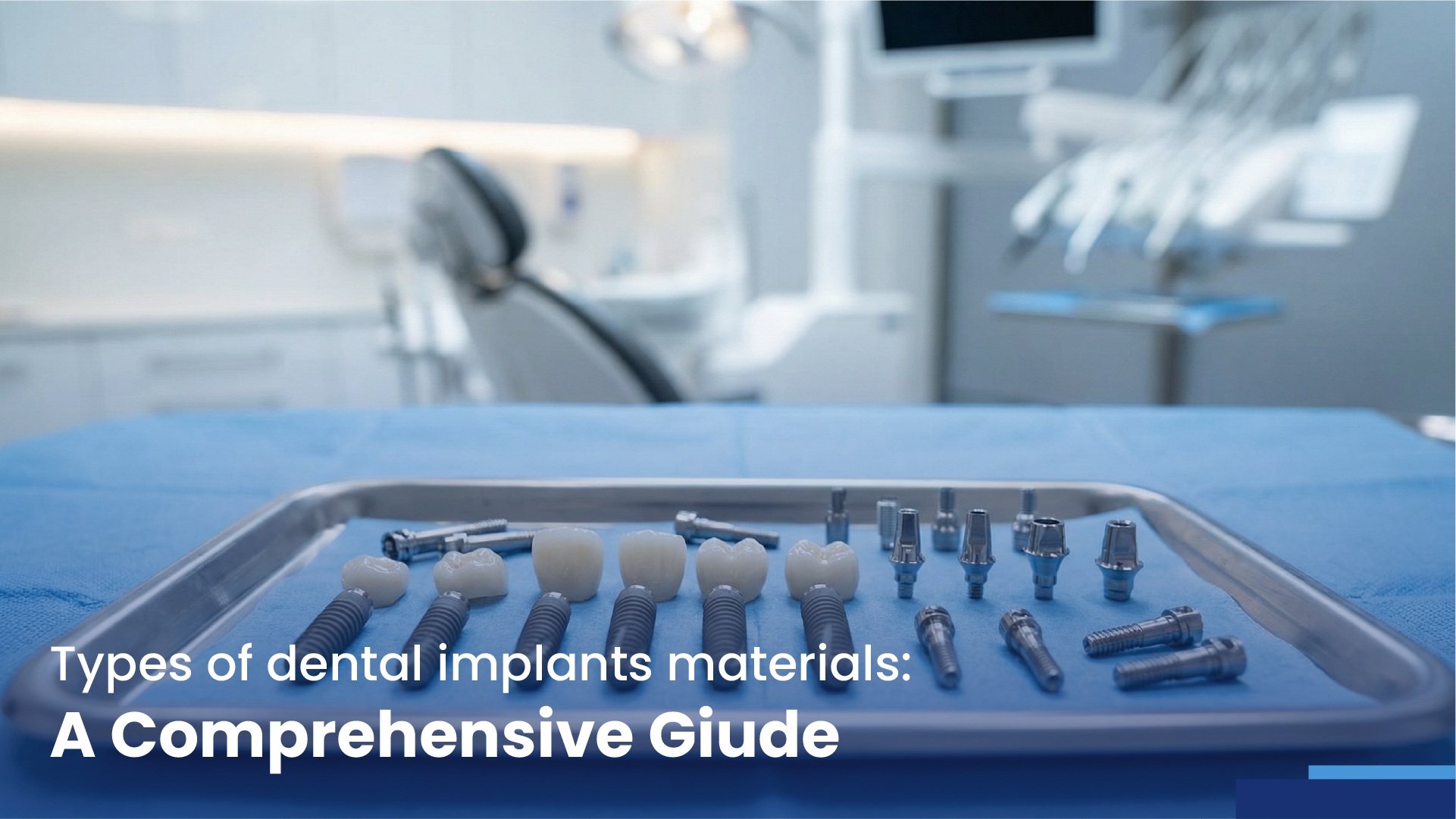
Dental implants have transformed the way missing teeth are replaced, offering a long-term solution that looks, feels, and functions like natural teeth. One of the most important — yet often overlooked, aspects of implant treatment is the material used to make the dental implant. The choice of material affects strength, durability, biocompatibility, and even long-term comfort.
If you are considering dental implants in Kuwait, understanding the different types of dental implants materials can help you have a more informed discussion with your dentist. This guide explains the most commonly used materials, their advantages and limitations, and how the right material is selected for each patient.
What are dental implants materials?
A dental implant is a small post placed into the jawbone to replace the root of a missing tooth. Over time, the bone bonds with the implant in a process called osseointegration. This creates a strong foundation for a crown, bridge, or denture.
Modern dental implant materials are carefully chosen to be:
- Strong enough to withstand chewing forces
- Biocompatible (accepted by the body without causing harmful reactions)
- Resistant to corrosion in the moist oral environment
- Long-lasting under daily use
The two main categories of dental implant materials used worldwide — including in advanced dental centers in Kuwait — are:
- Titanium dental implants
- Zirconia dental implants
Each material offers distinct advantages tailored to specific clinical needs and aesthetic goals. For an in-depth scientific overview of these biomaterials, you can refer to a critical review published by researchers in implant technology.
Types of Dental implants materials:
- Titanium
Titanium implants are the most widely used and researched type of dental implant material. They have been used successfully in dentistry for several decades.
Why titanium is commonly used
Titanium is known for its exceptional strength, durability, and compatibility with the human body. It is widely used not only in dentistry but also in orthopedic surgeries such as hip and knee replacements.
Key benefits of titanium dental implants include:
- Excellent osseointegration (strong bonding with bone)
- High mechanical strength
- Long clinical track record
- Suitable for single and multiple tooth replacement
Because of these properties, titanium implants in Kuwait clinics are often recommended for patients who need a reliable and well-established solution.
Types of titanium used in implants
There are two main forms of titanium used in dental implants:
- Commercially pure titanium This type contains minimal alloying elements. It is highly biocompatible and widely used for implant fixtures. It comes in different grades depending on strength.
- Titanium alloys (usually titanium–aluminum–vanadium) These alloys are slightly stronger than pure titanium and are sometimes used in situations where additional strength is needed, such as in patients with heavy biting forces.
Surface treatments of titanium implants
Modern titanium dental implants often undergo special surface treatments to enhance bone integration. These may include:
- Sandblasting
- Acid etching
- Plasma spraying
These surface modifications increase roughness at a microscopic level, helping the bone attach more securely to the implant.
Are titanium implants safe?
Titanium has an excellent safety profile and is considered highly biocompatible. Allergic reactions are extremely rare. For most patients seeking tooth implants in Kuwait, titanium remains the gold standard due to its reliability and long-term success rates.
- Zirconia
Zirconia implants, also known as ceramic implants, are a newer alternative to titanium. They are made from zirconium dioxide, a strong ceramic material.
Why some patients prefer zirconia
Zirconia is white in color, which can be beneficial in certain cosmetic situations. It also contains no metal, which appeals to patients who prefer metal-free dental solutions.
Benefits of zirconia dental implants include:
- Tooth-colored material for improved aesthetics
- Excellent biocompatibility
- Low plaque accumulation
- Corrosion resistance
Because of their natural color, ceramic dental implants in Kuwait may be considered for patients with thin or delicate gum tissue where metal shine-through could be a concern.
To understand the science behind this material, an academic review of zirconia in dental implantology discusses the sophisticated biological and mechanical features of these ceramic implants.
One-piece vs two-piece zirconia implants
Zirconia implants are often available in:
- One-piece designs: Implant and abutment are a single unit
- Two-piece designs: Separate implant body and abutment (similar to titanium systems)
Two-piece zirconia systems offer more flexibility in positioning and prosthetic design, but they are still less common than titanium systems.
Limitations of zirconia implants
Although promising, zirconia dental implants have a shorter clinical history compared to titanium. Some limitations may include:
- Slightly lower fracture resistance in certain designs
- Less flexibility in complex restorative cases
- Fewer long-term studies compared to titanium
For these reasons, dentists in Kuwait carefully evaluate whether zirconia is suitable based on the patient’s bite forces, bone quality, and aesthetic needs.
Before making a final decision, it is highly recommended to explore the clinical effectiveness and long-term outcomes of zirconia vs titanium dental implants to ensure your investment lasts a lifetime.
Titanium vs Zirconia Dental Implant Materials
To better understand the differences between the two main types of dental implant materials, the table below provides a side-by-side comparison:
| Feature | Titanium Dental Implants | Zirconia Dental Implants |
| Material Type | Metal | Ceramic (Zirconium Dioxide) |
| Color | Metallic gray | Tooth-colored (white) |
| Clinical History | 40+ years of documented use | Shorter clinical history |
| Osseointegration | Excellent and well-documented | Very good, but fewer long-term studies |
| Strength & Fracture Resistance | Very high mechanical strength | Strong but may be more brittle in certain designs |
| Aesthetic Advantage | May show gray shadow under thin gums | Superior aesthetics in thin gum areas |
| Biocompatibility | Highly biocompatible | Highly biocompatible |
| Corrosion Resistance | Excellent | Excellent |
| Flexibility in Complex Cases | Highly adaptable | Slightly more limited |
| Availability Worldwide | Widely available | Increasing availability |
How do dentists choose the right dental implant material?
Selecting the best dental implant material is not a one-size-fits-all decision. A dentist considers several factors before recommending titanium or zirconia.
- Bone quality and quantity
Strong bone integration is essential for implant success. Titanium implants have a long record of predictable integration even in challenging bone conditions. In cases of limited bone volume, titanium may be preferred.
- Aesthetic zone considerations
When implants are placed in the front teeth area, aesthetics become especially important. If gum tissue is thin, zirconia implants may help reduce the risk of a grayish shadow under the gums.
- Bite force and chewing habits
Patients with heavy biting forces, teeth grinding, or clenching may benefit from the strength and flexibility of titanium systems. Material strength plays a key role in long-term durability.
- Medical and personal preferences
Some patients request metal-free dental implants due to personal or holistic health preferences. In such cases, zirconia may be discussed as an alternative, provided it is clinically suitable.
To help you visualize the differences, you can read this side-by-side comparison of titanium vs zirconia dental implant materials.
Symptoms you should not ignore after dental implant placement
Regardless of the dental implant material, healing should be monitored carefully. While mild discomfort and swelling are normal after surgery, certain signs require prompt dental evaluation:
- Persistent or increasing pain
- Swelling that worsens after a few days
- Pus or unusual discharge
- Implant mobility
- Fever or general illness
If you experience any of these symptoms after getting dental implants in Kuwait, you should contact your dentist promptly.
When should you see a dentist about dental implants?
You should consult a dentist or oral implant specialist if you:
- Have one or more missing teeth
- Struggle with loose dentures
- Want a fixed, long-lasting tooth replacement
- Have difficulty chewing due to tooth loss
- Notice changes around an existing implant
Early assessment allows proper planning and increases the chances of long-term implant success.
How are dental implants diagnosed and planned?
Before choosing between titanium vs zirconia dental implants, a detailed evaluation is performed.
Clinical examination
The dentist checks gum health, bite alignment, and available space for the implant.
Imaging
Advanced imaging such as digital X-rays or 3D scans (CBCT) helps assess bone height, width, and density. This is essential for safe and accurate implant placement.
Treatment planning
Based on these findings, the dentist discusses:
- Number of implants needed
- Ideal implant material
- Need for bone grafting (if required)
- Timeline of treatment
This comprehensive approach is common in well-equipped dental centers in Kuwait.
Treatment options available in Kuwait
Dental clinics offering dental implant treatment in Kuwait typically provide:
- Single tooth implants
- Implant-supported bridges
- Full-arch implant restorations
- Bone grafting procedures
- Sinus lift surgeries (when needed)
Both titanium dental implants and zirconia implants may be available, depending on the clinic’s systems and the patient’s needs.
Possible complications if left untreated
Choosing not to replace missing teeth can lead to:
- Bone loss in the jaw
- Shifting of neighboring teeth
- Bite imbalance
- Difficulty chewing
- Changes in facial appearance
Timely consultation about tooth replacement options in Kuwait can help prevent these long-term issues.
Ready to Explore Your Dental Implant Options in Kuwait?
Choosing between titanium and zirconia dental implants requires professional evaluation. Every patient’s bone structure, bite force, gum condition, and aesthetic goals are different.
If you are considering dental implants in Kuwait, scheduling a consultation with a qualified implant specialist allows you to receive a personalized assessment, detailed imaging, and a clear treatment plan tailored to your needs.
Early evaluation supports better planning, safer placement, and long-term stability. A professional dental consultation is the first step toward restoring function, comfort, and confidence in your smile.
FِAQs
- What causes dental implants to fail?
Implant failure may be related to poor oral hygiene, smoking, uncontrolled medical conditions, or inadequate bone integration. Material choice is important, but overall health and aftercare also play major roles.
- Which is better: titanium or zirconia dental implants?
There is no universal “best” material. Titanium dental implants have the longest track record and are suitable for most cases. Zirconia implants may be preferred in certain aesthetic or metal-free situations. A dentist evaluates which is most appropriate.
- Are zirconia implants safer than titanium?
Both materials are considered highly biocompatible. For most patients, titanium is extremely well tolerated. Zirconia is also safe and may be an option for patients seeking ceramic alternatives.
- How long do dental implants last?
With proper care and regular dental follow-ups, dental implants — whether titanium or zirconia — can last many years. Longevity depends on oral hygiene, lifestyle habits, and overall health.