







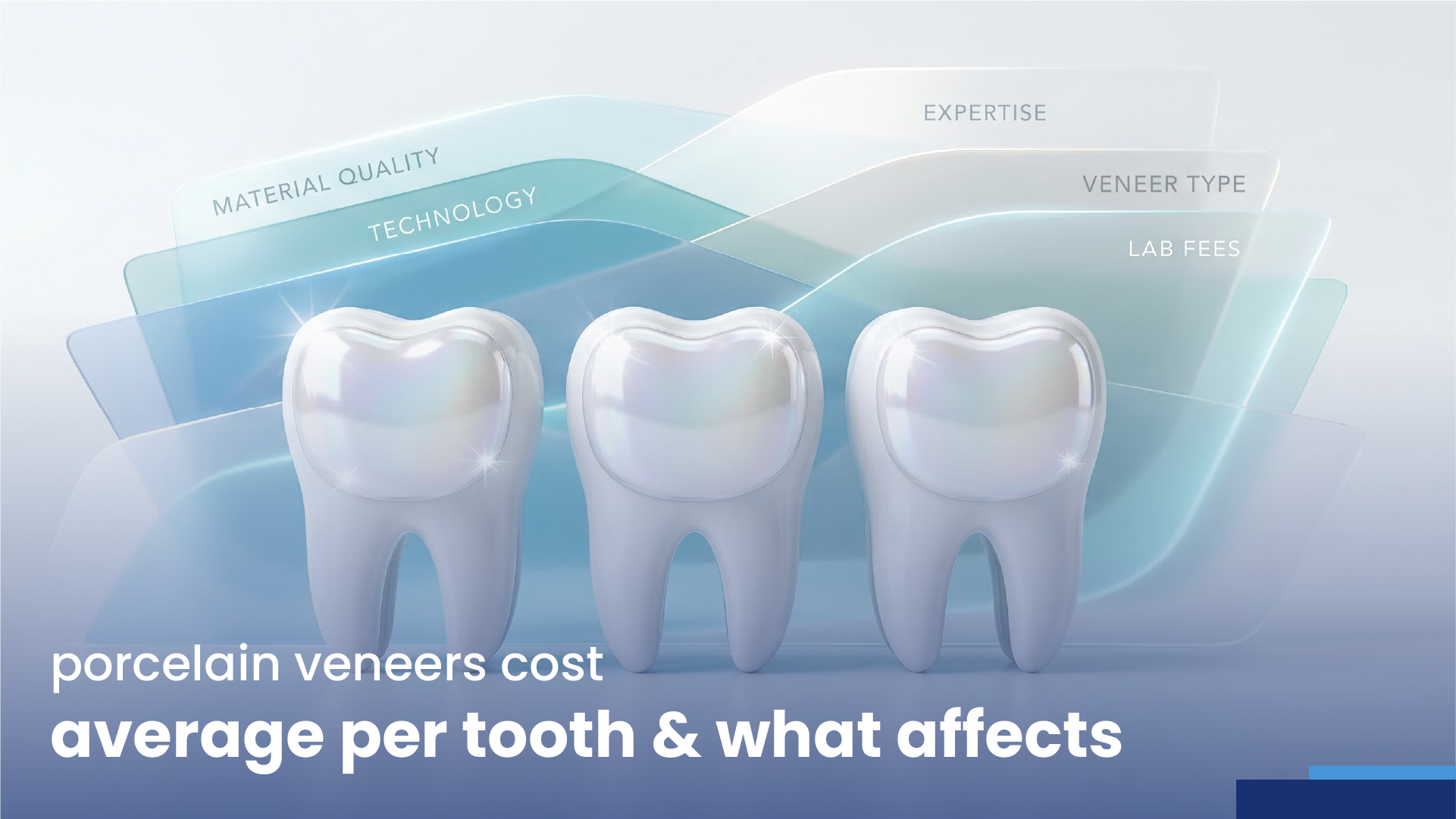
When people search for porcelain veneers cost, they are usually trying to answer two different questions at once. The first is practical: how much does veneer treatment usually cost per tooth? The second is clinical: why can one quote be much higher than another, even when both are described as porcelain veneers? According to the American Academy of Cosmetic Dentistry, the expertise of the dentist and the quality of the materials used play a significant role in these price variations.
That difference matters. Veneers are not a one-size-fits-all cosmetic product. They are custom-made dental restorations bonded to the front surfaces of teeth, and the final fee often reflects far more than the veneer itself. It may include clinical examination, digital scans or impressions, smile design, laboratory fabrication, temporary restorations, and any dental treatment that needs to happen before veneer placement. For patients comparing options at a medical center in Kuwait or a private dental clinic, the most useful way to think about price is not simply “cheap versus expensive.” A better question is: what exactly is included in the treatment plan, and is the tooth healthy enough to receive a veneer safely? Professional assessment is important because veneers are usually irreversible once enamel is removed, and untreated decay, gum disease, or bite problems can change both the clinical outcome and the final cost.
What are porcelain veneers?
Porcelain veneers are thin, custom-made ceramic shells that cover the front surfaces of teeth to improve their appearance. Dentists commonly use them to address discoloration, small chips, worn edges, minor shape irregularities, and some gaps between teeth. They are among the most common cosmetic dentistry treatments, and they are designed to blend with the shape and color of natural teeth. Detailed patient education from the Cleveland Clinic emphasizes that these shells are highly resistant to stains compared to resin veneers.
Traditional porcelain veneers usually require removal of a small amount of enamel so the restoration can fit properly and look natural. That is why the treatment is typically considered irreversible. No-prep or minimal-prep options exist, but even these may still involve some enamel modification and are not appropriate for every patient. From a durability standpoint, veneers can last many years with proper care. Veneers often last around 10 to 15 years, while some sources describe broader ranges depending on material, bonding substrate, and case selection. Systematic reviews published by the National Institutes of Health have reported high long-term survival for well-planned porcelain veneers, especially when bonded primarily to enamel.
How much does porcelain veneers cost per tooth?
There is no single official price for porcelain veneers cost in Kuwait because private clinics and laboratories set their own fees, and the final quote depends on the treatment plan. In real-world practice, veneers are usually priced per tooth because each veneer is designed, fabricated, shaded, and bonded individually. Even when patients book a smile makeover, the calculation often still starts on a per-tooth basis.
As a broad international consumer benchmark, published estimates commonly place porcelain veneers in roughly the $900 to $2,500 per tooth range, with some cases falling outside that depending on material and complexity. Those figures are not a Kuwait-specific fee schedule, but they are useful for understanding why veneer treatment is generally considered a premium, custom restoration. According to data from Forbes Health, these costs reflect the advanced technology and specialized labor involved in cosmetic dentistry. In Kuwait, the actual quote may be lower or higher depending on the clinic, the dental laboratory, and whether your case needs preparatory treatment first.
The most important takeaway is that a “per-tooth” figure rarely tells the full story on its own. A lower quote may cover only the veneer shell itself, while a more complete quote may also include records, temporaries, occlusal adjustment, follow-up visits, or treatment of gum and tooth problems before the veneer is placed.
Common causes and risk factors that raise veneer treatment cost
Patients often assume the veneer material is the only thing affecting price. In practice, the biggest cost drivers usually come from case complexity and the amount of professional work required before, during, and after veneer placement.
1. Number of teeth being treated
The total fee rises as the number of veneers increases. That seems obvious, but it is clinically important too. Matching one tooth is different from redesigning several visible teeth in the smile zone, where symmetry, color blending, and bite harmony matter more. Because veneers are individually made, more teeth generally means more design time, more lab work, and more chair time.
2. Type of ceramic and laboratory work
The veneer itself is only part of the process. Indirect restorative materials vary in composition, processing methods, and clinical indications, and newer ceramic systems are designed to balance aesthetics with strength. After tooth preparation, the dentist takes an impression or digital scan and sends it to a dental lab or technician so the veneer can be custom fabricated. The American Dental Association (ADA) notes that laboratory artistry and material selection are critical components of the final restoration fee.
3. Diagnostic records and smile design
Many veneer cases involve more than a visual exam. Dentists may use photographs, diagnostic impressions or digital scans, bite assessment, and sometimes X-rays to confirm oral health and plan the case accurately. These records help determine whether veneers are appropriate and how the final result should be shaped and bonded.
4. Pre-treatment dental work
This is one of the most overlooked parts of porcelain veneers cost. If you have cavities, gum disease, inflammation, or an unstable bite, those issues should be treated first. Placing veneers over unhealthy teeth may worsen existing problems, and tooth preparation can carry risks, including the possibility that some teeth later need root canal treatment.
5. Bite problems, grinding, and clenching
Patients who clench or grind their teeth, or who have a deep overbite, may not be ideal veneer candidates without careful planning. In these situations, treatment may involve additional protective steps, bite adjustment, or reconsideration of whether veneers are the best choice at all. Organizations like the Oral Health Foundation warn that grinding (bruxism) can significantly shorten the lifespan of any dental restoration.
6. Temporary veneers and review visits
Some veneer workflows include temporary restorations between preparation and final bonding. These help protect the teeth and allow the dentist to review esthetics and function before the permanent veneers are cemented. A quote that includes temporaries and follow-up care may be more comprehensive than one that looks cheaper at first glance.
Symptoms and signs you should not ignore before getting veneers
Veneers are elective, but your teeth and gums still need to be healthy first. You should not ignore persistent gum bleeding, untreated decay, tooth sensitivity, pain when biting, loose old fillings, or signs of tooth wear from grinding. These problems may change the treatment plan or delay cosmetic work until the mouth is stable.
Severe discoloration is also worth evaluating properly. Some stains respond well to whitening, while others do not. Porcelain veneers may be considered for widespread discoloration that does not improve with whitening, but that does not mean every stained tooth automatically needs veneers. As noted by WebMD’s dental guide, a dentist should first determine the cause of the color change and whether a more conservative option would work.
When should you see a dentist before comparing veneer prices?
You should see a dentist before focusing only on price if you have decay, gum disease, repeated chipping, tooth wear, sensitivity, grinding, or old cosmetic work that is failing. These issues can change whether veneers are appropriate, how many teeth need treatment, and whether additional dentistry is required first.
You should also book a proper consultation if you are comparing veneers with bonding, teeth whitening, or dental crowns. Cosmetic goals often overlap, but the right treatment depends on tooth structure, enamel condition, and function. A professional exam is the safest way to avoid paying for a cosmetic plan that does not suit your long-term oral health. Mayo Clinic advises that regular dental exams are essential for maintaining the health of any cosmetic work.
How are porcelain veneers diagnosed and planned?
Planning veneers usually starts with a clinical exam and a discussion of your smile goals. If the dentist believes veneers may be appropriate, they may also take X-rays when indicated, because dental X-rays help detect conditions not visible in a routine exam, such as hidden decay or other structural concerns.
Next, the dentist typically takes an impression or a digital scan to create a model of your teeth. The impression or 3D model is then sent to a dental lab so the veneer can be custom made. This step is one reason veneer treatment takes planning and lab coordination rather than being completed like a simple same-day polish. Advanced CAD/CAM technology, as described by the Journal of Dentistry, is increasingly used to improve the precision of these digital models.
In some cases, the dentist may recommend treating gum inflammation, replacing old restorations, or managing bite forces before moving forward. That is not a complication. It is part of good treatment sequencing, and it often improves both the final esthetic result and the longevity of the restorations.
Treatment options and price-related choices available in Kuwait
At a Kuwait clinic, patients comparing veneer quotes are often also comparing treatment categories. That matters because porcelain veneers are not the only way to improve a smile.
Teeth whitening may be the better first step when the main concern is external staining or generalized discoloration without shape problems. Dental bonding may be more conservative for minor chips, small gaps, or small shape corrections because it often requires less enamel removal and is generally reversible, although it usually needs touch-ups sooner than porcelain veneers. Dental Crowns may be more appropriate when a tooth needs broader structural coverage rather than only front-surface cosmetic correction.
This is why two patients asking about porcelain veneers cost may receive very different recommendations. One may truly benefit from porcelain veneers. Another may achieve a healthy, more affordable result with whitening or bonding.
Possible complications and hidden costs if treatment is poorly planned
A price that looks attractive at first can become more expensive if the case is not properly planned. Veneers can chip, crack, wear down, loosen, or need replacement over time. A small percentage of teeth prepared for crowns, bridges, or veneers may later require root canal treatment.
There is also a patient safety issue in low-cost cosmetic shortcuts. In 2024, the American Dental Association warned the public about unlicensed “veneer technicians,” stressing that dental procedures that alter the structure of teeth without a dentist’s supervision can cause irreversible harm. This issue has been highlighted in reports by The Washington Post, which noted the rising health risks associated with unregulated cosmetic dentistry.
Are cheaper veneers always worth it?
Not always. A lower upfront fee may still become expensive if it excludes diagnosis, treats unhealthy teeth cosmetically, uses weak case selection, or leads to repair and replacement sooner than expected. Veneers are elective, but the planning around them is real dental care and should be supervised by a qualified dentist.
This does not mean the highest quote is automatically the best one either. It means patients should ask what is included: consultation, records, temporaries, lab work, bite review, follow-up care, and any preparatory treatment. A transparent quote is usually more useful than a headline price alone.
Frequently asked questions
- Is porcelain veneers cost usually quoted per tooth?
Yes. Veneer fees are commonly quoted per tooth because each veneer is individually designed, fabricated, and bonded. Even when a clinic plans several veneers together, the calculation usually starts on a per-tooth basis.
- Why do veneer prices vary so much between clinics?
Prices vary because the treatment plan may include different things, such as imaging, scans, mock-ups, temporary veneers, laboratory craftsmanship, and pre-treatment dental work. Material choice, case complexity, and the amount of professional time involved also affect the quote.
- Does the quote usually include lab work?
Often yes, but not always in the same way. Since porcelain veneers are indirect restorations made from impressions or digital scans and fabricated by a dental lab, laboratory work is a real part of the cost, but clinics may package it differently in their pricing.
- Are porcelain veneers covered by insurance?
Coverage varies by policy and country, but purely cosmetic veneers are often not covered in the same way as medically necessary dental treatment. International resources like MouthHealthy.org commonly note limited coverage for cosmetic work, so patients should confirm benefits directly with their insurer before treatment.
- How long do porcelain veneers usually last?
Many veneers last around 10 to 15 years with proper care, and some may last longer depending on case selection, bonding, and habits such as grinding. Long-term studies have shown strong survival rates for well-planned porcelain veneers, especially when bonded mainly to enamel.
- Can bonding be cheaper than porcelain veneers?
Yes, in many cases bonding is less expensive because it is a direct resin procedure and may involve less enamel removal. However, bonding usually needs maintenance or touch-ups sooner than porcelain veneers, so the best option depends on the tooth, the esthetic goal, and the expected lifespan of the result.
Your care journey at Blue Clinic
Understanding porcelain veneers cost is not only about comparing numbers. It is about understanding why proper diagnosis, healthy gums and teeth, and individualized planning matter before cosmetic treatment begins. Early evaluation helps identify decay, gum problems, bite stress, and enamel limitations that may affect both safety and final cost. In a multi-specialty setting, coordinated care can make treatment more predictable because the cosmetic plan is built on a healthier oral foundation and monitored by qualified dental professionals.
- Dental services
- Dermatology and aesthetic treatments
- Laser services
- General medical consultations
- Preventive healthcare services
Patients who are considering veneers or comparing cosmetic dentistry options in Kuwait should ideally have a professional assessment before making a final decision. Blue Clinic provides comprehensive care in a multi-specialty environment and maintains a clinical approach that prioritizes diagnosis, treatment planning, and safe long-term outcomes. For further information or to book an appointment, patients may contact the clinic directly and ask for a consultation tailored to their oral health needs.