






If you have been wondering what braces actually mean in dental and orthodontic terms, you are not alone. The word covers a wide range of appliances, and understanding your options makes it far easier to have a productive conversation with your dentist or orthodontist before committing to anything. In this article, we will cover the meaning of braces, how different types work, who is a good candidate for treatment, what the treatment timeline looks like, what to expect during and after the process, and how to choose the right type for your specific situation.
Braces Meaning?
Braces are orthodontic appliances designed to align teeth, correct bite problems, and improve the overall function and appearance of your smile. They work by applying steady, controlled pressure to the teeth over weeks and months, gradually guiding them into more favorable positions. At Blue Clinic, every orthodontic journey starts with a thorough assessment at our dental department to evaluate bite alignment, jaw structure, and the overall condition of the teeth before any treatment plan is discussed.
The term is used broadly and covers several very different appliances, from the metal brackets most people picture to near-invisible clear trays. What they share is a single goal: repositioning teeth and correcting jaw alignment through carefully managed, sustained force. This is a slow and deliberate process that follows the biology of how bone and tissue respond to pressure.
In clinical language, the problems braces address are often grouped under the term malocclusion, which refers to misaligned teeth or an improper bite relationship between the upper and lower jaw. This can include crowding, gaps, overbites, underbites, crossbites, and open bites. The specific type of problem influences which appliance is most appropriate for each individual case.
How Do Braces Work?
Braces work by applying gentle and continuous pressure to the teeth. This pressure causes the bone surrounding the teeth to gradually respond through a process called bone remodeling, where bone tissue dissolves on the side toward which a tooth is moving and new bone forms on the opposite side. This is what allows teeth to shift safely without becoming unstable in the jaw.
This biological response is why orthodontic treatment cannot be meaningfully rushed. The body needs time to remodel bone at a safe rate. Attempting to accelerate movement beyond that limit can damage tooth roots, gum tissue, and supporting bone structure. The entire process at our orthodontics department is managed with this in mind, ensuring that progress is consistent and clinically sound at every stage.
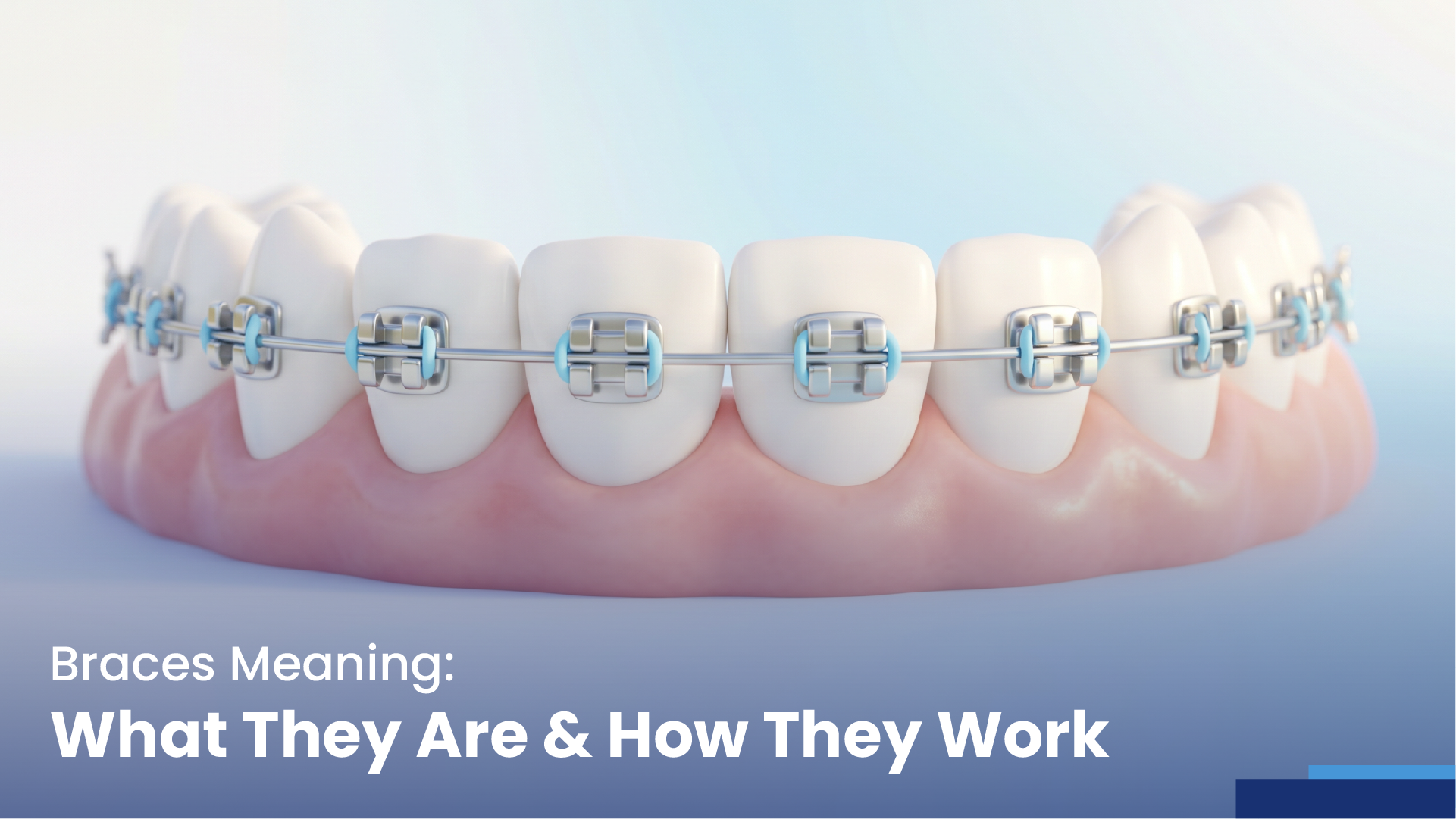
For fixed braces, brackets are bonded to the surface of each tooth. An archwire runs through the brackets and is secured with small elastic ties or self-ligating clips. The wire applies pressure, and as treatment progresses it is adjusted and replaced with progressively firmer wires to guide further movement. Patients attend adjustment appointments approximately every four to eight weeks throughout treatment.
For clear aligners, the process differs slightly. A series of custom plastic trays is manufactured to move the teeth in small increments. Each tray is worn for one to two weeks before being swapped for the next in the sequence. There are no wires or brackets, though small tooth-colored attachments are sometimes bonded to the teeth to help the aligner create specific movements. You can explore this option further on our Invisalign page if you are interested in removable treatment.
Types of Braces
Metal Braces
Metal braces consist of stainless steel brackets bonded to the front surface of each tooth, connected by a metal archwire. They are the most widely recognized form of orthodontic treatment and have been used effectively for decades. Modern versions are smaller and more comfortable than older designs, though they remain the most visible option. Our metal braces page covers how they compare to other appliances in terms of effectiveness, durability, and cost.
Metal braces are highly effective across the full spectrum of alignment issues, including complex cases involving severe crowding or significant bite problems. They also tend to be the most cost-effective fixed appliance, which is one reason they remain in wide use among patients of all ages. For straightforward and complex cases alike, they deliver reliable and predictable results.
Ceramic Braces
Ceramic braces follow exactly the same mechanical principle as metal braces but use tooth-colored or clear ceramic brackets instead of stainless steel. This makes them significantly less noticeable, particularly in everyday social and professional settings. They are a popular choice among adults and older teenagers who want the consistency of fixed treatment without the prominent look of metal. Our ceramic braces page offers a full breakdown of how they work, what dietary adjustments are required, and what to expect from the experience.
The main practical considerations with ceramic braces involve care, staining of the elastic ties, and cost compared to metal. They perform well for most alignment cases, though very complex bite corrections sometimes respond better to metal appliances. A consultation with our team will clarify which option suits your specific clinical situation.
Lingual Braces
Lingual braces are structurally similar to metal braces but are attached to the inner (tongue-side) surface of the teeth rather than the outer surface. This makes them completely invisible when smiling or speaking, which appeals to adults in public-facing roles. However, they are technically more complex to place and adjust, which generally makes them more expensive and less widely available than outer-surface options.
Lingual braces can also cause temporary speech changes and tongue irritation in the early weeks of treatment. They are a strong option for patients who need the precision of fixed appliances but require full visual discretion. If you are unsure whether they are appropriate for your case, our orthodontics team can assess your suitability during a consultation.
Clear Aligners
Clear aligners are removable plastic trays manufactured using digital impressions or scans of your teeth. Each tray is designed to produce a small, precise increment of tooth movement. The trays must be worn for a minimum of 20 to 22 hours per day and are removed only for eating, drinking anything other than water, and oral hygiene routines.
This option is particularly well suited to mild to moderate alignment issues and to patients who value a discreet and removable treatment experience. Severe bite problems may still require fixed appliances to achieve the necessary correction. If you are weighing up this option, our Invisalign page provides detailed information on how the system works and what kind of cases it can address effectively.
Who Can Benefit from Braces?
Braces are suitable for children, teenagers, and adults. The appropriate timing depends on the type of issue being treated and the stage of the patient’s dental development. For children, orthodontic treatment is often monitored from around age seven, when the first permanent molars and incisors begin to emerge. Early intervention is not always required but can be beneficial in select cases where a problem is best addressed before full skeletal development is complete.
For teenagers, active treatment typically begins once most of the permanent teeth have come through. This tends to be the most common period for braces. Adults can also undergo orthodontic treatment at any age with excellent outcomes, as bone remodeling occurs regardless of age, though sometimes at a somewhat slower pace. Before beginning any orthodontic treatment, a general dental check-up through our general dentistry service ensures that the teeth and gums are in a suitable baseline condition.
Common conditions that braces are used to treat include crowded teeth, gaps between teeth, overbite, underbite, crossbite, and open bite. Each of these creates different challenges for chewing efficiency, oral hygiene, and long-term dental health. Correcting them improves not just the appearance of the smile but its functional quality as well.
How Long Does Orthodontic Treatment Take?
Treatment length varies considerably based on the complexity of the case, the type of appliance used, and how consistently care instructions are followed. Mild alignment cases treated with clear aligners can sometimes be completed in six to twelve months. Moderate cases using fixed braces typically take twelve to twenty months. Complex cases involving significant crowding or bite correction can take two to three years or longer. For a detailed look at what the different appliance types involve over that time, our article on types of braces and cost explains the full picture for the most common appliance options.
These figures are estimates rather than guarantees. Missing scheduled appointments, breaking brackets, or failing to wear clear aligners for the required daily hours all extend treatment time. Consistency and cooperation are just as important as the clinical quality of the treatment itself. Your orthodontist will give you a more specific estimate during your initial assessment based on your clinical situation.
What to Expect During Treatment
Starting treatment involves taking dental impressions or digital scans, sometimes alongside x-rays and clinical photographs, so your orthodontist can map out a precise treatment plan. Brackets are then bonded to the teeth, or in the case of aligners, the first set of trays is delivered. Some soreness and pressure in the first few days is entirely normal as the teeth begin responding to the appliances.
Adjustment appointments for fixed braces happen every four to eight weeks. At each visit, the orthodontist checks progress, adjusts wire tension, replaces elastic ties, and makes any necessary modifications to the treatment plan. For aligner patients, appointments are less frequent but equally important for monitoring tooth movement. If soreness after adjustments is a concern, our blog article on braces treatment at Blue Clinic covers what to expect at every stage of the process.
Once the active phase of treatment is complete, the braces or aligners are removed and retainers are fitted. Retainers are critical for maintaining the new position of the teeth. Without consistent retainer wear, teeth have a natural tendency to drift back toward their original positions over time. Retainers are typically worn full-time initially and then at night on an ongoing basis, sometimes indefinitely.
How to Choose the Right Type of Braces
Several factors shape which type of braces is most appropriate for any individual. The severity of the alignment or bite issue is the most important clinical factor, as complex cases often require fixed appliances to achieve the necessary precision. Lifestyle and appearance preferences play a significant role for adults, who frequently prioritize discretion over the purely functional aspects of treatment. You can review the key differences in detail on our orthodontics department page.
Budget is also a practical consideration. Metal braces are generally the most affordable fixed option. Ceramic braces cost more due to the material, and lingual or aligner-based systems can carry a further premium depending on the provider and the complexity of the case. For a direct comparison of the two most commonly chosen fixed options, our article on types of braces and cost explores the differences in full detail.
Discipline and lifestyle habits matter particularly when clear aligners are being considered. Aligners only work if worn consistently. Patients who are unlikely to wear them for the required daily hours will achieve better results with fixed appliances. Oral hygiene is also relevant: all fixed braces require diligent cleaning around brackets and wires, and those who find this challenging may benefit from removable options. To speak with our team directly about which option fits your situation, reach out via WhatsApp to arrange an initial assessment.
Braces and Complementary Dental Treatments
Starting orthodontic treatment does not mean neglecting other areas of your dental health. In fact, finishing braces often prompts patients to address cosmetic concerns they had deferred during treatment. One of the most commonly requested follow-up treatments is teeth whitening, since fixed brackets can leave subtle shade variations on tooth surfaces that become visible once the brackets are removed.
Some patients also consider dental veneers after completing orthodontic treatment, particularly if there are remaining shape, size, or color concerns that straightening alone could not resolve. These decisions are best made in consultation with the dental team once treatment is complete and the teeth have settled fully into their new positions.
In some cases, patients may have restorative work outstanding that needs to be addressed before or alongside orthodontic treatment. Our broader dental department at Blue Clinic covers a full range of dental services, which means different aspects of your oral health can be coordinated under one roof without the need to visit separate clinics.
Frequently Asked Questions
At what age is it best to get braces?
There is no single ideal age. Children can be assessed from around age seven, but most active treatment begins in the early teenage years when more permanent teeth have come through. Adults of any age can also undergo orthodontic treatment provided their teeth and gums are in good health. The orthodontics team at Blue Clinic conducts age-appropriate assessments for all patients.
Do braces hurt the whole time?
Braces do not cause constant pain. Most discomfort occurs in the first few days after fitting and for a day or two following each adjustment. This soreness typically resolves within 48 to 72 hours and responds well to over-the-counter pain relief and cold, soft foods. Between adjustments, most patients do not experience significant discomfort.
Can I eat normally with braces?
With fixed braces, certain foods need to be avoided or cut into smaller pieces, including hard, sticky, or crunchy items that can dislodge brackets or bend wires. With clear aligners, you remove the trays to eat, so there are far fewer dietary restrictions during treatment. In either case, good oral hygiene after eating is essential.
Are braces only for cosmetic purposes?
No. While improved smile appearance is a common motivation, braces serve important functional purposes. Correcting bite problems can reduce excessive wear on teeth, improve chewing efficiency, support clearer speech, and lower the risk of jaw-related problems over time. Many patients begin treatment for functional reasons and the aesthetic improvement follows naturally.
What happens if I skip wearing my retainer?
Without consistent retainer use, teeth will gradually drift back toward their original positions. This can undo months or years of orthodontic work. Retainers are typically recommended full-time initially and then nightly on an ongoing basis. The exact retention protocol depends on your case and your orthodontist’s guidance.
How do I know which type of braces is right for me?
This is best determined through a proper orthodontic consultation. The orthodontist reviews your teeth, bite, x-rays, and preferences before making any recommendation. At Blue Clinic, consultations through our dental department include a thorough evaluation before any treatment option is proposed.
Ready to Take the Next Step?
Choosing braces is a meaningful decision, and the right choice depends on the complexity of your alignment issue, your lifestyle, your appearance preferences, and your realistic budget. Fixed braces remain the most versatile option for complex cases, while clear aligners and ceramic options suit those seeking a less visible treatment experience. What matters most is getting an accurate diagnosis before committing to a specific path.
An assessment by an experienced orthodontist will give you a clear picture of what your situation requires, how long treatment is likely to take, and which options are genuinely available to you. If you are based in Kuwait and want to explore your orthodontic options in a professional and well-structured setting, the dental team at Blue Clinic is available to guide you through the full process.
Practical next steps:
- Visit our dental department page to review available orthodontic treatments
- Book an initial orthodontic consultation to receive a personalized assessment
- Contact the clinic to ask about appointment availability and timing
- Speak with the team about which option suits your lifestyle, case complexity, and budget
From initial assessment to the end of treatment, the orthodontics team at Blue Clinic is here to support you at every stage of your orthodontic journey.