

Vitiligo is a chronic autoimmune condition in which the immune system destroys the melanocytes, the cells responsible for producing skin pigment. The result is well-defined white patches that can appear anywhere on the body. While vitiligo is not physically harmful or contagious, its impact on appearance and self-image can be significant, which is why effective treatment matters. The good news is that modern vitiligo treatment has advanced considerably, and many patients achieve meaningful repigmentation with the right approach. At Blue Clinic‘s dermatology department, vitiligo is assessed and treated based on its type, extent, activity, and the specific body areas involved.
This guide covers what vitiligo is, its types, the full range of treatment options from topical creams to phototherapy and surgery, how repigmentation rates differ by body area, and what results are realistic to expect.
Understanding Vitiligo
Vitiligo develops when melanocytes are attacked and destroyed by the immune system. Without these pigment-producing cells, the affected skin loses its colour and turns white. The condition affects approximately 1 percent of the global population and can begin at any age, though it commonly appears before age 30. It affects all skin tones but is far more visible and psychologically distressing in medium to dark skin.
Vitiligo is frequently associated with other autoimmune conditions, particularly thyroid disease. For this reason, a proper vitiligo assessment often includes screening for related autoimmune conditions. According to the American Academy of Dermatology, early treatment gives the best chance of repigmentation, making prompt diagnosis important.
Types of Vitiligo
Non-Segmental Vitiligo (Generalised)
The most common form, accounting for the majority of cases. It typically appears symmetrically on both sides of the body, often on areas exposed to friction and pressure such as the hands, wrists, elbows, knees, and around the eyes and mouth. Non-segmental vitiligo tends to progress over time in an unpredictable pattern of flares and stable periods. Because it is driven by an active autoimmune process, it responds well to treatments that modulate the immune system.
Segmental Vitiligo
Less common, segmental vitiligo appears on only one side or segment of the body and usually stops spreading after a period of initial progression. It often begins earlier in life and progresses rapidly for six months to two years before stabilising. Because it stabilises, segmental vitiligo is particularly well suited to surgical treatment options once it has stopped progressing. It is generally more resistant to medical treatments than non-segmental vitiligo but more amenable to grafting.
Treatment Goals
Vitiligo treatment has three possible goals depending on the individual case: stabilising the condition to stop further pigment loss, repigmenting the affected areas to restore natural colour, and in extensive cases, depigmenting the remaining normal skin to create an even appearance. The right goal and approach depend on how much of the body is affected, whether the condition is active or stable, and the patient’s own priorities. The dermatology team at Blue Clinic develops an individual plan after assessing these factors.
Topical Treatments
Topical Corticosteroids
Topical corticosteroids are a first-line treatment for localised vitiligo, particularly early or limited disease. They suppress the local immune attack on melanocytes and can induce repigmentation, especially on the face and neck. Potency is selected based on the body area, as prolonged use of potent steroids on thin skin (like the face) risks skin thinning. They are typically used in structured cycles rather than continuously to minimise side effects.
Topical Calcineurin Inhibitors
Tacrolimus and pimecrolimus are non-steroidal immunomodulators that are especially useful for sensitive areas including the face and around the eyes, where potent corticosteroids are inappropriate. They do not cause skin thinning, making them suitable for longer-term use. They are often the preferred topical option for facial vitiligo, which responds particularly well to them.
Topical JAK Inhibitors
The most significant recent advance in vitiligo treatment is the arrival of topical JAK (Janus kinase) inhibitors, particularly ruxolitinib cream, which has been approved specifically for non-segmental vitiligo. JAK inhibitors block the specific inflammatory signalling pathway that drives melanocyte destruction in vitiligo. Clinical trials have shown significant facial repigmentation in a substantial proportion of patients, representing a genuine breakthrough for a condition that was historically difficult to treat. Availability and suitability should be discussed with a dermatologist.
Phototherapy: The Mainstay for Widespread Vitiligo
For vitiligo affecting more than a small area, phototherapy is the cornerstone of treatment. Narrowband UVB (NB-UVB) is the most widely used and effective phototherapy for vitiligo. It works by stimulating the surviving melanocytes, including those in the hair follicles which act as a reservoir, to migrate and produce pigment in the affected skin.
NB-UVB is typically administered two to three times weekly over several months. Repigmentation appears gradually, often starting as small pigmented spots within the white patches (perifollicular repigmentation) that expand over time. Treatment courses often extend for many months to maximise results. NB-UVB is safe for widespread disease and suitable across skin tones. Consistency is essential, as irregular attendance significantly reduces effectiveness.
Excimer Laser
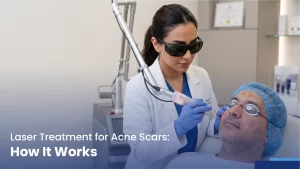
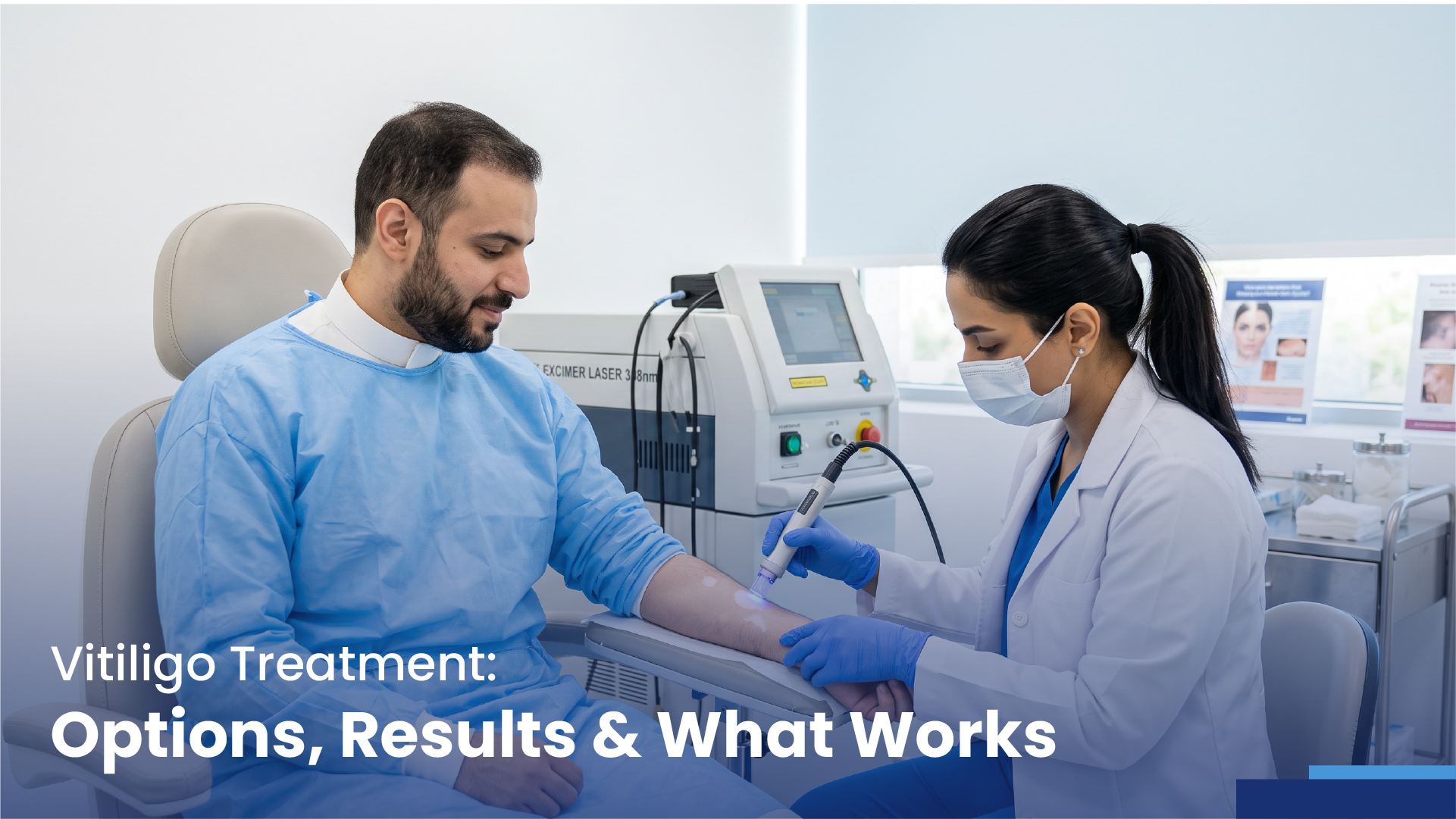
The excimer laser delivers targeted UVB light to specific vitiligo patches, making it ideal for localised areas rather than widespread disease. Because it concentrates the treatment precisely on the affected skin, it spares the surrounding normal skin and can achieve faster localised repigmentation than whole-body phototherapy for small patches. It is often combined with topical treatments for enhanced results. The excimer laser is particularly effective for facial vitiligo and other responsive areas.
Surgical Treatments
Surgery is reserved for stable vitiligo that has not progressed for at least a year, and is particularly valuable for segmental vitiligo which is often resistant to medical treatment. Surgical approaches transplant melanocytes from normally pigmented areas to the depigmented patches.
- Punch grafting: small plugs of pigmented skin are transplanted into the vitiligo patches.
- Suction blister grafting: the top layer of pigmented skin is transferred to a prepared depigmented area.
- Melanocyte cell transplantation: melanocytes are harvested, prepared as a cell suspension, and applied to the depigmented skin. This modern technique can treat larger areas from a small donor sample.
Surgical treatment is only appropriate for stable disease, as transplanting cells into actively progressing vitiligo risks losing them to the ongoing autoimmune process.
Depigmentation for Extensive Vitiligo
In cases where vitiligo affects the majority of the body, restoring pigment to all areas may not be realistic. For these patients, depigmentation, the process of removing the remaining normal pigment to create a uniform appearance, may be considered. This is a significant and permanent decision made carefully with a dermatologist, as it cannot be reversed.
Repigmentation Rates by Body Area
One of the most important things to understand about vitiligo treatment is that different body areas respond very differently. This is largely because repigmentation depends on the reservoir of melanocytes in hair follicles, which varies by location:
- Face and neck: the best responders, often achieving excellent repigmentation, particularly the central face.
- Trunk and limbs: moderate response, generally good with sustained treatment.
- Hands, feet, fingers, and toes: the most resistant areas, often responding poorly because they have fewer hair follicles to supply melanocytes.
- Areas with white hair in the patch: respond poorly, as white hair indicates the follicular melanocyte reservoir is also depleted.
- Lips and areas around the mouth: variable and often slow to respond.
Setting realistic expectations by body area is essential. Understanding that the hands may respond poorly while the face responds well helps patients approach treatment with accurate expectations.
Combination Approaches
The most effective vitiligo treatment usually combines modalities. Phototherapy combined with topical calcineurin inhibitors or JAK inhibitors consistently produces better results than either alone. Excimer laser combined with topical treatments enhances localised repigmentation. The Blue Clinic dermatology team designs combination protocols tailored to the individual, sequencing treatments to maximise the chance of repigmentation.
Camouflage and Psychological Support
While medical treatment progresses, cosmetic camouflage products can effectively conceal vitiligo patches and provide immediate confidence. Self-tanning products containing dihydroxyacetone can also add colour to white patches temporarily. Beyond appearance, the psychological impact of vitiligo is significant, and acknowledging this is an important part of holistic care. Support for the emotional burden of the condition matters alongside skin treatment.
Frequently Asked Questions
Can vitiligo be cured?
There is currently no permanent cure for vitiligo, but many patients achieve significant and lasting repigmentation with treatment, particularly on responsive areas like the face. Early treatment of active disease gives the best results. The goal is meaningful repigmentation and stabilisation rather than a complete cure.
Does vitiligo spread?
Non-segmental vitiligo can spread unpredictably over time, which is why treatment to stabilise the condition is valuable. Segmental vitiligo typically stops spreading after an initial period. Factors like stress and skin injury (the Koebner phenomenon) can trigger new patches in susceptible individuals.
How long does vitiligo treatment take to show results?
Repigmentation is a slow process. Topical treatments and phototherapy typically require at least three to six months before meaningful results appear, and full treatment courses often extend beyond a year. Patience and consistency are essential for success.
Is vitiligo linked to other health conditions?
Yes. Vitiligo is associated with other autoimmune conditions, most commonly thyroid disease. A proper assessment often includes screening for related conditions. This is one reason a professional evaluation is valuable rather than self-treatment.
Will the repigmented skin match my natural colour?
In most cases, repigmented skin closely matches the surrounding natural skin over time, particularly with phototherapy. Initially, new pigment may appear as small darker spots that gradually blend and even out. The final colour usually integrates well with the surrounding skin.
Getting Started with Vitiligo Treatment
Vitiligo is far more treatable today than it was even a decade ago, but success depends on accurate diagnosis, matching the treatment to the type and activity of the condition, and realistic expectations by body area. Early treatment of active disease gives the best outcomes.
- Visit the Blue Clinic dermatology department for a full vitiligo assessment including type classification and activity evaluation.
- Book a consultation through WhatsApp to discuss your treatment options and goals with a qualified dermatologist.
The team at Blue Clinic provides comprehensive vitiligo care including topical treatments, phototherapy, and combination protocols tailored to each patient.