



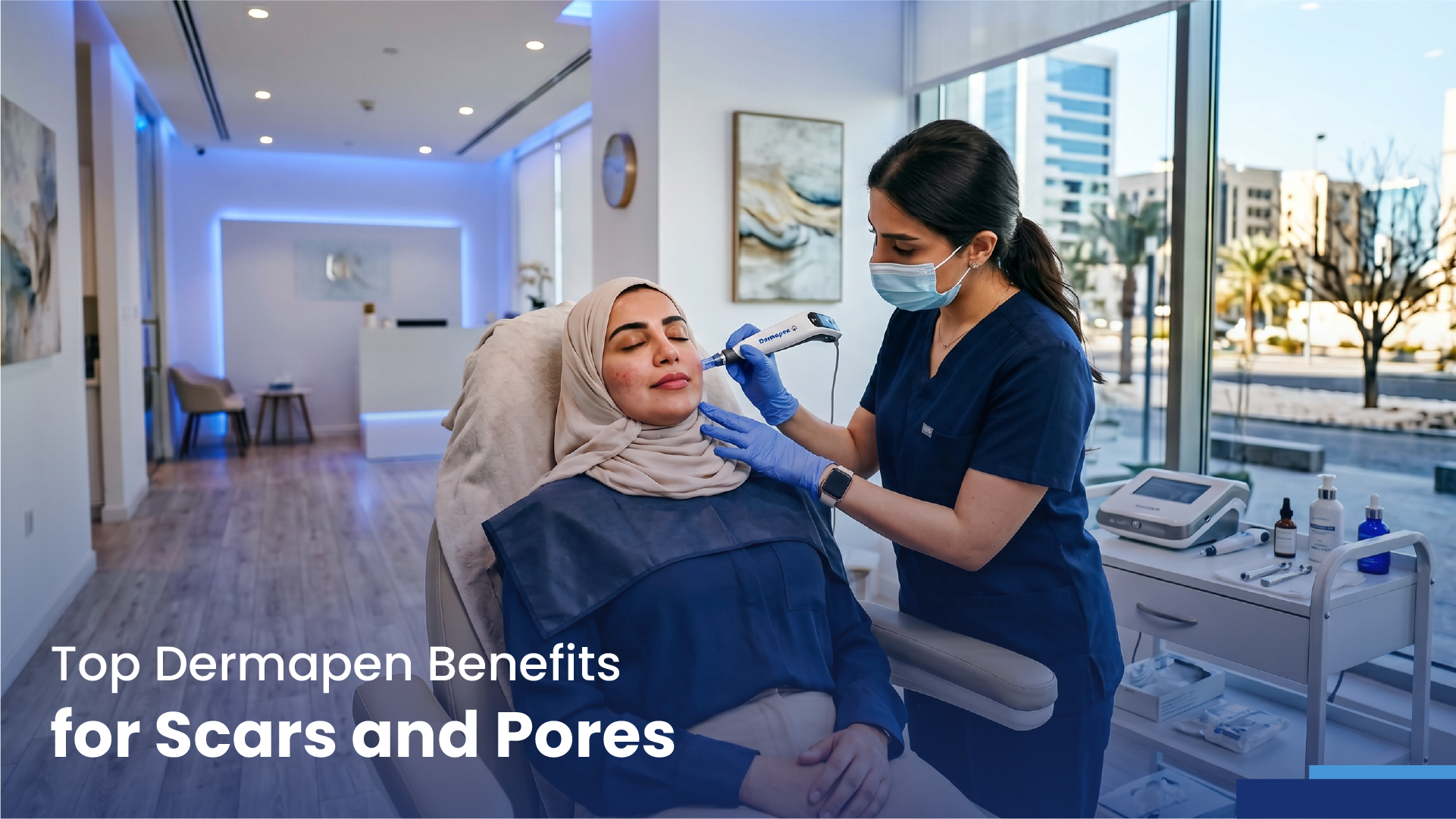
Dermapen is a professional microneedling device that uses fine, rapidly oscillating needles to create controlled micro-injuries in the skin, triggering the body’s own collagen and elastin production in response. The results — improved scars, reduced pore size, better skin texture, and more even tone — develop gradually over weeks as new collagen forms, and they are achieved safely across virtually all skin tones. At Blue Clinic‘s dermatology and aesthetics department, Dermapen treatments are performed as part of a structured skin improvement programme.
This guide covers the main Dermapen benefits, how the treatment works, who it suits, and what to expect from a course of treatment.
How Dermapen Works: The Science of Collagen Induction
The Dermapen device uses a sterile, disposable tip containing multiple fine needles that oscillate at high speed, creating thousands of micro-channels in the skin surface during a single treatment session. The depth of penetration is adjustable from 0.25mm to 2.5mm, allowing the treatment to be calibrated for different areas of the face or body and different skin concerns.
These micro-injuries are intentional and controlled. The skin’s wound-healing response to them is the mechanism behind the treatment’s benefits. In phase one (inflammation), the body releases growth factors and cytokines. In phase two (proliferation), fibroblasts migrate to the area and begin producing new collagen and elastin. In phase three (remodelling), the newly produced collagen matures and organises itself. According to research published in the Journal of Cutaneous and Aesthetic Surgery, collagen induction therapy produces measurable increases in collagen density that persist well beyond the active treatment course.
Benefit 1: Acne Scar Reduction
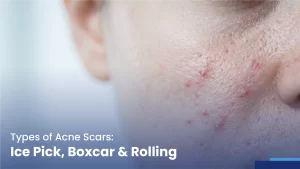
Dermapen is one of the most evidence-supported treatments for atrophic acne scars — the indented, pitted scars that form when inflammation destroys collagen during a severe breakout. The collagen induction process fills in these depressions from below, gradually lifting the scar surface toward the level of the surrounding skin.
The treatment is particularly effective for rolling scars and boxcar scars. Ice-pick scars (very deep and narrow) may require combination treatment with other modalities such as punch excision or TCA cross. Improvement is gradual: most patients see meaningful change by their third or fourth session, with continued improvement for up to six months after completing a course. The dermatology team at Blue Clinic assesses scar type and depth before recommending the appropriate treatment approach.
Benefit 2: Reduced Pore Size
Enlarged pores are caused by the loss of the collagen structure that surrounds each follicle opening, allowing the pore to appear wider. As new collagen forms around the follicle walls in response to Dermapen treatment, the structural support is restored and the pore appears smaller. This is a genuine structural improvement rather than a temporary cosmetic effect.
Results for pore reduction are typically visible from the second session onward and continue improving over the full course. Patients with oily skin who are prone to congestion see the most significant improvement as the combination of tightened pores and improved product penetration helps maintain cleaner follicles.
Benefit 3: Improved Skin Texture and Smoothness
Uneven skin texture — rough patches, bumpy areas, or a generally dull surface — reflects a disrupted organisation of the outer skin layers. Dermapen stimulates the replacement of disorganised surface cells with new, well-structured tissue as collagen remodelling progresses. The result is a measurably smoother skin surface that reflects light more evenly, giving the skin a healthier and more radiant appearance.
Benefit 4: Reduction of Fine Lines and Early Wrinkles
Fine lines form as collagen density decreases with age, allowing the skin to crease more easily under the influence of facial movement and gravity. Dermapen’s stimulation of new collagen production addresses this at the structural level. It is most effective for fine surface lines rather than the deeper dynamic wrinkles that benefit more from botulinum toxin, but for patients with early ageing concerns, Dermapen is a highly effective preventive and restorative option.
Benefit 5: Hyperpigmentation and Uneven Tone
Post-inflammatory hyperpigmentation (the dark marks that remain after acne, injury, or inflammation resolves) responds well to Dermapen treatment. The micro-injuries stimulate an accelerated skin turnover that gradually replaces pigmented cells with fresh, unpigmented skin. The treatment is particularly effective when combined with depigmenting serums applied immediately after needling, as the micro-channels allow significantly deeper penetration than standard topical application.
An important advantage over laser treatments for pigmentation is that Dermapen is safe for all skin tones, including Fitzpatrick V and VI, where laser treatments carry a higher risk of post-inflammatory hyperpigmentation from the heat energy involved.
Benefit 6: Maximised Skincare Absorption
One of the most immediately practical benefits of Dermapen is the dramatic increase in topical product absorption that the micro-channels allow. Studies indicate that the transdermal delivery of active ingredients is enhanced by up to 80% when applied immediately after microneedling. This means that serums, growth factors, hyaluronic acid, vitamin C, and peptides applied during or immediately after a Dermapen session penetrate to the dermal layer where they are biologically active, rather than remaining on the skin surface where most topical products stay.
Benefit 7: Safe for All Skin Tones
Unlike ablative laser resurfacing, chemical peels of medium or deep depth, and some energy-based devices, Dermapen does not generate heat energy. The micro-injury mechanism does not trigger the melanocyte response that causes hyperpigmentation in darker skin tones. This makes it one of the most genuinely inclusive skin improvement options available, with a consistent safety and efficacy profile across Fitzpatrick skin types I through VI.
Benefit 8: Treatment of Stretch Marks
Stretch marks (striae) form when the dermis is stretched rapidly, causing tears in the collagen and elastin fibres. They present as red or purple streaks initially (striae rubra) and fade to silver-white (striae alba) over time. Dermapen stimulates new collagen formation within the stretch mark tissue, gradually improving its texture and colour. Striae rubra respond more readily than striae alba, but both can show improvement with a course of treatment.
Benefit 9: Scalp and Hair Applications
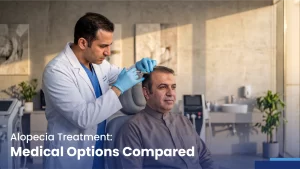
Dermapen is increasingly used on the scalp to stimulate hair follicles in patients with androgenetic alopecia (pattern hair loss) or diffuse thinning. The micro-injuries increase blood flow to the follicle area and enhance the penetration of topical treatments such as minoxidil, which is applied immediately after treatment. Clinical studies, including research reviewed in the International Journal of Trichology, support microneedling as an adjunct to standard hair loss treatments.
Benefit 10: Minimal Downtime
Following a Dermapen session, the skin typically appears pink or mildly red for 12 to 48 hours — comparable to a mild sunburn. This is the predictable and expected inflammatory response that initiates the treatment’s benefits. Most patients return to normal activities the following day. Unlike ablative resurfacing procedures that require a week or more of visible healing, Dermapen’s recovery window is short and manageable for most schedules.
What to Expect During a Session
A topical numbing cream is applied 30 to 45 minutes before treatment to minimise discomfort. The Dermapen device is then passed systematically over the treatment area, with the needle depth adjusted by zone. During the treatment, a serum appropriate to the patient’s concern is applied to the skin and driven in by the needling action. The session takes 30 to 60 minutes depending on the area.
Immediately after treatment, the skin is red and may appear slightly swollen. Sun protection is essential in the days following treatment, and active skincare ingredients (retinoids, acids) should be avoided for 48 to 72 hours to allow the skin barrier to re-establish. Book your session through WhatsApp.
How Many Sessions Are Needed?
The number of sessions required depends on the concern being treated. Mild texture and pigmentation issues may show significant improvement in three to four sessions. Moderate acne scarring typically requires four to six sessions. Deep or extensive scarring may benefit from six to eight sessions or a combination approach. Sessions are spaced four to six weeks apart to allow the collagen remodelling cycle to progress between treatments.
Frequently Asked Questions
Is Dermapen better than a dermaroller?
Yes for most clinical applications. Dermapen penetrates the skin vertically with adjustable depth control, producing cleaner micro-channels with less lateral tearing than the diagonal penetration of a roller. The depth adjustment allows the device to treat delicate areas like under the eyes and around the nose that a roller cannot safely address. Professional devices like Dermapen are also sterile and single-use per patient, unlike home dermarollers which carry infection and injury risks from improper use.
Can Dermapen be combined with other treatments?
Yes, and combination approaches often produce better outcomes. Dermapen is commonly combined with platelet-rich plasma (PRP), where the patient’s own growth factors are applied to the skin immediately after needling for enhanced collagen stimulation. It also complements laser treatments, chemical peels, and injectable treatments. The Blue Clinic team develops individual treatment plans that combine procedures based on each patient’s specific goals.
Is Dermapen safe for active acne?
No. Dermapen should not be used over active, inflamed acne lesions as the device can spread bacteria across the skin surface, worsening breakouts. Active acne should be treated first, and microneedling is then used to address the scarring and textural changes once the acne is controlled.
How long do results last?
The new collagen produced in response to Dermapen treatment is a permanent structural change in the skin — it does not disappear once it forms. However, the natural ageing process continues, and maintenance sessions (typically once or twice a year after completing the initial course) help sustain the results over time.
Starting a Dermapen Course at Blue Clinic
- Visit our dermatology and aesthetics department to learn about Dermapen protocols and available combination treatments.
- Book a skin assessment through WhatsApp to identify the appropriate treatment protocol for your specific concerns.
The Blue Clinic team provides structured skin improvement programmes that include Dermapen as a core treatment for scarring, pores, texture, and pigmentation.