







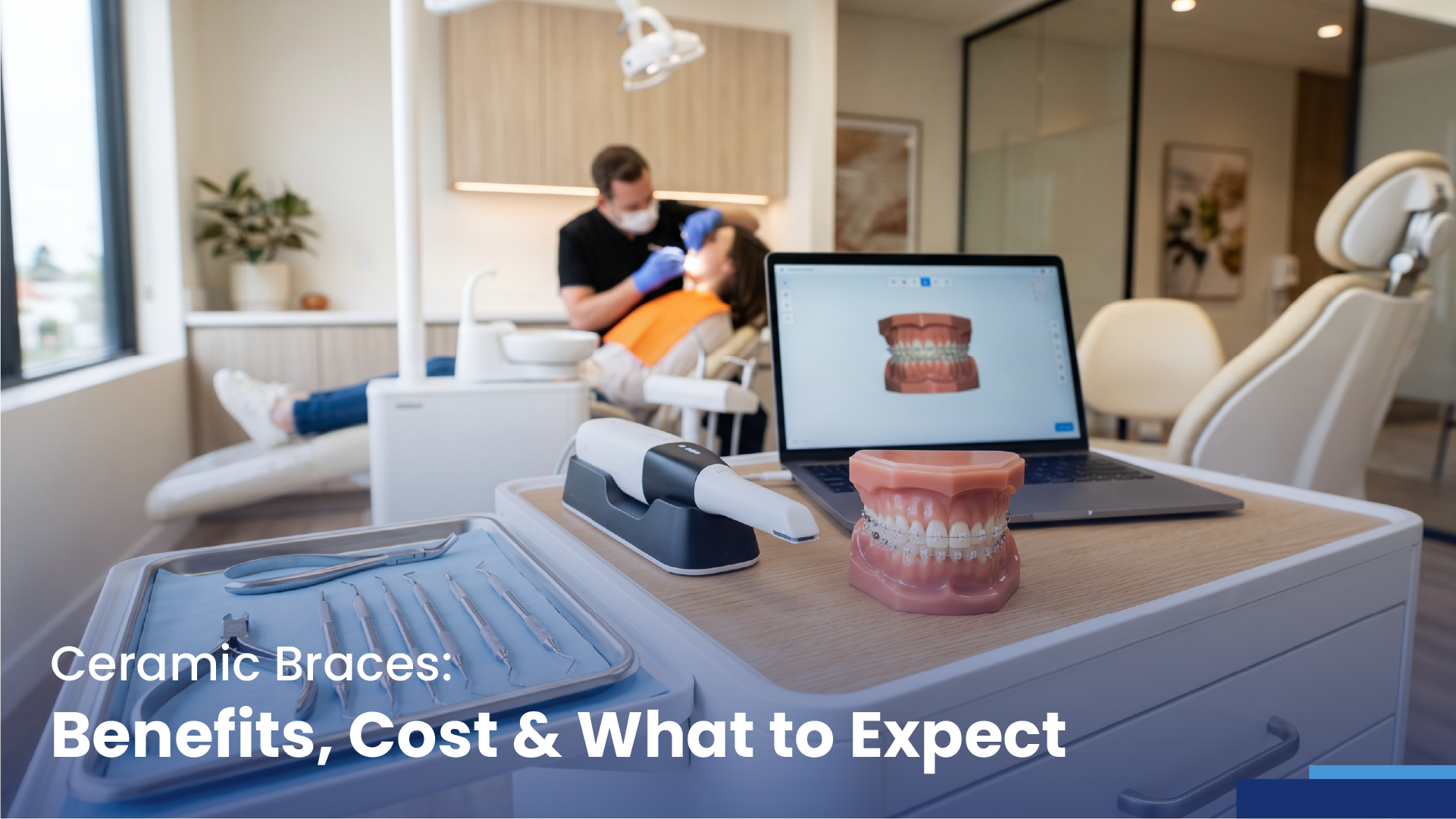
Ceramic braces are one of the most popular orthodontic options among adults who want the reliability of fixed treatment without the prominent look of metal. They are clinically effective, visually discreet, and widely available, but they come with specific considerations around care, diet, and cost that are worth understanding fully before committing. In this article, we will cover what ceramic braces are, how they work, their advantages and limitations, how they compare to metal braces, dietary and maintenance requirements, who they suit best, and what to realistically expect from the treatment process.
What Are Ceramic Braces?
Ceramic braces are fixed orthodontic appliances that function identically to traditional metal braces but use brackets made from tooth-colored or clear ceramic material rather than stainless steel. The brackets are bonded to the front surface of each tooth, and a metal archwire runs through them to apply the pressure needed to move teeth gradually into alignment. At Blue Clinic, ceramic braces are available through our orthodontics department as part of a comprehensive range of fixed and removable orthodontic options.
The ceramic material closely matches the natural color of tooth enamel, making the brackets far less noticeable than their metal counterparts. According to Healthline, ceramic braces are widely regarded as a strong middle ground between the full discretion of clear aligners and the durability and lower cost of metal braces. This makes them particularly appealing for adults and older teenagers who prioritize appearance during treatment but need the consistency and control of fixed appliances.
Unlike clear aligners, ceramic braces are fixed in place and work continuously around the clock without requiring the patient to remember to insert or remove anything. For a broader understanding of how ceramic braces compare to the full range of orthodontic options, our article on types of braces and cost provides a useful overview.
How Do Ceramic Braces Work?
The working principle of ceramic braces is identical to that of metal braces. Brackets are bonded to each tooth using a dental adhesive, and a continuous archwire connects them all. The wire applies controlled, directional pressure in precise amounts, guiding each tooth gradually toward its target position over a period of months. The orthodontics team at Blue Clinic designs this movement plan carefully based on digital scans, x-rays, and clinical photographs taken at the initial assessment.
The key physical difference from metal braces is the bracket material. Ceramic brackets are made from monocrystalline or polycrystalline aluminum oxide, which gives them a translucent or tooth-colored appearance. The archwire running through the brackets is typically metal, though some practitioners offer tooth-colored wires for patients who want additional visual discretion.
The overall treatment duration with ceramic braces is comparable to that of metal braces for equivalent levels of case complexity. Treatment can also be combined with preventive or restorative care through our dental department when clinically appropriate.
Benefits of Ceramic Braces
Ceramic braces offer several advantages that make them particularly well suited to patients with appearance priorities. You can also review available treatment options on our orthodontics page before booking a consultation.
- Discretion without sacrifice of effectiveness. Unlike clear aligners, ceramic braces are fixed in place and work continuously regardless of patient compliance.
- Effective for a wide range of cases. Ceramic braces can address moderate to complex alignment issues with the same level of precision as metal braces.
- Less visible than metal. Ceramic brackets blend visually with the tooth surface and are far less noticeable in photographs and everyday interactions.
- Smooth, low-profile brackets. Modern ceramic brackets are designed with rounded edges that reduce friction against the inner lips and cheeks.
- No permanent staining of the teeth. The surface of the tooth enamel underneath the bracket is protected during treatment.
The Downsides Worth Knowing
Being clear about the limitations of ceramic braces helps patients make better-informed decisions and avoid disappointment during treatment. If any of these considerations give you pause, our metal braces and Invisalign pages explain the practical advantages of the available alternatives.
- Staining of elastic ties. The clear or tooth-colored elastic ties that hold the archwire in place can absorb pigment from coffee, tea, red wine, and turmeric. Since these ties are replaced at every adjustment appointment, the staining is not permanent, but it requires dietary mindfulness between visits.
- Higher cost than metal braces. Ceramic brackets cost more to manufacture and require greater precision to place, so the overall treatment cost is higher.
- More fragile than metal brackets. Ceramic material is harder than enamel but more brittle than steel. Impact from contact sports increases the risk of bracket fracture.
- Slightly higher friction. Some clinical evidence suggests that ceramic brackets create marginally more friction along the archwire than metal ones.
Ceramic vs Metal Braces: Key Differences
Both ceramic and metal braces can effectively treat similar orthodontic problems. The choice between them typically comes down to four practical areas. For a full side-by-side comparison, our dedicated article on types of braces and cost explores each difference in detail.
Appearance: Ceramic brackets are significantly less visible than metal ones. This is the primary reason most patients choose ceramics over metal, especially adults who want to maintain a professional appearance during treatment that can last one to two years.
Cost: Metal braces are less expensive. For patients where budget is a primary consideration, this is a significant practical factor. Our dental department provides clear cost guidance during the initial consultation.
Durability: Metal brackets are harder and more resistant to fracture than ceramic ones. For patients who play contact sports, this resilience is a relevant consideration.
Maintenance: Both types require thorough cleaning around the brackets, but ceramic wearers need additional dietary mindfulness to minimize tie staining. The orthodontics team at Blue Clinic provides practical hygiene guidance at the start of treatment.
Food and Drink Restrictions with Ceramic Braces
The dietary guidelines for ceramic braces overlap substantially with those for metal braces, with additional caution around staining agents. The orthodontics team will review these in detail at your first fitting appointment.
Foods and drinks to limit or avoid:
- Coffee, tea, and red wine, which cause visible tie staining
- Turmeric, tomato-based sauces, and other strongly pigmented foods
- Fizzy drinks, which combine acidity with staining potential
- Hard foods such as crusty bread, raw carrots, and hard candy
- Sticky foods including chewing gum and toffee, which can dislodge brackets
The single most important habit to develop is cutting food into smaller pieces rather than biting directly into it with the front teeth. Good oral hygiene alongside a mindful diet also supports the broader care provided through our general dentistry team. Good brushing and flossing habits throughout treatment are essential and directly support the orthodontic treatment process.
Daily Care and Maintenance
Keeping ceramic braces clean requires consistent daily attention. The team at our orthodontics department walks every patient through the correct technique at the start of treatment.
- Brush after every meal using a soft-bristle toothbrush with gentle circular motions around each bracket and along the gumline.
- Use an interdental brush to clean the space between the wire and the tooth surface.
- Floss daily using a floss threader or orthodontic flosser.
- Rinse with a fluoride mouthwash to protect tooth surfaces from enamel erosion.
- Attend all scheduled adjustment appointments, when elastic ties are replaced and fresh staining is removed.
Patients who also plan to pursue teeth whitening after completing their orthodontic treatment should maintain good enamel health throughout by following fluoride care guidance from our dental team.
Who Are Ceramic Braces Best For?
Ceramic braces tend to work best for adults in professional or client-facing roles, older teenagers who are self-conscious about the appearance of metal braces, patients with moderate to complex alignment cases who want a less visible fixed option, and individuals who are willing to adapt their dietary and hygiene habits accordingly. Our orthodontics team at Blue Clinic will confirm suitability through a personalized consultation.
Who Should Consider a Different Option?
Consider a different option if your case requires very precise bite correction better served by metal brackets, if you play contact sports regularly, if budget is a significant constraint, or if you have a mild alignment case that could be addressed with clear aligners. Alternatives including metal braces and Invisalign may be more appropriate depending on the clinical situation and personal priorities.
What to Expect During Ceramic Braces Treatment
Initial fitting: Brackets are bonded to the tooth surface using a dental adhesive. There is typically mild soreness and a sensation of pressure in the first few days. Our orthodontics department guides every patient through what to expect during this initial phase.
Adjustment appointments: These take place every four to six weeks. The orthodontist replaces the elastic ties, adjusts the archwire tension, and evaluates progress. The team at Blue Clinic schedules these appointments with flexibility to fit most patients’ routines.
End of treatment: Once alignment targets are met, the brackets are carefully removed and retainers are fitted. According to established orthodontic treatment guidelines, consistent retainer wear after braces is essential to preserve the results. Patients at this stage often also consider dental veneers to complete the smile transformation.
Frequently Asked Questions
How noticeable are ceramic braces in photos?
Ceramic brackets are substantially less visible than metal ones in most everyday photographs. At a normal conversational distance, they blend well with the tooth surface. Most patients are pleasantly surprised by how discreet they look in practice. You can explore all orthodontic options at our orthodontics service page.
Do ceramic braces stain permanently?
The ceramic brackets themselves are fairly resistant to permanent staining. The elastic ties that secure the wire are more susceptible to picking up color from coffee, tea, and turmeric. Since these ties are replaced at every adjustment appointment, any discoloration is temporary.
Are ceramic braces more painful than metal?
The level of discomfort is similar for both types. Most soreness comes from the pressure of tooth movement rather than the bracket material. Mild soreness for one to three days after each adjustment is normal and manageable. Our orthodontics team will walk you through all strategies for managing post-adjustment discomfort.
How long does ceramic braces treatment take?
Mild to moderate alignment cases typically take 12 to 20 months. More complex cases may take longer. Your orthodontist will provide a realistic estimate during the initial consultation based on a full clinical assessment.
Do ceramic braces cost significantly more than metal?
Yes, ceramic braces are typically priced higher than metal braces. The difference reflects the material cost and the additional care required during placement. Speak with our team via WhatsApp for accurate pricing based on your specific case.
Choosing the Right Braces for Your Situation
Ceramic braces offer a well-established middle ground between the discretion of clear aligners and the durability and cost-effectiveness of metal braces. The most important step before committing to any orthodontic appliance is a proper clinical assessment. The orthodontics team at Blue Clinic provides this assessment as the foundation of every treatment journey.
Practical next steps:
- Visit the orthodontics department page to review all available treatment options
- Book an initial consultation to receive a personalized assessment of your case
- Speak with the dental team about how ceramic braces fit your lifestyle and clinical needs
- Contact the clinic to arrange your first appointment
The dental team at Blue Clinic is available to guide you through the full process, from initial assessment to the final fitting of your retainers.