




Mouth ulcers, also known as canker sores or aphthous ulcers, are among the most common minor oral health complaints. Most are harmless and resolve on their own within one to two weeks, but the pain they cause, particularly with eating, drinking, and speaking, makes effective treatment worthwhile. Treatment does not just mask discomfort; the right approach can genuinely speed healing and reduce the number of days the ulcer is painful. At Blue Clinic‘s dental department, persistent or unusually severe mouth ulcers are assessed to rule out an underlying cause before treatment is recommended.
This guide covers what typically triggers mouth ulcers, the treatment options available from topical gels to prescription steroid pastes, how long healing usually takes, and the warning signs that mean a mouth ulcer needs professional assessment rather than home care alone.
What Causes Mouth Ulcers
The exact cause of the common aphthous ulcer is not fully understood, but several triggers are well recognised and often combine to produce an outbreak:
- Minor trauma: accidentally biting the inside of the cheek or lip, a sharp or broken tooth edge, or irritation from orthodontic brackets and wires.
- Stress and lack of sleep: a very commonly reported trigger, particularly for people prone to recurrent ulcers.
- Nutritional deficiencies: low levels of vitamin B12, iron, or folate are associated with more frequent or more severe ulcers.
- Hormonal changes: some people notice ulcers linked to their menstrual cycle.
- Certain foods: acidic foods (citrus, tomatoes) and rough or spicy foods can trigger ulcers in susceptible individuals.
- Toothpaste ingredients: sodium lauryl sulfate (SLS), a foaming agent in many toothpastes, is linked to increased ulcer frequency in sensitive individuals.
- Underlying conditions: in a minority of cases, recurrent or severe ulcers are associated with conditions such as coeliac disease, inflammatory bowel disease, or immune-related disorders, which is why persistent or unusual patterns warrant medical attention.
Types of Mouth Ulcers
Minor aphthous ulcers are the most common type: small (under 1cm), shallow, round or oval, usually healing within one to two weeks without scarring. Major aphthous ulcers are larger and deeper, can exceed 1cm, take considerably longer to heal (sometimes several weeks), and may leave scarring. Herpetiform ulcers appear as clusters of many tiny pinpoint ulcers that can merge into a larger irregular area; despite the name, they are not caused by the herpes virus.
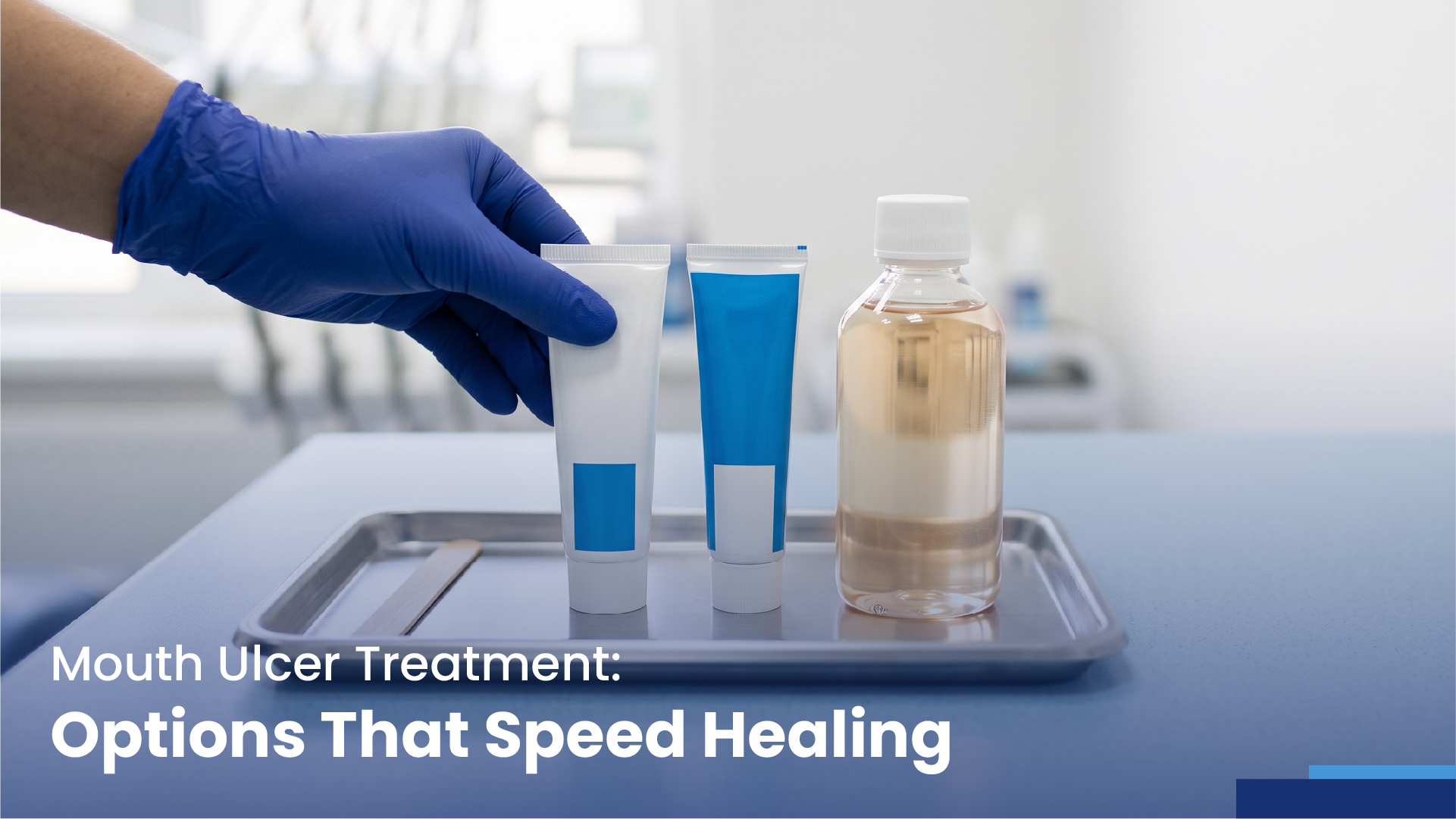
Topical Treatment Options
Topical Analgesic Gels
Over-the-counter gels containing local anaesthetics such as benzocaine or lidocaine provide temporary numbing directly on the ulcer, making eating and speaking more comfortable while the ulcer heals. They are applied directly to the ulcer, ideally after eating and before bed, and their effect typically lasts twenty to thirty minutes.
Protective Barrier Gels
Some products form a protective film over the ulcer, shielding it from further irritation by food, drink, and the mechanical friction of speaking and chewing. This reduces pain by preventing repeated trauma to the exposed tissue rather than by numbing it directly, and can be a good option for people who want protection without a numbing sensation.
Antiseptic Mouth Rinses
Chlorhexidine-based antiseptic rinses reduce the bacterial load in the mouth, which can lower the risk of secondary infection in the ulcer and may modestly speed healing. They are typically used for a limited period, as prolonged use can cause temporary staining of the teeth.
Salt Water or Baking Soda Rinses
A simple rinse of warm water with a small amount of salt or baking soda is a gentle, accessible option that can soothe the area and support healing. It is a useful adjunct to other treatments rather than a standalone solution for larger or more painful ulcers.
Topical Corticosteroid Pastes
For more painful, larger, or recurrent ulcers, a dentist may prescribe a topical corticosteroid such as triamcinolone in an adhesive paste. This reduces the inflammatory response driving the pain and can noticeably shorten the healing time for major or unusually persistent ulcers. Because it is a prescription treatment, it should be used under professional guidance rather than self-selected for a typical minor ulcer.
Chemical Cautery (In-Clinic Option)
For a single stubborn or unusually painful ulcer, a dentist can apply a chemical cauterising agent such as silver nitrate directly to the lesion in a brief in-office procedure. This can provide fairly rapid pain relief, though it is generally reserved for ulcers that are not responding well to standard topical care.
Supporting the Healing Process
Alongside active treatment, a few simple adjustments reduce irritation and support healing:
- Avoid acidic, spicy, salty, or very hot foods and drinks while the ulcer is active, as these directly irritate the exposed tissue.
- Switch temporarily to a soft-bristled toothbrush and brush gently around the affected area.
- Consider switching to an SLS-free toothpaste if ulcers recur frequently, as this ingredient is a recognised trigger for some people.
- Stay hydrated, as a dry mouth can make ulcers feel more uncomfortable.
Typical Healing Times
Minor aphthous ulcers, the most common type, generally heal within seven to fourteen days without leaving a scar. Major aphthous ulcers heal more slowly, often taking two to six weeks, and can leave a scar due to their depth. Herpetiform ulcers, despite appearing in large clusters, are individually shallow and tend to heal within one to two weeks, though new clusters may form in the same outbreak.
Warning Signs That Need Professional Assessment
Most mouth ulcers are unremarkable and self-limiting, but certain patterns warrant a dental or medical assessment rather than continued home treatment:
- An ulcer that has not shown any improvement after two to three weeks.
- Ulcers that are unusually large, unusually painful, or recur very frequently (more than several times a year).
- An ulcer accompanied by fever, unexplained weight loss, or other systemic symptoms.
- A sore or lesion that is not painful, particularly if it is firm, has irregular edges, or does not heal, as this pattern can occasionally indicate something other than a simple aphthous ulcer and should always be assessed.
The dental team at Blue Clinic can assess persistent or atypical ulcers, identify any underlying trigger such as a nutritional deficiency, and prescribe stronger treatment when a standard aphthous ulcer is not responding as expected.
Frequently Asked Questions
Are mouth ulcers contagious?
No. Common aphthous ulcers are not caused by a virus and cannot be passed to another person through kissing or sharing utensils. This is an important distinction from cold sores, which are caused by the herpes simplex virus and are contagious. If a sore is on the outer lip rather than inside the mouth and is preceded by tingling and small fluid-filled blisters, it is more likely a cold sore than an aphthous ulcer.
Can toothpaste really cause mouth ulcers?
For some individuals, yes. Sodium lauryl sulfate (SLS), a common foaming agent in toothpaste, has been shown in studies to increase the frequency of aphthous ulcers in susceptible people. Switching to an SLS-free toothpaste is a simple change worth trying for anyone with frequent recurrences.
Do mouth ulcers mean I have a vitamin deficiency?
Not necessarily, as most ulcers occur in people with entirely normal nutrition. However, frequent or severe recurrent ulcers are worth discussing with a healthcare provider, as low vitamin B12, iron, or folate are recognised contributing factors that a simple blood test can identify and correct.
How can I prevent ulcers from coming back?
Identifying and managing personal triggers is the most effective prevention strategy: protecting the mouth from trauma (addressing a sharp tooth or ill-fitting brace), managing stress, using an SLS-free toothpaste if sensitive to it, and correcting any identified nutritional deficiency. For people with frequent recurrences despite these steps, a dental assessment can help identify further options.
Getting Effective Treatment
- Visit the Blue Clinic dental department if your ulcer is unusually large, painful, or has not healed within two to three weeks.
- Book a consultation through WhatsApp to discuss frequent or severe mouth ulcers and receive an appropriate treatment plan.
The team at Blue Clinic provides assessment and treatment for persistent or recurrent mouth ulcers, including prescription options when standard topical care is not enough.