



Alopecia is a broad term covering several distinct types of hair loss, and the single most important principle of treatment is that the right approach depends entirely on which type of alopecia you have. A treatment that works for pattern hair loss does nothing for the autoimmune form, and vice versa. This is why an accurate diagnosis always comes before treatment. At Blue Clinic‘s dermatology department, alopecia is diagnosed by type before any treatment plan is developed.
This guide compares the medical treatment options across the main types of alopecia, explaining which type responds to what, so you can understand where your situation fits.
Why Diagnosis Comes First
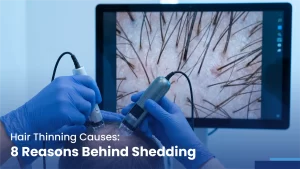
Alopecia is not one condition. The main types have different causes and completely different treatments: androgenetic alopecia (pattern hair loss driven by hormones and genetics), alopecia areata (an autoimmune attack on follicles), telogen effluvium (stress-triggered diffuse shedding), traction alopecia (mechanical damage from styling), and scarring alopecias (inflammation that permanently destroys follicles). Matching the treatment to the diagnosis is everything, and this is why professional assessment by the dermatology team is the essential starting point.
Androgenetic Alopecia Treatment
Androgenetic alopecia, or pattern hair loss, is the most common type and responds to treatments that counter the effect of DHT on the follicles and stimulate growth.
Minoxidil
Minoxidil, applied topically as a solution or foam (or taken orally at low dose under supervision), is a first-line treatment for pattern hair loss in both men and women. It works by prolonging the growth phase of the hair cycle and improving blood flow to the follicles. It requires consistent daily use, and results take three to six months to appear. Stopping treatment leads to loss of the gained hair, so it is an ongoing commitment.
Finasteride
Finasteride is an oral medication for men that blocks the conversion of testosterone to DHT, the hormone responsible for shrinking follicles in pattern hair loss. It effectively slows progression and can produce regrowth. It requires ongoing use and is prescribed and monitored by a doctor, with the potential side effects discussed beforehand. It is generally not used in women of childbearing potential.
Platelet-Rich Plasma (PRP)
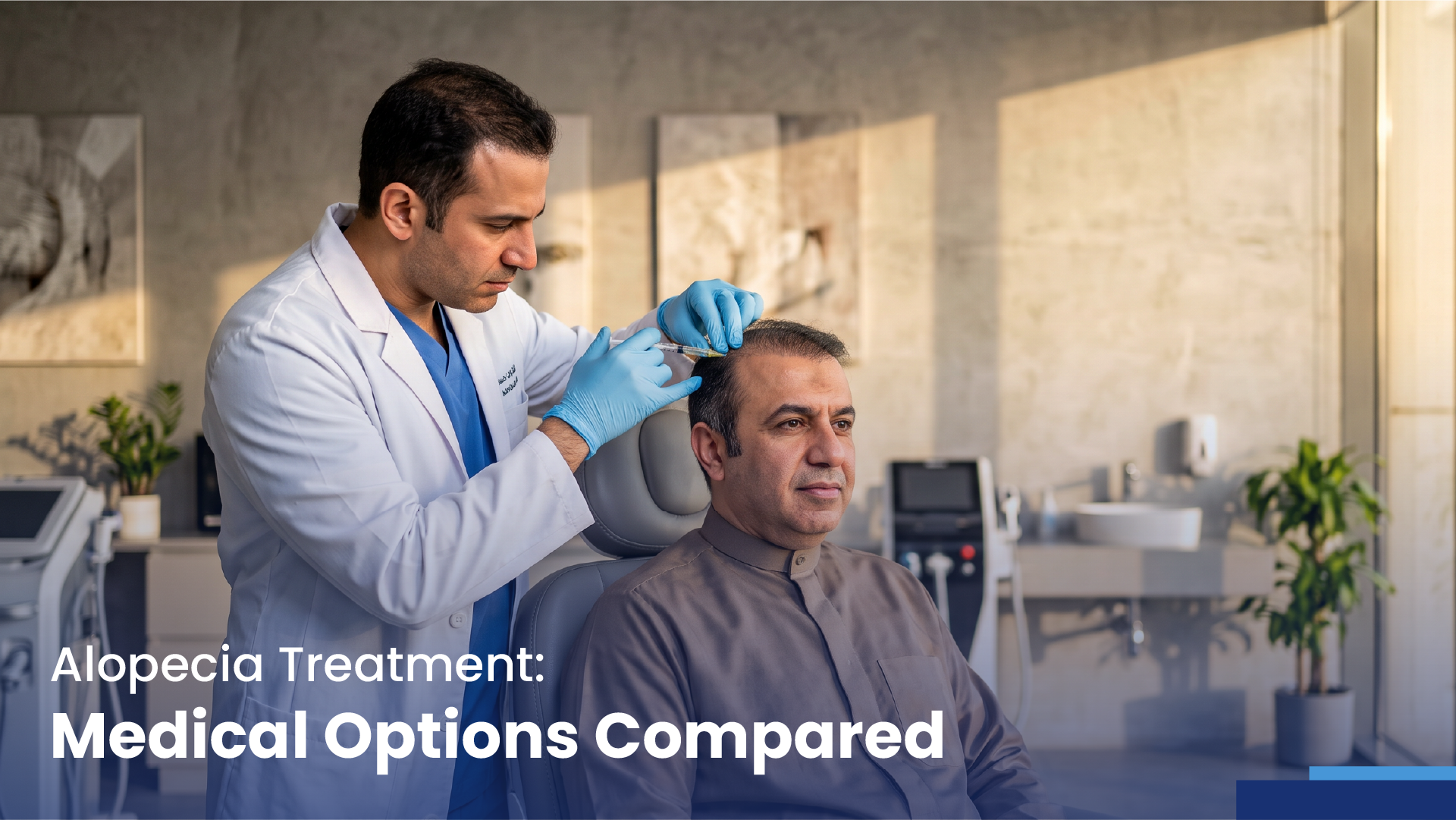
PRP involves drawing a small amount of the patient’s own blood, concentrating the platelets and growth factors, and injecting them into the scalp to stimulate the follicles. It is used as an adjunct to medical treatment for pattern hair loss, typically as a course of sessions followed by maintenance. Evidence supports it as a complementary treatment that enhances results alongside minoxidil and finasteride.
Alopecia Areata Treatment
Alopecia areata is an autoimmune condition where the immune system attacks hair follicles, causing sudden round bald patches. Because the cause is immune-driven, treatment focuses on suppressing that immune attack rather than stimulating growth directly.
Corticosteroid Injections
Intralesional corticosteroid injections, delivered directly into the bald patches, are the most common and effective treatment for localised alopecia areata. They suppress the local immune attack and allow the follicles to resume producing hair. Sessions are repeated every few weeks. This is often the first-line treatment for patchy alopecia areata affecting limited areas.
Topical Treatments
Topical corticosteroids and topical immunotherapy (which deliberately provokes a mild allergic reaction to divert the immune response) are used for alopecia areata, particularly in children or in more widespread cases where injections are impractical. Topical immunotherapy is a specialised treatment for extensive or resistant cases.
JAK Inhibitors
The most significant advance in alopecia areata treatment is the arrival of JAK (Janus kinase) inhibitors, oral medications that block the specific immune signalling pathway driving the follicle attack. They have been approved for severe alopecia areata and can produce substantial regrowth in extensive cases, including total scalp and body hair loss, that previously had very limited options. They are prescribed and monitored by a dermatologist, as they require appropriate screening and follow-up. According to reviews in the Journal of the American Academy of Dermatology, JAK inhibitors represent a major step forward for severe alopecia areata.
Telogen Effluvium Treatment
Telogen effluvium is diffuse shedding triggered by stress, illness, childbirth, or nutritional deficiency. The key principle here is that treatment means addressing the underlying trigger rather than the hair directly. Correcting an iron or vitamin deficiency, managing the stressor, recovering from the illness, or allowing time after childbirth resolves the shedding, because telogen effluvium is usually self-limiting. Hair typically returns to normal density within a year once the trigger is resolved. Supportive measures like good nutrition help, but no aggressive hair treatment is usually needed.
Traction Alopecia Treatment
Traction alopecia is caused by hairstyles that pull persistently on the hair, damaging the follicles along the hairline and part. The essential treatment is to relieve the tension by changing to looser styles. If caught early, before the follicles are permanently damaged, the hair regrows on its own once the pulling stops. In more established cases, minoxidil may help stimulate regrowth. If the follicles have been permanently scarred by prolonged tension, hair transplantation may be the only option to restore the area. Early recognition is therefore critical to preserving the follicles.
Scarring Alopecia Treatment
Scarring (cicatricial) alopecias are a group of conditions where inflammation destroys the hair follicles and replaces them with scar tissue, causing permanent hair loss. These are the most urgent type to diagnose and treat because the damage is irreversible once it occurs. Treatment focuses on aggressively controlling the inflammation with anti-inflammatory and immunosuppressive medications to halt progression and preserve the remaining follicles. Early diagnosis is essential, as any follicles already lost to scarring cannot be recovered without transplantation, and transplantation itself is only possible once the disease is fully inactive.
Comparing the Main Treatments
A summary of which treatment matches which type of alopecia:
- Minoxidil: androgenetic alopecia (both sexes), sometimes traction alopecia; ongoing use required.
- Finasteride: androgenetic alopecia in men; blocks DHT; ongoing use.
- PRP: adjunct for androgenetic alopecia; enhances other treatments.
- Corticosteroid injections: alopecia areata (localised patches); suppress immune attack.
- Topical immunotherapy: extensive or resistant alopecia areata.
- JAK inhibitors: severe alopecia areata; block the immune pathway.
- Addressing the trigger: telogen effluvium; self-limiting once resolved.
- Relieving tension: traction alopecia; reversible if caught early.
- Anti-inflammatory medication: scarring alopecia; halts progression urgently.
Hair Transplantation as an Option
For permanent hair loss where follicles are gone (advanced androgenetic alopecia, established traction alopecia, or inactive scarring alopecia), hair transplantation can restore hair by moving resistant follicles from the donor area to the affected areas. It is only appropriate for stable, non-active conditions with an adequate donor supply. It is not a treatment for active alopecia areata or active scarring alopecia, where the underlying process must be controlled first.
Frequently Asked Questions
Which type of alopecia is reversible?
Telogen effluvium and early traction alopecia are typically fully reversible once the cause is addressed. Alopecia areata often regrows with treatment, though it can recur. Androgenetic alopecia can be slowed and partially reversed but requires ongoing treatment. Scarring alopecias cause permanent loss, which is why they need urgent treatment to halt progression.
How long do alopecia treatments take to work?
Most hair treatments require patience. Minoxidil and finasteride take three to six months to show results. Corticosteroid injections for alopecia areata may show regrowth within one to two months. JAK inhibitors for severe alopecia areata typically take several months. Consistency is essential across all of them.
Will hair loss return if I stop treatment?
For androgenetic alopecia, yes: minoxidil and finasteride maintain their effect only while used, and stopping leads to renewed loss. Alopecia areata can recur regardless of treatment. Telogen effluvium and traction alopecia, once resolved, do not require ongoing treatment as long as the trigger stays resolved.
Are JAK inhibitors safe?
JAK inhibitors are generally effective for severe alopecia areata but require dermatological supervision, appropriate screening, and ongoing monitoring, as they carry potential risks. They are prescribed after weighing the benefits against the risks for each individual. They are a major advance for severe cases that previously had few options.
Can alopecia areata spread to total hair loss?
In some cases, alopecia areata progresses to total scalp hair loss (alopecia totalis) or complete body hair loss (alopecia universalis). These extensive forms were historically very difficult to treat, but JAK inhibitors have significantly improved the outlook. Early treatment gives the best chance of controlling progression.
Getting the Right Alopecia Treatment
Because effective alopecia treatment depends entirely on the correct diagnosis, the essential first step is a professional assessment to identify your specific type of hair loss and match it to the right treatment.
- Contact the Blue Clinic dermatology department for an assessment to diagnose your type of alopecia and identify the appropriate treatment.
- Book a consultation through WhatsApp to begin evaluation with a qualified dermatologist.
The team at Blue Clinic provides comprehensive alopecia care including diagnosis, medical treatment, and ongoing management across all the main types of hair loss.