



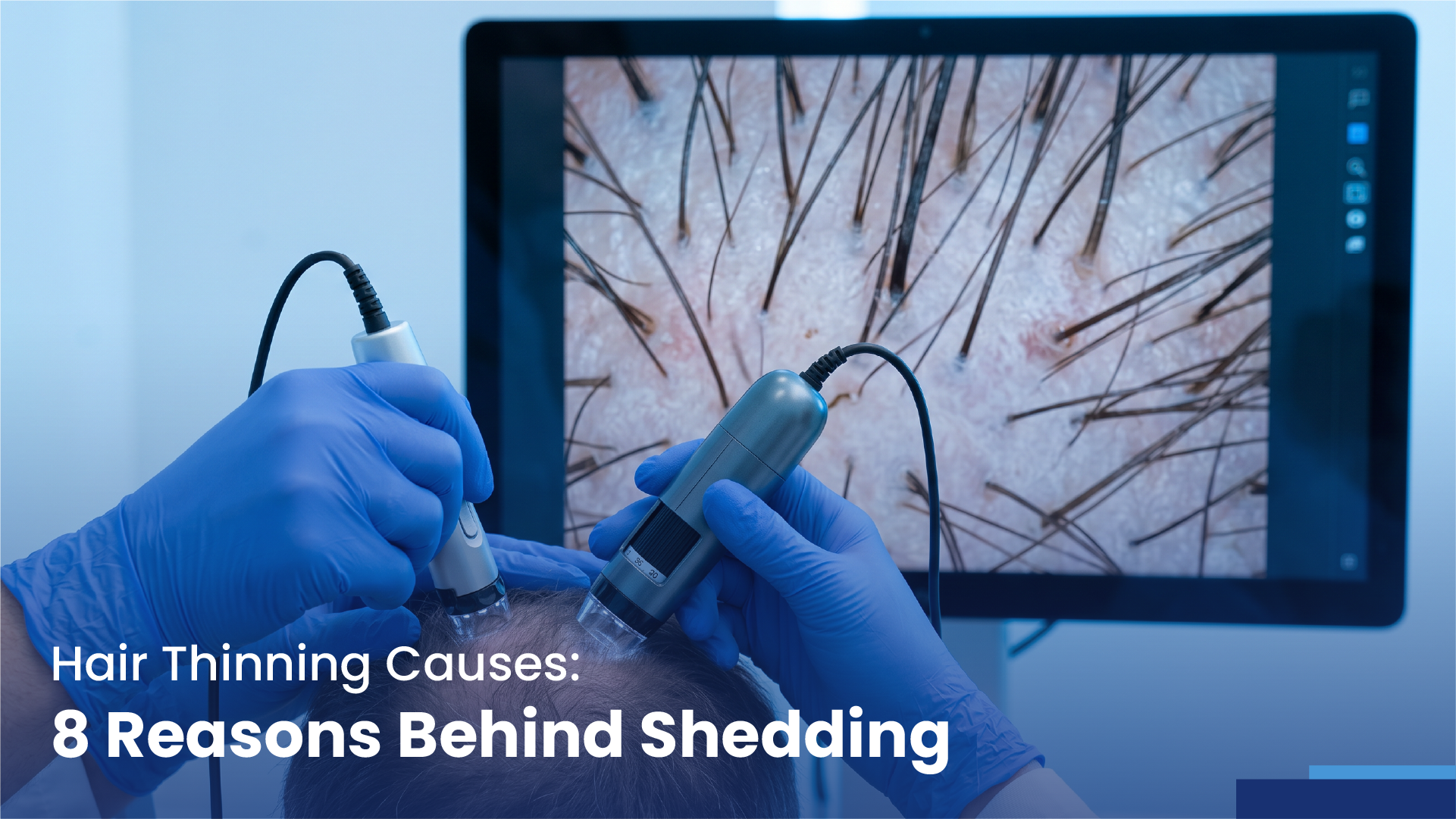
Noticing more hair in the brush, on the pillow, or in the shower drain is unsettling, but not all hair thinning is the same, and identifying the cause is the essential first step before any treatment. Losing 50 to 100 hairs a day is completely normal. Thinning becomes a genuine concern when shedding clearly exceeds this, when the hair loses density, or when the scalp becomes more visible. Crucially, different causes require completely different treatments, so understanding your specific trigger before starting any product saves months of wasted effort. At Blue Clinic‘s dermatology department, hair thinning is assessed to identify the actual cause before any treatment is recommended.
This guide covers the eight most common causes of hair thinning, how to tell them apart, and how to identify which one is affecting you.
Cause 1: Iron Deficiency
Iron deficiency is one of the most common and most treatable causes of hair thinning, particularly in women. Hair is one of the fastest-growing tissues in the body and among the first to suffer when the body runs low on iron. Low iron pushes a large proportion of hair follicles prematurely into the resting and shedding phase, producing diffuse thinning across the whole scalp.
Iron status is assessed with a blood test that must include ferritin, the body’s iron store, which is a more sensitive marker than haemoglobin alone. Ferritin levels below 30 are associated with hair thinning even when other blood values look normal. Correcting the deficiency with supervised supplementation typically improves shedding over three to six months. This is why a blood test is so valuable before assuming the cause is something else.
Cause 2: Thyroid Disorders
The thyroid gland regulates metabolism throughout the body, including the hair growth cycle. Both an underactive thyroid (hypothyroidism) and an overactive thyroid (hyperthyroidism) cause hair thinning, producing diffuse shedding across the entire scalp along with more fragile, finer hair.
Accompanying symptoms help distinguish thyroid-related thinning: hypothyroidism brings weight gain, fatigue, and cold sensitivity, while hyperthyroidism brings weight loss, anxiety, and heat sensitivity. A simple blood test measuring thyroid function confirms the diagnosis, and treating the thyroid condition gradually improves the hair, though it can take several months.
Cause 3: Stress and Telogen Effluvium
Significant physical or emotional stress, such as major surgery, serious illness, childbirth, crash dieting, or psychological trauma, can trigger a condition called telogen effluvium. The body responds to the stress by pushing a large number of hair follicles into the resting phase simultaneously. Two to four months after the triggering event, these follicles shed together, producing sudden and alarming diffuse hair loss.
The reassuring aspect of telogen effluvium is that it is usually self-limiting. Once the body recovers from the underlying trigger, shedding typically stops within about six months and hair returns to its normal density over the following year. Managing stress and maintaining good nutrition support recovery. Recognising this pattern prevents unnecessary panic and inappropriate treatment.
Cause 4: Hormonal Changes and Androgenetic Thinning
Hormones play a central role in hair thinning. The hormone DHT (dihydrotestosterone), derived from testosterone, shrinks hair follicles and shortens their growth cycle in genetically susceptible individuals, producing the gradual thinning of androgenetic hair loss in both men and women.
In women specifically, hormonal shifts drive thinning at several life stages: the drop in oestrogen after childbirth (a common trigger of telogen effluvium), the sustained decline at menopause, and the elevated androgens of polycystic ovary syndrome (PCOS), which causes thinning in a pattern similar to male pattern hair loss. Identifying a hormonal cause is important because it changes the treatment approach entirely.
Cause 5: Androgenetic Alopecia (Pattern Thinning)
Androgenetic alopecia is the single most common cause of hair thinning overall, affecting more than half of men over 50 and a significant proportion of women. It follows recognisable patterns: in men it begins at the hairline and crown, while in women it appears as a widening part with progressive thinning across the top of the scalp, usually preserving the hairline.
Pattern thinning is gradual and progressive rather than sudden. Early intervention slows its progression and preserves existing hair, which is why identifying it early matters. The dermatology team at Blue Clinic assesses the degree of thinning and guides the most appropriate approach for pattern hair loss.
Cause 6: Traction from Styling
Traction alopecia is hair thinning and loss caused directly by hairstyles that pull persistently on the hair. Tight ponytails, braids, buns, extensions, and weaves place chronic tension on the follicles, gradually damaging them. The thinning characteristically appears along the hairline and the edges of the scalp and along the part line where tension is greatest.
Traction alopecia is entirely preventable and, if caught early, fully reversible simply by relieving the tension and changing styling habits. However, if the pulling continues for too long, the follicular damage becomes permanent and the hair does not regrow. This makes early recognition especially important. Anyone who habitually wears tight styles and notices thinning at the hairline should change their styling and seek assessment promptly.
Cause 7: Scalp Conditions
Conditions affecting the scalp directly can cause hair thinning, and some can permanently damage follicles if neglected:
- Alopecia areata: an autoimmune condition causing sudden round, coin-shaped bald patches. It is often treatable, particularly when addressed early.
- Tinea capitis (scalp ringworm): a fungal infection common in children that causes patchy hair loss with scaling and itching.
- Seborrheic dermatitis and scalp psoriasis: chronic inflammation that weakens follicles and disrupts healthy growth.
- Folliculitis: bacterial infection of the hair follicles causing localised inflammation and shedding.
- Scarring alopecias: a group of conditions where inflammation destroys follicles and replaces them with scar tissue, causing permanent loss. These require urgent assessment to halt progression.
Because some scalp conditions cause irreversible damage, any persistent scalp symptoms accompanying hair thinning warrant prompt evaluation.
Cause 8: Medications and Medical Treatments
Many medications list hair thinning as a side effect by disrupting the hair growth cycle:
- Chemotherapy: stops the rapid division of hair follicle cells. The loss is temporary and hair regrows after treatment ends.
- Blood thinners (warfarin, heparin): can trigger telogen effluvium.
- Cholesterol-lowering statins: associated with hair thinning in some patients.
- Certain antidepressants, beta-blockers, and other blood pressure medications: may cause shedding in some individuals.
Never stop a prescribed medication because of hair thinning without consulting the prescribing doctor. Alternatives are often available, and medication-related hair loss is usually temporary.
How to Identify Your Trigger
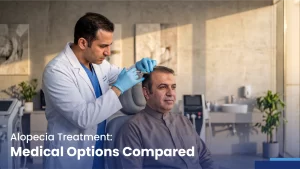
Identifying the cause starts with a detailed history: when the thinning began, whether it followed a specific event, and whether it is patchy or diffuse. This is followed by a clinical examination of the scalp and hair, and targeted blood tests, which may include a full blood count, ferritin, thyroid function, vitamin D, B12, zinc, and hormonal tests if indicated. Accurate diagnosis by a dermatologist saves months of trial and error with the wrong products.
Frequently Asked Questions
Is hair thinning after childbirth normal?
Yes, completely. Postpartum shedding is a classic form of telogen effluvium caused by the sharp drop in oestrogen after delivery, which pushes hair into the shedding phase. It usually begins two to three months after birth, continues for three to six months, and then resolves as hair gradually returns to normal density.
Do hair supplements actually work?
Their results are generally modest, especially in the absence of an actual deficiency. Supplements help when they correct a genuine nutritional deficiency, but taking them without a proven deficiency rarely produces significant improvement. The best investment is treating the actual underlying cause, which requires proper diagnosis.
Can hairstyles really cause permanent hair loss?
Yes. Traction alopecia from persistently tight styles is reversible if caught early, but prolonged tension can permanently damage the follicles so the hair does not regrow. This is why changing damaging styling habits early is so important.
Is hair thinning reversible?
It depends entirely on the cause. Telogen effluvium, iron deficiency, thyroid-related thinning, and early traction alopecia are typically reversible once the cause is addressed. Androgenetic alopecia can be slowed and managed but not fully reversed. Scarring alopecias cause permanent loss. This is precisely why identifying the cause early matters so much.
When should I see a dermatologist about hair thinning?
See a dermatologist if the thinning is sudden or severe, if you notice patchy loss, if it is accompanied by scalp symptoms, or if it persists without an obvious cause. Early assessment gives the best chance of identifying reversible causes before any permanent damage occurs.
Getting to the Root of Your Hair Thinning
- Contact the Blue Clinic dermatology department for a specialist assessment to identify the specific cause of your hair thinning.
- Book a consultation through WhatsApp to begin evaluation and diagnosis.
The team at Blue Clinic provides comprehensive hair and scalp care including diagnosis, treatment, and follow-up.