


Melasma is one of the most common and most frustrating pigmentation conditions, characterised by brown or greyish-brown patches that typically appear on the cheeks, forehead, upper lip, and bridge of the nose. It is more common in women and in medium to dark skin tones, and it is notoriously stubborn: it fades with treatment, then relapses the moment sun protection lapses or hormonal triggers return. Understanding why melasma behaves this way is the key to treating it effectively. At Blue Clinic‘s dermatology department, melasma is treated with a combination approach that addresses both the pigment and the underlying triggers.
This guide covers what melasma is, why it relapses so easily, the pigment-blocking creams that actually work, the role of chemical peels and lasers, and why strict sun protection is the non-negotiable foundation of every successful treatment plan.
What Is Melasma?
Melasma is a form of hyperpigmentation caused by overactive melanocytes producing excess pigment in specific areas. Unlike simple sun spots, melasma is driven by a combination of factors working together, most importantly sun exposure and hormonal influences. This dual driver is what makes it so persistent. The pigment can sit in the upper layer of the skin (epidermal melasma, which responds better to treatment), the deeper layer (dermal melasma, which is more resistant), or both (mixed melasma).
Determining the depth of the pigment helps predict how it will respond to treatment, which is one reason a professional assessment by the dermatology team is valuable before starting any treatment.
Why Melasma Relapses So Easily
The single most important thing to understand about melasma is that it is a chronic, relapsing condition. It is not cured in the way a temporary rash is cured. Two main drivers keep reactivating it:
- Sun and heat: even small amounts of UV exposure and visible light reactivate melanocytes and undo treatment progress. Heat itself (from cooking, hot climates, or saunas) can also trigger melasma independently of UV.
- Hormones: pregnancy (melasma is often called the mask of pregnancy), oral contraceptives, and hormone therapy all trigger and worsen melasma. This is why it is far more common in women.
Because these triggers are ongoing, melasma treatment is not a one-time fix but a process of fading the pigment and then maintaining the result by controlling the triggers. Patients who understand this from the start achieve far better long-term outcomes than those who expect a permanent cure.
Pigment-Blocking Creams: The Foundation of Fading
Hydroquinone
Hydroquinone is the most established and effective topical treatment for melasma. It works by inhibiting tyrosinase, the enzyme that produces melanin, effectively slowing pigment production. It is typically used for defined treatment periods rather than continuously, as prolonged uninterrupted use can cause side effects. Hydroquinone remains the gold standard against which other pigment-lightening agents are measured, and it should be used under dermatological supervision.
Triple Combination Cream
The most effective topical treatment for melasma is a triple combination cream containing hydroquinone, a retinoid (tretinoin), and a mild corticosteroid. The three ingredients work synergistically: hydroquinone blocks pigment production, the retinoid accelerates cell turnover to shed pigmented cells, and the corticosteroid reduces irritation from the other two. This combination is well supported by clinical evidence and is often the first-line prescription treatment for moderate to severe melasma.
Azelaic Acid
Azelaic acid inhibits tyrosinase and reduces pigment production while being gentle enough for sensitive skin and safe during pregnancy, when many other treatments are contraindicated. It is a valuable option for maintenance and for patients who cannot tolerate hydroquinone.
Tranexamic Acid
Tranexamic acid has emerged as an important melasma treatment, available both topically and orally. Oral tranexamic acid, prescribed and monitored by a dermatologist, has shown significant results in reducing melasma, particularly stubborn cases, by interfering with the pigment-producing pathway. It is prescribed with appropriate screening as it is not suitable for everyone, particularly those with clotting risks.
Other Brightening Agents
Kojic acid, vitamin C, niacinamide, and cysteamine all contribute to reducing pigmentation through various mechanisms. They are often used in combination or as maintenance agents to sustain results after the initial fading phase. Vitamin C also provides antioxidant protection that complements sun protection.
Chemical Peels
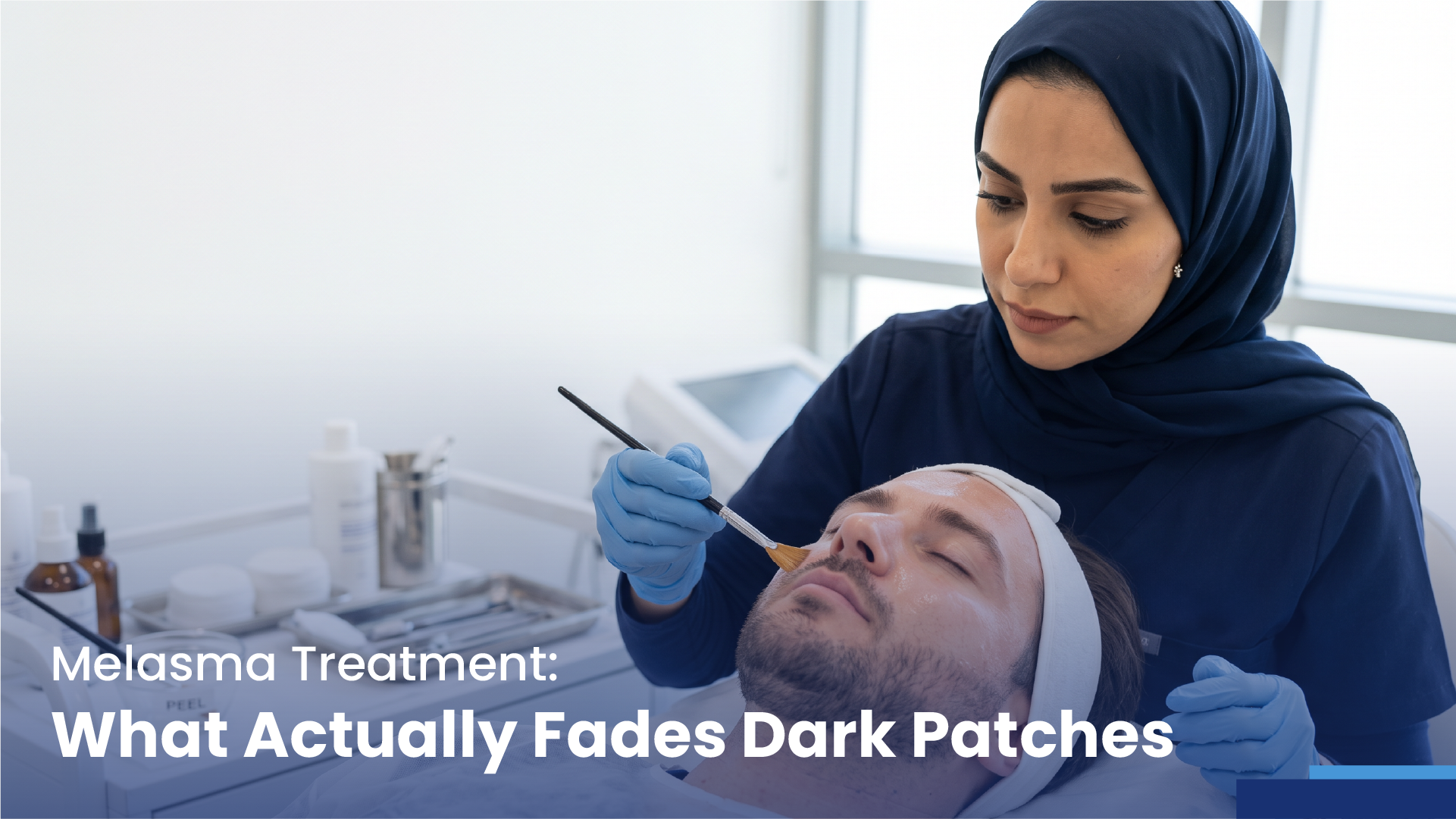
Chemical peels using agents such as glycolic acid, salicylic acid, or specially formulated melasma peels can accelerate the fading of pigment by removing pigmented surface cells. They are used as an adjunct to topical treatment rather than a standalone solution. Peels for melasma require careful selection and expertise, as overly aggressive peeling can paradoxically worsen melasma by triggering inflammation. Superficial, well-controlled peels performed by a professional are the safest approach.
Lasers: Use With Caution
Laser treatment for melasma is a double-edged sword. While certain lasers and energy devices can reduce pigment, melasma is uniquely prone to rebound and worsening after aggressive laser treatment because the heat and inflammation can stimulate the very melanocytes being targeted. For this reason, lasers are never a first-line treatment for melasma and are approached with great caution.
When used, low-energy, carefully selected devices in experienced hands can help resistant cases as part of a broader plan, always combined with strict sun protection and topical maintenance. Aggressive laser treatment of melasma by inexperienced providers is a common cause of the condition becoming worse and harder to treat. This is why choosing an experienced dermatology provider matters so much for melasma specifically.
Strict Sun Protection: The Non-Negotiable Foundation
No melasma treatment works without rigorous sun protection. This is not optional or secondary; it is the foundation on which every other treatment depends. Because both UV and visible light trigger melasma, sun protection for melasma is more demanding than general sun protection:
- Use a broad-spectrum SPF 50+ sunscreen every single day, regardless of weather or whether you are staying indoors (visible light passes through windows).
- Choose a tinted mineral sunscreen containing iron oxides, which protect against visible light that regular sunscreens miss and that is a proven melasma trigger.
- Reapply every two to three hours during the day, especially with outdoor exposure.
- Add physical protection: wide-brimmed hats and seeking shade.
- Be mindful of heat exposure, as heat itself can trigger melasma.
Patients who commit to strict daily sun protection see dramatically better and more durable results than those who treat sun protection as an afterthought. It is the difference between fading melasma that stays faded and melasma that relapses within weeks.
Maintenance: Preventing Relapse
Because melasma is chronic, maintenance after the initial fading is essential. This typically involves continued daily sun protection indefinitely, a maintenance topical regimen (often azelaic acid, vitamin C, or intermittent hydroquinone cycles), and managing hormonal triggers where possible in consultation with the relevant doctors. Melasma treatment is best thought of as ongoing management rather than a one-time cure.
Frequently Asked Questions
Will my melasma come back after treatment?
It can, and it commonly does if sun protection and maintenance are not sustained. Melasma is a chronic relapsing condition, not a one-time problem. The key to lasting results is committing to daily sun protection and a maintenance regimen after the initial fading. With good maintenance, results can be sustained long-term.
Does pregnancy melasma go away on its own?
Melasma that develops during pregnancy (the mask of pregnancy) often fades gradually after delivery as hormone levels normalise, but it does not always resolve completely and can persist. Sun protection during and after pregnancy helps. Aggressive treatment is usually deferred until after pregnancy and breastfeeding, though azelaic acid is considered safe during pregnancy.
Can I treat melasma with over-the-counter products?
Mild melasma may improve with over-the-counter brightening agents and diligent sun protection, but moderate to severe melasma usually requires prescription treatments like triple combination cream or tranexamic acid under dermatological supervision. Self-treating with aggressive products can worsen the condition.
Why did my melasma get worse after laser treatment?
This is a well-recognised risk. Melasma can rebound and worsen after aggressive laser treatment because the heat and inflammation stimulate melanocytes. This is why lasers are never first-line for melasma and must be approached cautiously by experienced providers, always alongside sun protection and topical treatment.
How long does melasma treatment take?
Meaningful fading typically takes several months of consistent treatment. Because melasma is stubborn, patience is essential. The initial fading phase is followed by ongoing maintenance to prevent relapse. There is no fast permanent fix, but steady improvement is very achievable.
Getting Started with Melasma Treatment
Melasma is treatable but demands a realistic, committed approach: the right combination of pigment-blocking treatments, cautious use of procedures, and above all, rigorous sun protection sustained over time.
- Visit the Blue Clinic dermatology department for a melasma assessment including pigment depth evaluation and a tailored treatment plan.
- Book a consultation through WhatsApp to discuss your treatment options with a qualified dermatologist.
The team at Blue Clinic provides evidence-based melasma treatment combining topical therapies, careful procedural options, and a strong emphasis on sun protection and maintenance.