







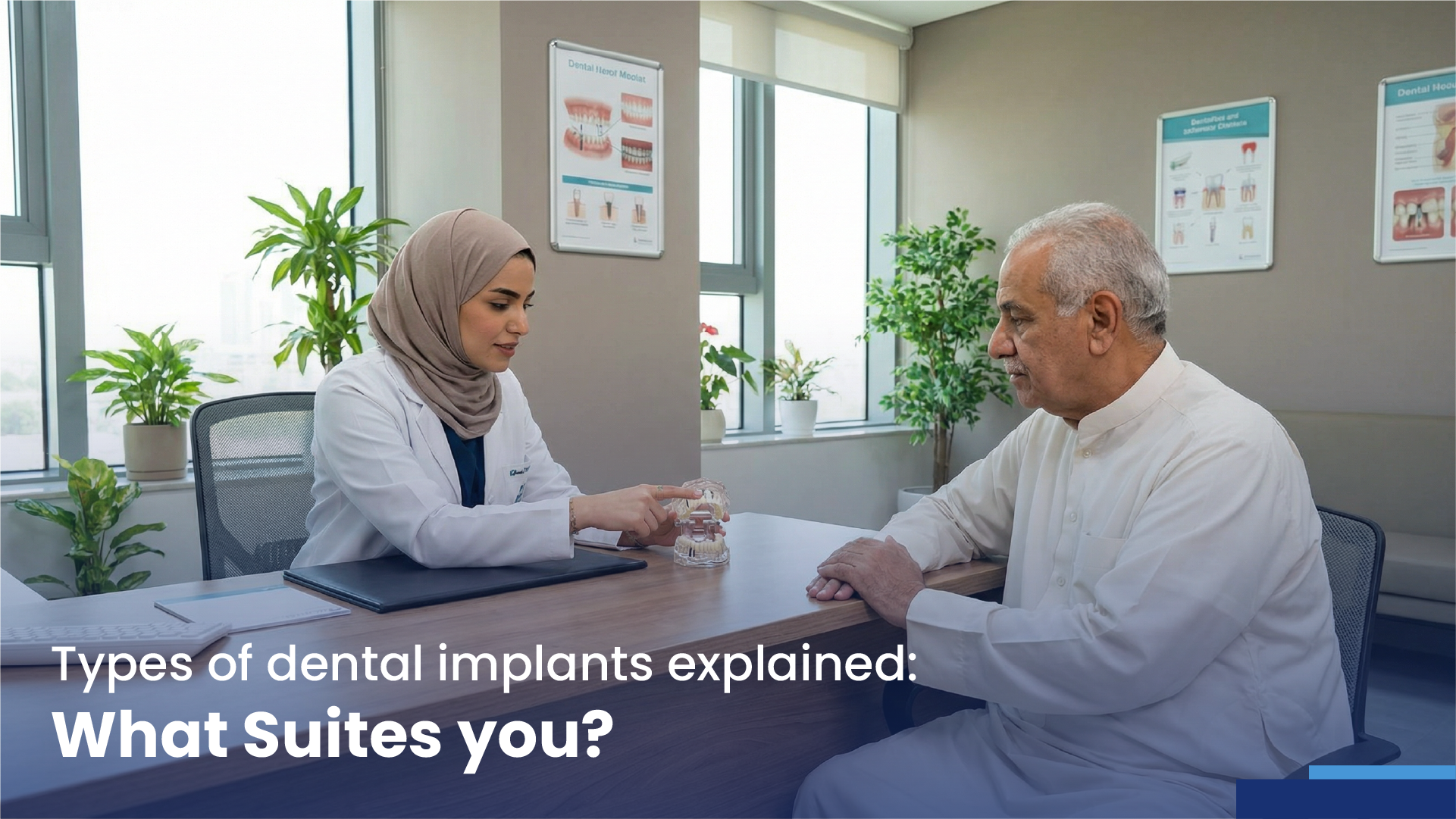
Missing teeth affect more than just appearance. They can change how you chew, speak, and even how your jawbone stays healthy over time. Today, dental implants in Kuwait are considered one of the most reliable and long-lasting solutions for tooth replacement. However, many patients are surprised to learn that there isn’t just one kind of implant — there are several types of dental implants, each designed for different needs.
Understanding the differences can help you feel more confident before your consultation at a medical center in Kuwait that offers advanced dental care. This guide explains the main implant types, who they are suitable for, and what factors influence the choice.
What are types of dental implants?
Dental implants are small, biocompatible posts — usually made of titanium or zirconia — that are placed into the jawbone to replace missing tooth roots. Once healed, they support crowns, bridges, or dentures.
When people search for types of dental implants, they are usually referring to one of three things:
- The way the implant is placed in the jaw
- The number of implants used to support teeth
- The material and design of the implant
Each of these categories plays a vital role in determining the most effective clinical path for a patient.
For a detailed overview of all available options, you can check out a complete guide to dental implant types.
Main structural types of dental implants
1. Endosteal implants
These are the most common types of dental implants used worldwide and in many Blue Clinic branches.
How they work: Endosteal implants are placed directly into the jawbone. After healing, a connector (abutment) is attached, followed by the artificial tooth.
Best for:
- Patients with healthy jawbone density
- Replacing one or multiple missing teeth
- Long-term, stable tooth replacement
Advantages:
- Strong and durable support
- High long-term success rates
- Feel and function similar to natural teeth
Things to consider: If the jawbone is too thin or weak, a bone graft may be recommended before placing this type of implant.
2. Subperiosteal implants
These are less common today but may still be used in special cases in a medical center in Kuwait.
How they work: Instead of being placed inside the jawbone, subperiosteal implants sit on top of the bone but under the gum tissue. A metal framework holds the replacement teeth.
Best for:
- Patients with significant bone loss
- Those who cannot undergo bone grafting
- Cases where traditional implants are not possible
Advantages:
- Avoids the need for major bone graft surgery
- Alternative solution when bone volume is limited
Things to consider: They may not be as stable as endosteal implants over the very long term and are typically chosen only when other options are unsuitable.
3. Zygomatic implants
Zygomatic implants are a specialized type of dental implant treatment in Kuwait for complex cases.
How they work: Instead of anchoring into the upper jawbone, these implants are placed into the cheekbone (zygoma), which is denser.
Best for:
- Severe upper jaw bone loss
- Patients who have been told they are not candidates for regular implants
- Full-arch restorations in the upper jaw
Advantages:
- May avoid the need for extensive bone grafting
- Provides strong anchorage in challenging cases
Things to consider: This is a more advanced procedure performed by experienced oral surgeons and is not needed for most patients.
For a comprehensive comparison of the advantages and disadvantages of each method, you can check out a detailed comparison of implant types.
Implant options based on number of teeth replaced
Another way to understand types of dental implants is by how many teeth they support.
Single tooth implant
Used when only one tooth is missing. One implant supports one crown.
Ideal for:
- Isolated tooth loss
- Preserving neighboring healthy teeth
Unlike traditional bridges, adjacent teeth do not need to be filed down.
Implant-supported bridge
When several teeth in a row are missing, two or more implants can support a bridge.
Ideal for:
- Multiple missing teeth
- Stronger alternative to removable partial dentures
This option distributes chewing forces more evenly than traditional bridges.
Implant-supported dentures
For patients missing most or all teeth, implants can anchor a full denture. Common options include:
- All-on-4 dental implants – Four implants support a full arch
- All-on-6 dental implants – Six implants for added stability
These solutions are popular for full mouth Dental implants in Kuwait because they improve comfort, stability, and confidence compared to Dental Dentures.
For clinical examples of how these different implant types are used in practice, you can check out this educational article.
What materials are used in types of dental implants?
Titanium implants
The most widely used material.
Benefits:
- Strong and lightweight
- Excellent integration with bone (osseointegration)
- Long track record of success
Zirconia implants
A metal-free alternative.
Benefits:
- Tooth-colored material
- May be preferred by patients with metal sensitivities
- Good aesthetic option in visible areas
A dentist at a best dental clinic in kuwait will help determine which material is most suitable based on medical history and aesthetic goals.
For an in-depth academic review regarding these implant types and materials, you can check out the full study.
Common causes and risk factors for tooth loss
Understanding why teeth are lost helps explain why dental implants in Kuwait are often recommended.
Common causes include:
- Advanced gum disease (Periodontics)
- Severe tooth decay
- Trauma or accidents
- Failed root canal treatment
- Congenital missing teeth
Risk factors that may affect implant choice:
- Smoking
- Uncontrolled diabetes
- Poor oral hygiene
- Bone loss in the jaw
- Teeth grinding (bruxism)
These factors do not always prevent implants but may influence which of the types of dental implants is safest and most predictable.
Symptoms you should not ignore after tooth loss
Missing teeth can lead to more than just cosmetic concerns.
Mild but important signs:
- Difficulty chewing certain foods
- Food getting trapped in gaps
- Speech changes
More serious consequences:
- Shifting of nearby teeth
- Jawbone shrinkage over time
- Bite problems and jaw pain
Early evaluation at a medical center in Kuwait can prevent these complications.
When should you see a doctor for missing teeth?
You should consider consulting a dentist if:
- A tooth has been missing for more than a few months
- Your denture feels loose or uncomfortable
- You avoid certain foods due to chewing difficulty
- You notice changes in your facial shape due to tooth loss
The earlier dental implant treatment in Kuwait is planned, the more options may be available at the best dental clinic in kuwait.
How are types of dental implants diagnosed and selected?
Choosing between different types of dental implants requires a detailed assessment. A dentist may use:
- Clinical oral examination
- Digital X-rays
- 3D CBCT scans to assess bone volume
- Evaluation of gum health
- Medical history review
These steps help determine:
- Bone quality and quantity
- Ideal implant position
- Whether bone grafting is needed
- The safest and most effective implant type
Treatment options available in Kuwait
Patients seeking Dental implants in Kuwait can access a wide range of modern solutions.
Non-surgical preparation may include:
- Gum disease treatment
- Bone grafting
- Sinus lift procedures (for upper jaw implants)
Surgical phase:
- Placement of the implant post
- Healing period for bone integration
- Attachment of abutment and final crown, bridge, or denture
Treatment timelines vary depending on the type of dental implant and individual healing response.
Possible complications if left untreated
Not replacing missing teeth can lead to:
- Progressive bone loss
- Changes in facial appearance
- Increased strain on remaining teeth
- Higher risk of further tooth loss
- Digestive issues from poor chewing
Timely consultation at a Kuwait clinic helps reduce these long-term risks.
For insights on the long-term outcomes and success rates of various dental restorations, you can check out this detailed study.
Conclusion
Understanding the different types of dental implants helps patients make informed decisions about replacing missing teeth. From single implants to full-arch solutions, modern dentistry offers options that restore both function and confidence.
Because every case is unique, a professional evaluation at a trusted medical center in Kuwait is essential. A dentist can assess your oral health, discuss suitable implant types, and design a treatment plan tailored to your needs at the best dental clinic in kuwait.
Would you like me to help you draft a similar SEO-optimized article for their Dermatology services?
FAQs
- What is the most common type of dental implant?
The most widely used option is the endosteal implant, placed directly into the jawbone. It offers strong, long-term support for crowns, bridges, or dentures.
- Are all-on-4 implants considered a different type?
Yes. All-on-4 dental implants refer to a technique where four implants support a full arch of teeth. It’s a treatment approach within the broader category of types of dental implants.
- How do dentists decide which implant type I need?
A dentist evaluates bone density, number of missing teeth, gum health, and medical history. Treatment depends on the patient’s condition and long-term goals.
- Are dental implants safe?
For most healthy adults, Dental implants in Kuwait are considered a safe and predictable treatment when performed by qualified professionals and with proper aftercare.