







Missing teeth affect more than just appearance. They can change how you chew, speak, and even how your jaw functions over time. If you’ve lost one or more teeth, your dentist may recommend a dental bridge as a reliable way to restore your smile and oral function.
Gaps in the mouth can also place extra pressure on the remaining teeth. Over time, this imbalance may lead to wear, sensitivity, or jaw discomfort. Replacing missing teeth early helps maintain a stable bite and reduces the risk of future dental complications.
Understanding the different types of dental bridges helps you make a confident, informed decision about your treatment. This guide explains how dental bridges work, the main bridge options available, and how the expert team at Blue Clinic selects the right solution for each patient.
Dental technology has advanced significantly in recent years, allowing bridges to look more natural and fit more comfortably than older designs. Modern materials are also more durable, giving patients long-lasting and aesthetically pleasing results.
What are dental bridges?
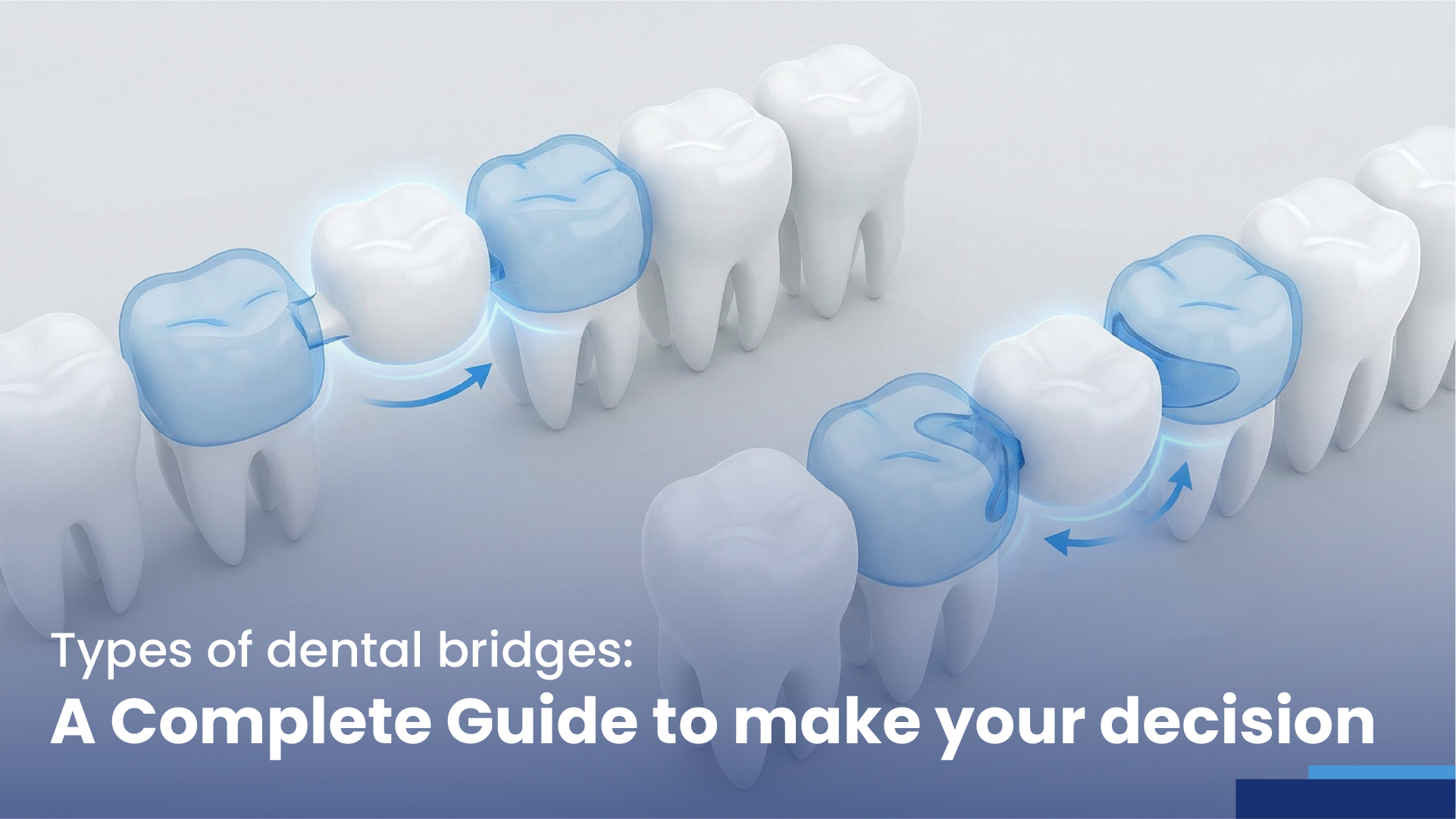
A dental bridge is a fixed dental restoration used to replace one or more missing teeth. It literally “bridges” the gap left behind. The bridge consists of:
- Pontic – the artificial tooth that replaces the missing one
- Abutment teeth or implants – the supporting structures that hold the bridge in place
Unlike removable dentures, dental bridges at Blue Clinic are cemented or attached in a way that makes them stable and long-lasting. This stability allows patients to eat and speak with confidence without worrying about movement.
They restore:
- Proper chewing function
- Clear speech
- Natural facial structure
- Balanced bite alignment
Without replacing a missing tooth, nearby teeth may shift, leading to bite problems, jaw discomfort, and difficulty cleaning between teeth. Over time, these changes can make oral hygiene more challenging and increase the risk of gum disease or tooth decay in surrounding teeth.
Common causes of tooth loss and need for bridges
Patients may need tooth replacement options in Kuwait for several reasons:
- Severe tooth decay that cannot be restored
- Advanced gum disease (periodontics)
- Dental trauma or accidents
- Congenital missing teeth
- Failed root canal treatment
In these cases, a dental bridge treatment at Blue Clinic can prevent further complications and maintain long-term oral health. A bridge not only fills the space but also distributes biting forces evenly.
Main types of dental bridges
The specialists at Blue Clinic generally use four primary types of dental bridges, each suited for different clinical situations. The right choice depends on the location of the missing tooth and the patient’s overall oral health.
Each bridge type has its own strengths and limitations. A dentist carefully evaluates these factors to recommend a solution that provides both function and long-term stability.
1. Traditional dental bridge
The traditional dental bridge is the most commonly used type. It involves placing dental crowns on the natural teeth on either side of the gap, which support the artificial tooth in between.
This method has been used successfully for many years and remains a dependable solution for many patients. It is especially effective in areas where masticatory forces are strong and stability is essential.
How it works
- The teeth next to the missing tooth are reshaped
- Dental crowns are placed over these teeth
- The pontic is attached between the crowns
Best for
- Patients with healthy, strong enamel and teeth on both sides of the missing tooth
- Back teeth (molars and premolars) where chewing pressure is high
Advantages
- Strong and durable
- Natural appearance
- Long track record of success
Drawbacks
- Requires removal of enamel from healthy teeth
- Not ideal if supporting teeth are weak or heavily restored
Traditional bridges remain one of the most reliable tooth bridge options in Kuwait for restoring chewing strength. With proper care and regular dental visits, they can last many years.
2. Cantilever dental bridge
A cantilever bridge is used when there is only one natural tooth next to the gap. Instead of being supported on both sides, the bridge is anchored from just one side.
This design requires careful planning because the supporting tooth carries more force. Dentists evaluate bite patterns to ensure this option will function safely.
How it works
- The pontic is supported by a crown on just one adjacent tooth
- No support exists on the other side
Best for
- Areas with low biting force
- Front teeth rather than molars
Advantages
- Requires preparation of only one supporting tooth
- Less invasive than traditional bridges
Drawbacks
- Less stable under heavy chewing pressure
- Higher risk of leverage stress on the supporting tooth
- Not usually recommended for back teeth
Dentists typically reserve cantilever bridges for carefully selected cases where bite forces are controlled. Regular monitoring helps ensure the supporting tooth remains healthy.
3. Maryland dental bridge (resin-bonded bridge)
The Maryland bridge, also called a resin-bonded bridge, uses a metal or ceramic framework bonded to the back of adjacent teeth. It is known for being more conservative than other bridge types.
Because it requires minimal alteration of natural teeth, this option is often preferred for younger patients or those who want to preserve as much enamel as possible.
How it works
- A pontic is attached to thin “wings”
- These wings are bonded to the back surfaces of neighboring teeth
- Minimal or no drilling of adjacent teeth
Best for
- Front teeth
- Younger patients
- Cases where preserving natural tooth structure is important
Advantages
- Conservative (little enamel removal)
- Less invasive than traditional bridges
- Often quicker procedure
Drawbacks
- Not as strong as traditional bridges
- Can debond under heavy chewing
- Not ideal for molars
This option is often chosen when patients want a minimally invasive dental bridge. Dentists may recommend it as a temporary or long-term solution depending on bite conditions.
4. Implant-supported dental bridge
An implant-supported bridge uses dental implants instead of natural teeth for support. These implants act like artificial tooth roots anchored in the jawbone.
Because the bridge is supported by implants rather than neighboring teeth, this option preserves the structure of surrounding natural teeth and provides excellent stability.
How it works
- Titanium implants are surgically placed in the jawbone
- The bridge is attached to the implants
- No reliance on neighboring natural teeth
Best for
- Replacing multiple missing teeth in a row
- Patients with sufficient jawbone density
- Those seeking long-term stability
Advantages
- Very strong and durable
- Preserves bone in the jaw
- Does not affect adjacent teeth
- Natural feel and function
Drawbacks
- Requires minor surgery
- Longer treatment time
- Higher initial cost
Implant bridges are considered one of the most advanced tooth replacement solutions in Kuwait at the best implant clinic kuwait. They are designed to function much like natural teeth and can offer excellent long-term outcomes.
Symptoms you should not ignore after tooth loss
If you are missing a tooth and notice the following, you should seek dental care:
- Difficulty chewing on one side
- Food getting trapped in the gap
- Teeth shifting or tilting
- Jaw discomfort or clicking
- Changes in speech
- Gum irritation near the missing tooth
These signs suggest that replacing the tooth with a dental bridge treatment or another solution may be necessary. Addressing these issues early can prevent more complex dental problems later.
When should you see a dentist for missing teeth?
You should consult a dentist if:
- A tooth has been missing for more than a few weeks
- You experience bite imbalance
- You avoid chewing on one side
- You feel self-conscious about your smile
- You notice movement of nearby teeth
Early treatment often allows for more options and simpler procedures. Delaying care can lead to additional bone loss or shifting of surrounding teeth, which may limit future treatment choices at a dental clinic in Kuwait.
How are dental bridges diagnosed and planned?
Before recommending a specific type of dental bridge, a dentist performs:
- Clinical oral examination
- Digital X-rays
- Bite analysis
- Assessment of gum health
- Evaluation of bone support (especially for implants)
Modern imaging helps dentists assess the condition of surrounding teeth and bone in detail. This careful planning improves the long-term success of the bridge.
Treatment planning depends on:
- Number of missing teeth
- Location of the gap
- Strength of neighboring teeth
- Patient’s oral hygiene
- Budget and long-term goals
Each patient’s situation is unique, so the treatment plan is always customized. A dentist may also discuss alternative options such as implants or removable dentures if appropriate.
Possible complications if missing teeth are not replaced
Leaving a gap untreated can lead to:
- Teeth drifting into the empty space
- Bite misalignment
- Jaw joint strain
- Bone resorption in the jaw
- Increased risk of periodontal disease
- Difficulty cleaning teeth
- Changes in facial structure over time
Replacing missing teeth with the right type of dental bridge helps prevent these long-term problems. It also supports better chewing efficiency and overall oral comfort.
Main Benefits of Dental Bridges
Dental bridges offer more than cosmetic improvement. When properly planned and placed, they provide both functional and structural advantages.
Key benefits include:
- Restoring proper chewing efficiency
- Improving speech clarity
- Preventing neighboring teeth from shifting
- Maintaining facial structure and jaw alignment
- Distributing bite forces evenly
- Supporting long-term oral stability
By filling the gap left by missing teeth, dental bridges help preserve overall dental balance and reduce the risk of further complications.
How to Choose the Best Type of Dental Bridge
Selecting the right dental bridge is a clinical decision based on several important factors. There is no one-size-fits-all solution.
Your dentist considers:
- Number of missing teeth
- Location of the gap (front vs back teeth)
- Condition and strength of neighboring teeth
- Bone density (for implant-supported bridges)
- Bite force and chewing habits
- Aesthetic expectations
- Budget and long-term goals
For example:
- Traditional bridges may be ideal when strong natural teeth exist on both sides of the gap.
- Maryland bridges are suitable for front teeth and more conservative treatment.
- Implant-supported bridges provide greater long-term stability when bone conditions allow.
A detailed consultation at a qualified dental clinic in Kuwait ensures the bridge type matches your oral health needs and lifestyle.
How Is Dental Bridge Treatment Done?
The treatment process depends on the type of bridge selected, but generally follows these steps:
1. Initial Consultation and Diagnosis
The dentist performs:
- Clinical examination
- Digital X-rays
- Bite evaluation
- Assessment of gum and bone health
A customized treatment plan is created.
2. Tooth Preparation (If Required)
For traditional or cantilever bridges:
- Supporting teeth are reshaped
- Impressions or digital scans are taken
- A temporary bridge may be placed
For implant-supported bridges:
- Implants are surgically placed
- Healing time (osseointegration) is required
- The final bridge is attached after healing
3. Bridge Fabrication
The bridge is custom-designed in a dental laboratory to match:
- Tooth color
- Shape
- Bite alignment
4. Final Placement
The bridge is:
- Cemented (for traditional types), or
- Screw-retained (for implant-supported bridges)
The dentist checks fit, bite balance, and comfort before finalizing. Regular follow-ups ensure the bridge remains stable and functional.
Dental Bridge Cost in Kuwait
The cost of dental bridges varies depending on the type of bridge, materials used, and number of units involved. Below is a clear breakdown based on the types mentioned:
1) Porcelain Fused to Metal (PFM) Bridge
Estimated cost: 150 KD per unit.
The final price depends on the total number of units (teeth) included in the bridge.
2) Crown–Maryland Bridge (Resin-Bonded Bridge)
Estimated cost: 380 KD
3) Screw-Retained PMMA Bridge (Implant-Supported Temporary)
Estimated cost: 800 KD
4) Screw-Retained PMMA Bridge with Metal Support
Estimated cost: 1200 KD
It is important to note that the final treatment cost may vary depending on diagnostic imaging, additional procedures (such as bone grafting), and individual case complexity. A professional evaluation at a dental clinic in Kuwait provides the most accurate cost estimate tailored to your needs
Restore Your Smile with the Right Dental Bridge in Kuwait
Understanding the different types of dental bridges helps you take an active role in your oral health decisions. Each bridge type serves a specific purpose and suits different clinical needs.
If you are considering dental bridge treatment in Kuwait, a professional consultation allows for a detailed evaluation, digital imaging, and a personalized treatment plan tailored to your needs.
At Blue Clinic, we recommend the most appropriate option based on your lifestyle and long-term goals. Replacing missing teeth not only restores your smile but also protects your overall oral function and comfort.
FAQs
- What is the strongest type of dental bridge?
Dental implants supported bridges are generally the strongest because they are anchored into the jawbone rather than relying on natural teeth. This support helps them withstand strong chewing forces.
- Which dental bridge looks the most natural?
All modern bridges are designed to look natural, but porcelain and ceramic bridges offer excellent color matching with surrounding teeth. Dentists carefully shape and shade the bridge to blend with your smile.
- Are dental bridges permanent?
Dental bridges are fixed, long-term restorations, but they may need replacement after many years due to normal wear. Good oral hygiene and regular dental visits help extend their lifespan.
- How do dentists choose the right type of dental bridge in Kuwait?
A dentist at the best dental clinic in Kuwait evaluates oral health, bone condition, bite force, and aesthetic goals before recommending the best option. Personal preferences and lifestyle factors are also considered during treatment planning.