





Dental veneers are no longer considered a purely cosmetic luxury. In modern dentistry, veneers are a precise restorative solution designed to correct structural, color, and alignment imperfections while preserving natural tooth integrity when planned correctly.
This 2026 guide to dental veneers meaning explains their medical meaning, functional benefits, material types, and clinical considerations, with a clear, patient-focused perspective suitable for individuals researching safe and reliable veneer treatments in Kuwait.
This article is written for patients seeking clarity, not sales language. Each section explains how veneers work, when they are recommended, and how different veneer types affect appearance, durability, and oral health.
Dental Veneers Meaning: Understanding it from a clinical perspective
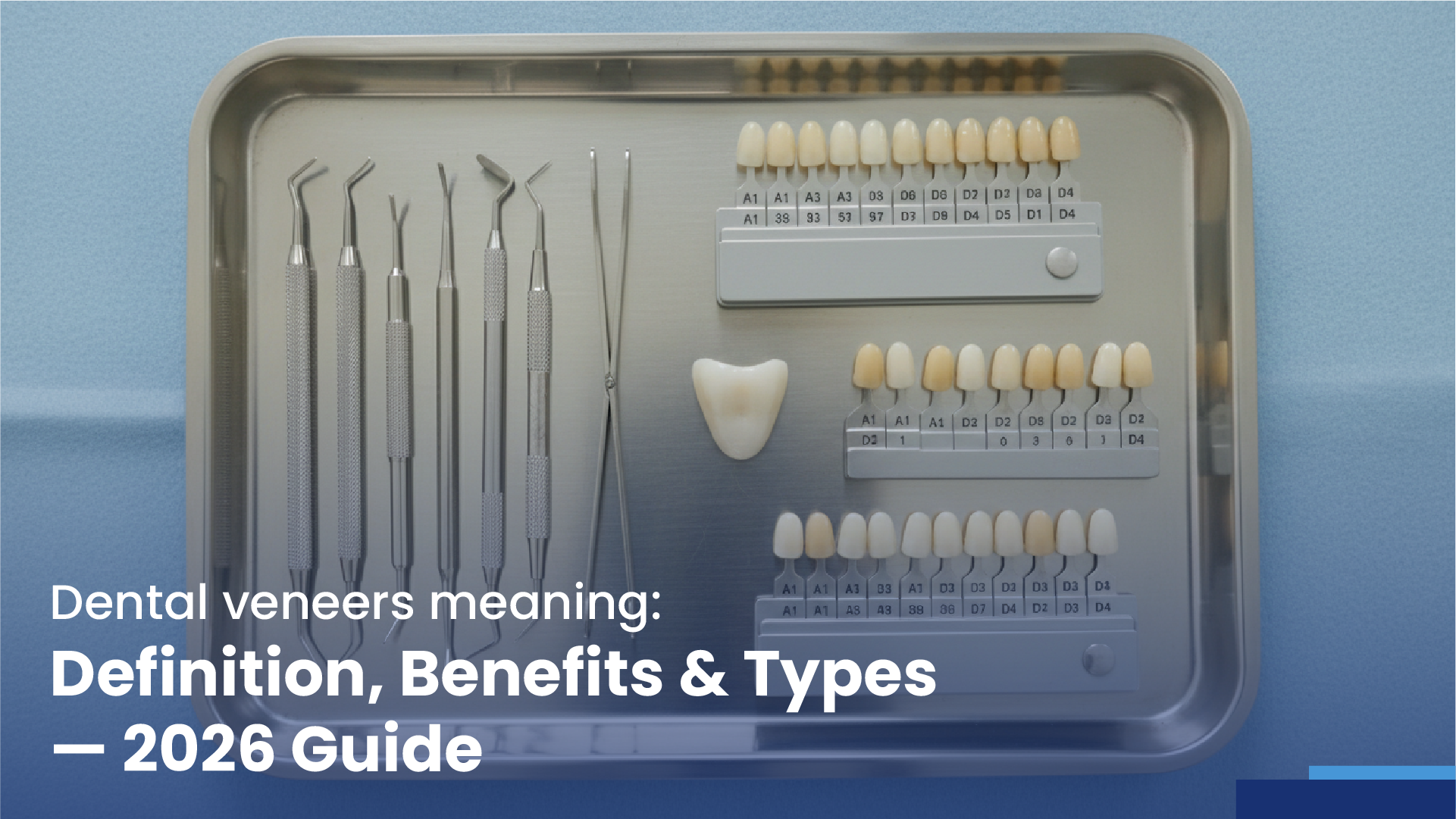
Dental veneers are thin, custom-made shells bonded to the front surface of teeth to improve shape, color, size, or alignment. They are classified as indirect restorations, meaning they are fabricated outside the mouth using precise dental impressions or digital scans, then permanently bonded to prepared teeth.
From a clinical standpoint, veneers serve both aesthetic and functional purposes. Dentists use veneers to restore worn enamel, close gaps, correct mild misalignment, and improve tooth symmetry without resorting to full crowns when tooth structure is still largely intact.
In modern dental practice in Kuwait, veneers are commonly used as part of smile rehabilitation plans rather than standalone cosmetic procedures. Proper diagnosis includes evaluating bite alignment, enamel thickness, gum health, and long-term load distribution across the teeth.
Why dental veneers are recommended in modern dentistry
Veneers are recommended when cosmetic concerns overlap with structural or surface-level dental issues. Unlike whitening or orthodontics alone, veneers can address multiple concerns simultaneously.
Common clinical indications for dental veneers
Dentists may recommend veneers in cases involving:
- Intrinsic tooth discoloration that does not respond to professional whitening.
- Enamel erosion caused by acidic diets or bruxism.
- Minor tooth misalignment or uneven spacing.
- Chipped or fractured enamel.
- Asymmetrical tooth shapes or worn incisal edges.
In these cases, dental veneers in Kuwait provide a controlled, predictable solution when conservative preparation protocols are followed.
The functional and aesthetic benefits of dental veneers
Dental veneers improve more than visual appearance. When properly planned, they contribute to overall oral function and long-term tooth protection.
- Improved tooth surface and enamel protection
Veneers cover compromised enamel surfaces, creating a protective barrier that reduces sensitivity and further erosion. This benefit is especially relevant for patients with enamel thinning caused by acid reflux, dietary acids, or aggressive brushing.
- Enhanced color stability and brightness
Unlike natural enamel, high-quality ceramic veneers resist staining from coffee, tea, and tobacco. This makes them a stable option for patients seeking long-term color consistency without repeated whitening sessions.
- Restored tooth proportions and smile balance
Veneers allow dentists to correct disproportionate tooth width, length, and contour. This helps improve smile harmony while maintaining a natural appearance aligned with facial proportions.
- Psychological and social benefits
Multiple clinical studies link improved smile aesthetics to higher patient confidence and improved social interaction. Patients who previously avoided smiling often report increased comfort after veneer treatment.
Types of dental veneers and how they differ
Understanding veneer types is essential for making informed decisions. Each material offers specific advantages depending on clinical needs, budget, and long-term expectations.
- Porcelain veneers
Porcelain veneers are considered the gold standard in aesthetic dentistry.
They are fabricated from medical-grade ceramic materials that closely mimic natural enamel translucency. These veneers are stain-resistant, highly durable, and capable of lasting 10 to 15 years or longer with proper care.
Porcelain veneers are commonly recommended for:
- Full smile makeovers
- Severe discoloration
- Long-term aesthetic stability
They require minimal enamel removal when modern conservative techniques are used.
- Composite resin veneers
Composite veneers are applied directly to the teeth using tooth-colored resin materials.
They offer a faster and more affordable alternative, often completed in a single visit. Dentists sculpt and polish the material chairside to achieve the desired shape and color.
Composite veneers are suitable for:
- Minor cosmetic corrections.
- Temporary aesthetic solutions.
- Patients seeking lower upfront cost.
They are less stain-resistant and typically last 4 to 7 years.
- No-prep and minimal-prep veneers
No-prep veneers involve little to no enamel removal and are designed for cases with adequate natural spacing and alignment.
Minimal-prep veneers require slight enamel reshaping to ensure proper bonding and thickness control. These options prioritize tooth preservation and are suitable only after careful evaluation.
Comparison table: Types of dental veneers
| Veneer type | Material | Durability | Tooth preparation | Best suited for |
| Porcelain veneers | Ceramic | 10–15+ years | Minimal | Full smile enhancement, discoloration |
| Composite veneers | Resin | 4–7 years | Minimal to none | Minor cosmetic corrections |
| No-prep veneers | Ultra-thin ceramic | 7–10 years | None or very minimal | Mild shape or color adjustments |
| Minimal-prep veneers | Ceramic | 10+ years | Light preparation | Balanced aesthetics with enamel preservation |
The dental veneer procedure step by step
Understanding the treatment process helps patients set realistic expectations.
- Clinical assessment and planning
Dentists begin with a comprehensive oral examination, digital imaging, and bite analysis. Smile design software may be used to simulate outcomes and align expectations.
- Tooth preparation
Depending on veneer type, a thin layer of enamel is removed to create space for the veneer. Local anesthesia is used when needed to ensure comfort.
- Impression or digital scanning
Precise impressions or intraoral scans are taken to ensure accurate fabrication of veneers.
- Temporary veneers
Temporary restorations protect the teeth and allow patients to preview aesthetics before final placement.
- Final bonding
Once veneers are ready, dentists bond them using high-strength dental adhesives. Bite adjustments and polishing ensure proper function and comfort.
Dental veneers vs crowns: Understanding the difference
Patients often confuse veneers with crowns. The distinction is clinically significant.
Veneers preserve more natural tooth material and are recommended when structural integrity remains strong. Crowns are reserved for severely damaged or heavily restored teeth.
Longevity and maintenance of dental veneers
Veneer lifespan depends on material choice, oral hygiene, and lifestyle habits.
Maintenance recommendations include:
- Using non-abrasive toothpaste.
- Wearing night guards if teeth grinding is present.
- Avoiding excessive force on front teeth.
- Attending regular dental checkups.
Patients who follow these guidelines often extend veneer longevity well beyond average estimates.
Are dental veneers safe?
Dental veneers are considered safe when performed by experienced dentists following conservative preparation principles. Complications are rare and usually linked to improper case selection or aggressive enamel reduction.
Modern adhesive dentistry has significantly improved bonding strength and reduced risks associated with veneer treatments.
Dental veneers in Kuwait: What patients should consider
Patients seeking dental veneers in Kuwait should evaluate:
- Dentist experience and specialization.
- Material quality and laboratory standards.
- Comprehensive treatment planning.
- Long-term follow-up care.
A reputable dental clinic in Kuwait prioritizes function, gum health, and bite stability alongside aesthetics.
How veneers integrate with other dental treatments
Veneers are often combined with:
- Teeth whitening for color matching.
- Orthodontic correction for alignment.
- Gum contouring for balanced smile frames.
Integrated planning ensures optimal outcomes rather than isolated cosmetic fixes.
Conclusion: Making informed decisions about dental veneers
Dental veneers represent a precise blend of restorative science and aesthetic dentistry. They offer durable, predictable improvements when chosen for the right indications and executed with clinical expertise. Understanding veneer types, benefits, limitations, and maintenance allows patients to approach treatment confidently and realistically.
Why choose Blue Clinic for dental veneer treatments in Kuwait
Blue Clinic provides comprehensive cosmetic and restorative dental services within a modern, patient-centered medical environment in Mahboula, Kuwait. Veneer treatments are planned by experienced dental professionals using advanced diagnostic tools and conservative techniques to protect natural tooth structure.
At Blue Clinic, patients benefit from:
- Personalized smile assessments.
- High-quality ceramic and composite veneer options.
- Integrated dental and aesthetic care under one roof.
- A clean, professional environment focused on long-term oral health.
Location: Mahboula Coastal Road, Mermaid Medical Center, 2nd Floor, Villa #205, Kuwait
For consultations or treatment planning, patients are encouraged to contact the clinic directly to explore suitable veneer options based on individual needs.
Frequently asked questions about dental veneers
How long do dental veneers last?
Porcelain veneers typically last 10 to 15 years or longer with proper care. Composite veneers usually last 4 to 7 years.
Can veneers be removed later?
Veneers are considered permanent because enamel removal is usually involved. Replacement is possible, but teeth cannot return to their original untreated state.
Do veneers damage natural teeth?
When conservative preparation is used, veneers do not damage teeth. They often protect weakened enamel surfaces.
Are veneers suitable for patients with gum disease?
Active gum disease must be treated before veneer placement. Healthy gums are essential for long-term success.
Can veneers fix severely crooked teeth?
Veneers correct mild alignment issues. Severe misalignment typically requires orthodontic treatment before veneer placement.