



Choosing between a dental crown and a dental veneer is one of the most common decisions patients face when improving the appearance or function of their teeth. Both treatments are widely used in modern cosmetic and restorative dentistry, yet they serve different purposes, involve different levels of tooth preparation, and deliver different long-term outcomes.
For patients researching cosmetic dentistry in Kuwait, understanding the real clinical difference between a crown and a veneer helps set realistic expectations and ensures the right treatment choice. This article explains the difference between crown and veneer through 10 clinically grounded facts, using practical insight from everyday dental practice rather than marketing claims.
Understanding crowns and veneers in modern dentistry
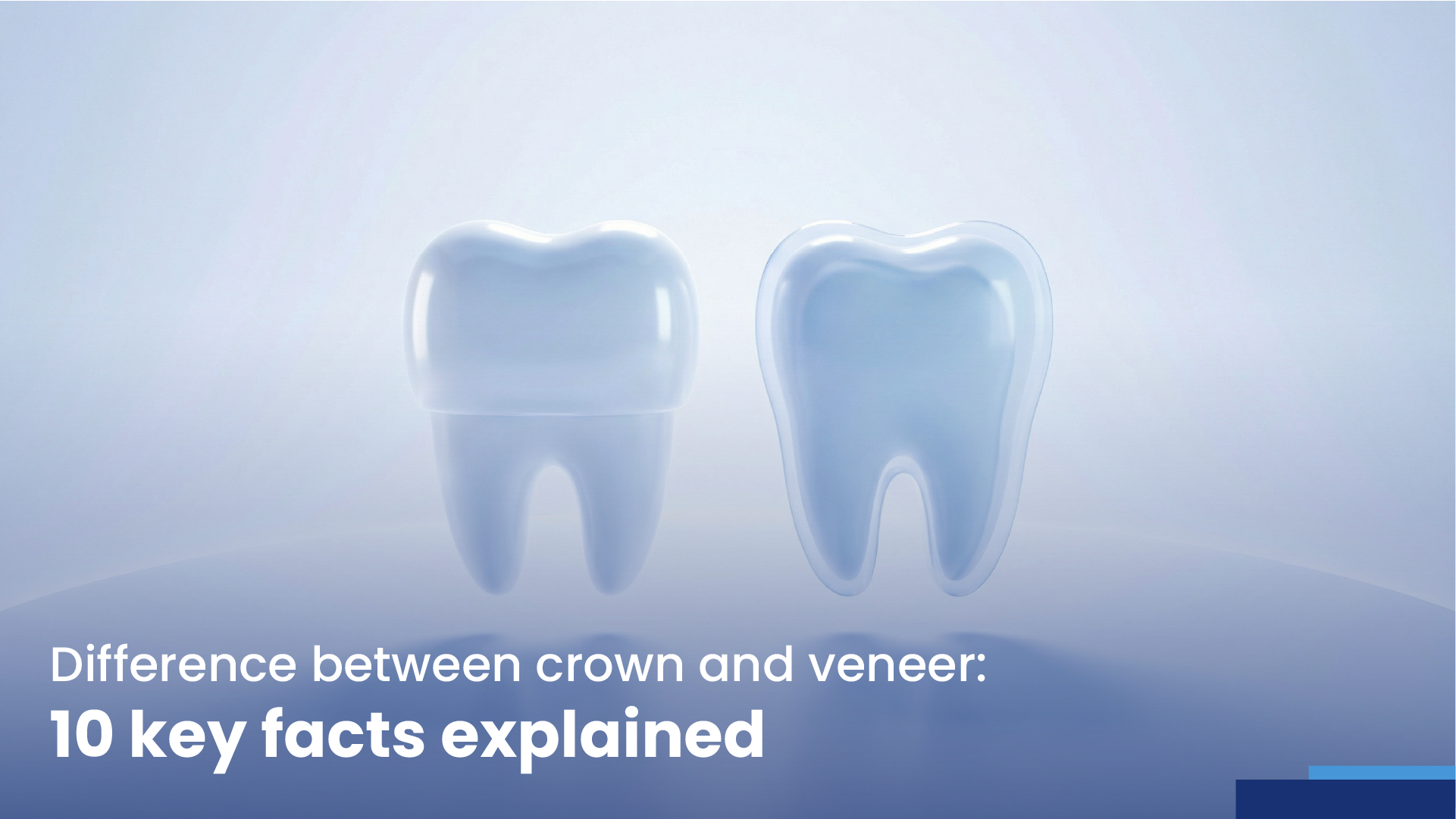
A dental crown is a full-coverage restoration that encases the entire visible portion of a tooth. It is primarily used to restore strength, function, and structure when a tooth is damaged, weakened, or heavily restored.
A dental veneer is a thin shell bonded to the front surface of a tooth. Veneers are mainly cosmetic and are designed to improve color, shape, alignment, or minor surface defects while preserving as much natural tooth structure as possible.
Both options are offered by advanced dentistry clinics in Kuwait, including comprehensive polyclinics that combine cosmetic and restorative expertise under one roof.
Fact 1: coverage area is the most fundamental difference
The most important distinction in the difference between crown and veneer lies in how much of the tooth is covered.
A dental crown wraps around the entire tooth, covering the front, back, sides, and biting surface. This makes it suitable for teeth that need structural reinforcement.
A dental veneer covers only the front-facing surface of the tooth. It does not protect the biting edge or the back of the tooth, which limits its use to teeth that are already healthy and structurally sound.
This difference directly affects durability, preparation, and treatment indications.
Fact 2: crowns restore strength, veneers enhance appearance
Crowns and veneers are designed for different clinical goals.
A dental crown restores chewing strength and protects teeth that are cracked, fractured, heavily filled, or weakened after root canal treatment. It allows patients to chew normally without risking further damage.
A dental veneer focuses on aesthetics. Veneers correct discoloration, minor chips, uneven shapes, and small alignment issues, especially in the visible front teeth.
Patients seeking smile design solutions in Kuwait often combine veneers for appearance with crowns where strength is required.
Fact 3: tooth preparation differs significantly
Tooth preparation is another major point in the difference between crown and veneer.
Crowns require circumferential reduction of the tooth. Enamel and some dentin are removed from all sides to create space for the crown material. This is necessary to ensure strength and proper fit.
Veneers require minimal preparation. In most cases, only a thin layer of enamel is removed from the front surface. This conservative approach preserves more natural tooth structure.
From a biological standpoint, preserving enamel supports long-term tooth health when aesthetics alone are the concern.
Fact 4: crowns are indicated for damaged teeth, veneers for healthy teeth
Clinical indication determines the correct treatment.
Dentists recommend dental crowns when teeth have:
- Large fillings
- Cracks or fractures
- Severe wear
- Structural weakness
- Previous root canal treatment
Dental veneers are recommended when teeth are:
- Structurally intact
- Free of extensive decay
- Mainly affected by cosmetic issues
Choosing veneers for a weakened tooth can lead to failure, while placing a crown on a healthy tooth may be unnecessarily invasive.
Fact 5: materials used differ in thickness and strength
Both treatments use high-quality ceramic or porcelain materials, yet their design and thickness differ.
Crowns are thicker and engineered to withstand high chewing forces. Materials such as porcelain-fused-to-zirconia or full ceramic crowns are commonly used in advanced dental clinics in Kuwait.
Veneers are ultra-thin and rely heavily on bonding strength rather than bulk. Their success depends on enamel quality and precise bonding techniques.
Material choice is guided by bite force, tooth position, and aesthetic expectations.
Fact 6: durability and lifespan are not the same
Durability is a practical concern for patients comparing the difference between crown and veneer.
Crowns generally last longer under heavy functional load. With proper oral hygiene, crowns may last 10 to 15 years or more.
Veneers have a slightly shorter lifespan, typically 7 to 12 years, depending on bite habits, oral care, and whether the patient grinds their teeth.
Longevity depends less on marketing claims and more on proper case selection and skilled execution.
Fact 7: crowns protect against further tooth damage
One of the clinical advantages of crowns is protection.
A crown seals the tooth completely, reducing the risk of fractures, bacterial leakage, and structural failure. This is especially important for molars and premolars that endure high chewing forces.
Veneers do not provide full protection. They improve appearance but leave the rest of the tooth exposed to normal biting stress.
This explains why dentists often combine crowns and veneers in full smile rehabilitation cases.
Fact 8: aesthetic outcomes differ in subtle but important ways
Both treatments can produce highly aesthetic results when done correctly.
Veneers are unmatched for front-tooth aesthetics. Their translucency and minimal thickness allow light to reflect naturally, creating a lifelike appearance.
Crowns can also be extremely natural-looking, especially with modern ceramic systems, but their thickness slightly limits translucency compared to veneers.
Fact 9: cost reflects complexity and material usage
Cost differences reflect the extent of treatment.
Crowns generally cost more than veneers due to:
- Greater tooth preparation
- Increased material volume
- Higher functional demands
Veneers are usually less expensive per tooth, though full smile veneer cases can approach the cost of crown-based treatments.
Accurate pricing depends on materials, technology, and clinical expertise rather than the label of the procedure.
Fact 10: treatment planning matters more than the procedure itself
The most overlooked aspect in the difference between crown and veneer is planning.
Successful outcomes depend on:
- Bite analysis
- Tooth structure evaluation
- Gum health
- Long-term functional goals
A skilled dentist does not choose crowns or veneers in isolation. Treatment planning integrates dental health, aesthetics, and longevity.
Crown vs veneer comparison table
| Aspect | Dental crown | Dental veneer |
| Tooth coverage | Entire tooth | Front surface only |
| Main purpose | Strength and protection | Cosmetic enhancement |
| Tooth preparation | Extensive | Minimal |
| Suitable for | Damaged or weak teeth | Healthy teeth |
| Durability | High | Moderate |
| Lifespan | 10–15+ years | 7–12 years |
| Aesthetic focus | Functional and cosmetic | Primarily cosmetic |
| Protection level | Full protection | Limited protection |
| Material thickness | Thick | Ultra-thin |
| Ideal placement | Any tooth | Front teeth |
How dentists decide between a crown and a veneer
In real clinical settings, dentists evaluate enamel thickness, bite force, existing restorations, and aesthetic goals. A patient seeking smile correction in Kuwait may need veneers on some teeth and crowns on others. The decision is not about preference but about long-term success.
Common misconceptions clarified
Many patients believe veneers are a lighter version of crowns. In reality, veneers and crowns serve different biological and mechanical roles.
Another misconception is that veneers are reversible. Because enamel is removed, veneers are a permanent commitment, even though they preserve more structure than crowns.
Clear education helps patients make informed decisions rather than trend-based choices.
Long-term care after crowns or veneers
Both restorations require:
- Daily brushing and flossing
- Regular dental check-ups
- Avoiding excessive biting forces on hard objects
Crowns and veneers are durable but not indestructible. Proper care extends their lifespan and maintains aesthetics.
Why professional evaluation is essential
Online comparisons cannot replace clinical examination. X-rays, bite analysis, and digital scans reveal factors invisible to the naked eye.
Patients searching for the difference between crown and veneer benefit most from a personalized consultation rather than generalized advice.
Why choose Blue Clinic for crowns and veneers in Kuwait
Blue Clinic provides comprehensive dental and cosmetic care under one roof in Mahboula, Kuwait. The dental department offers advanced restorative and cosmetic solutions, including dental crowns, veneers, and full smile rehabilitation.
Patients benefit from:
- Experienced dental specialists
- Modern diagnostic and treatment technologies
- Personalized treatment planning
- A patient-centered approach focused on long-term oral health
Location: Mahboula Coastal Road, Mermaid Medical Center, 2nd Floor, Villa #205 – Kuwait
Frequently asked questions
- How do I know if I need a crown or a veneer?
A clinical examination determines this. Teeth with structural damage usually require crowns, while healthy teeth with cosmetic concerns are suited for veneers.
- Are veneers painful?
Veneer placement involves minimal preparation and is usually completed with little to no discomfort under local anesthesia.
- Can veneers be placed on back teeth?
Veneers are not recommended for molars due to high chewing forces. Crowns are more suitable for back teeth.
- Do crowns or veneers stain over time?
High-quality ceramic materials resist staining. Proper oral hygiene maintains their appearance.
- Can crowns and veneers be combined in one treatment plan?
Yes. Many smile makeover cases use veneers for front teeth and crowns for structurally compromised teeth.
Understanding the difference between crown and veneer empowers patients to choose treatments that protect their teeth, enhance their smile, and support long-term oral health. At Blue Clinic, every treatment decision is guided by clinical expertise, precision, and patient-specific care.